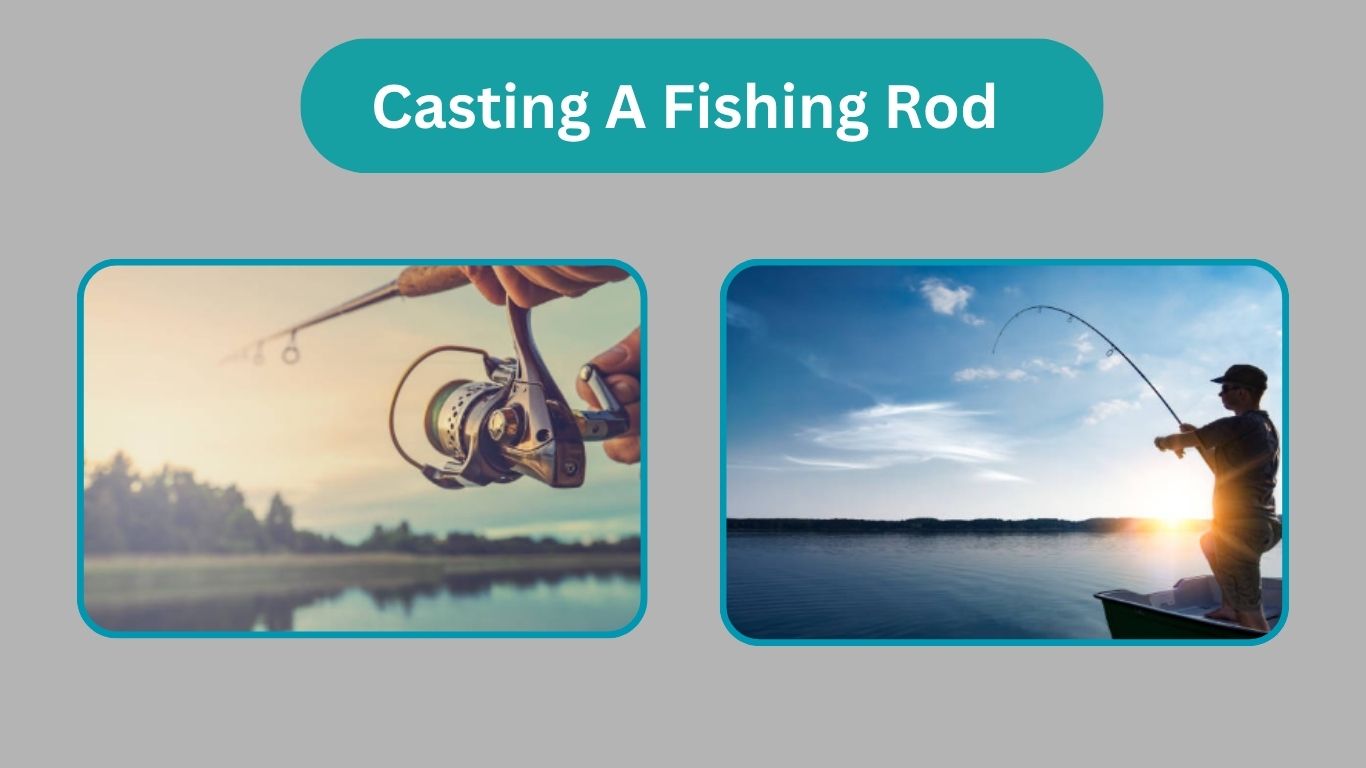
Fishing is a fun and relaxing activity that many people enjoy. Whether you’re standing by a lake, on a boat, or at the beach, one of the most important skills to learn is how to cast your fishing rod. Casting means throwing your fishing line and bait into the water to try and catch a fish. In this guide, we’ll explain everything you need to know about casting a fishing rod in simple, easy words.
What Does “Casting” Mean?
Casting is the act of using your fishing rod to throw your fishing line and bait or lure into the water. It’s like tossing a ball, but instead, you’re tossing your line out using the rod and reel. The better you cast, the farther and more accurately your bait will go, giving you a better chance of catching fish.
Types of Fishing Rods You Might Use
Before we get into the casting steps, let’s look at the three main types of fishing rods, because casting is a little different for each one:
1. Spinning Rod
- The most common and easiest for beginners.
- The reel hangs under the rod.
- Great for light to medium fishing.
2. Baitcasting Rod
- Better for experienced anglers.
- The reel sits on top of the rod.
- Good for casting heavier lines and lures.
3. Spincast Rod
- Simple and beginner-friendly.
- Has a closed-face reel (looks like a round cap).
- Easy to use with a push-button.
In this article, we will mainly focus on spinning rods, since they’re the most popular for beginners.
How to Set Up Your Rod (Before Casting)
If your fishing rod isn’t ready yet, no problem. Setting it up is simple if you follow these easy steps. Here’s how to get your rod ready to cast:
1. Put the Rod Together
Most fishing rods come in two or more parts. Line up the ends (called ferrules) and gently slide them together. Make sure the small loops on the rod (called guides) are in a straight line. Push the pieces in firmly but not too hard; you want them tight, not cracked. Give the rod a small twist to lock it in place.
2. Spool the Line
Check if your reel already has fishing line. If not, you’ll need to add some. Place the spool of line on the floor. Run the line through each guide starting from the top of the rod down to the reel. Open the bail (the small metal arm on the reel), tie the line to the reel spool, and slowly turn the handle to wind the line on. Use your fingers to hold the line with light pressure so it goes on smoothly. Ask a tackle shop for help if you’re unsure.
3. Add a Hook or Lure
Now tie a hook, bait, or lure to the end of your line. A good knot to use is the improved clinch knot. To tie it:
- Put the line through the hole in the hook.
- Twist the line around itself 5–7 times.
- Thread the end of the line through the loop near the hook, then pull it tight.
- Tug the knot gently to make sure it holds, then cut off the extra line.
That’s it, your rod is now set up and ready for fishing.
The 5 Simple Steps to Cast a Fishing Rod
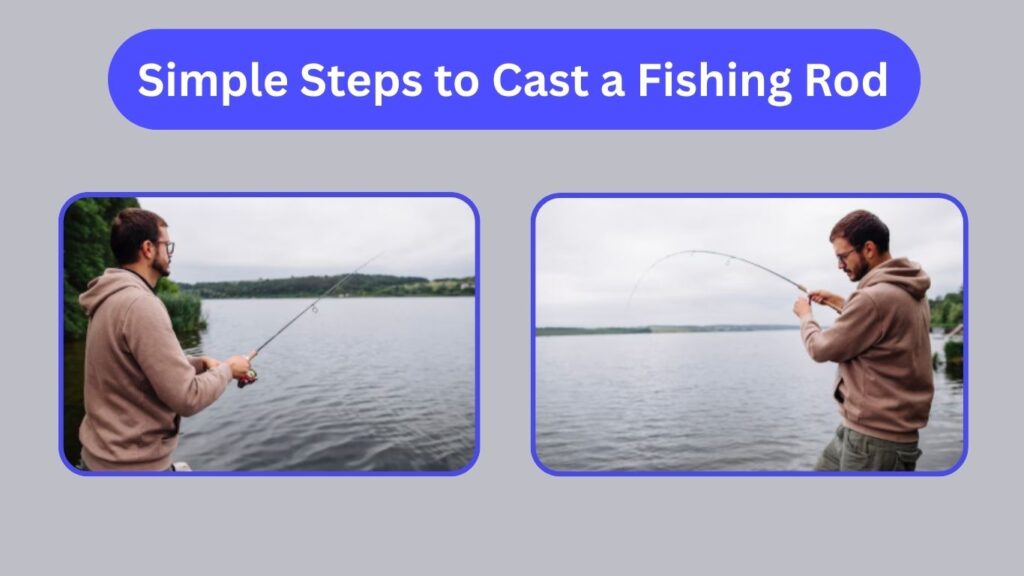
Learning how to cast a spinning rod can feel tricky at first, but it becomes easy with a little practice. Let’s break it down into five clear, detailed steps to help you cast smoothly and confidently.
Step 1: Hold the Rod the Right Way
Begin by holding your fishing rod with your dominant hand, which means your right hand if you’re right-handed, or left if you’re left-handed.
Grip the handle firmly but comfortably, just in front of the reel.
The reel should hang beneath the rod, not on top of it.
Place your index finger on the fishing line, where it runs over the rod above the reel. Use your fingertip to gently press the line against the rod; this helps control the line before the cast.
Step 2: Open the Bail
The bail is the small, curved metal arm on your spinning reel. It opens and closes to release or hold the fishing line.
With your other hand, carefully flip the bail open. This unlocks the spool so the line can fly out during the cast.
Important: Keep your index finger pressed against the line. If you let go too early, your hook or lure will drop straight down.
Step 3: Aim and Pull Back
Turn your body slightly toward the area of water you want to cast into; this is your target.
With your rod tip aimed slightly upward, pull the rod back in a smooth motion. You can bring it over your shoulder (like throwing a baseball) or swing it out to the side, depending on your space.
You’ll feel the rod load up with energy; this is what helps launch your bait forward.
Step 4: Cast Forward and Let Go
Now, in one fluid motion, swing the rod forward toward your target.
As the rod tip passes your eye level and begins pointing forward, release your finger from the line.
This allows the line to unroll off the spool and carry the bait or lure through the air.
The smoother the motion, the straighter and farther your cast will go.
Step 5: Close the Bail and Reel In
Once your bait lands in the water, manually flip the bail closed to stop the line from coming out.
Start slowly turning the reel handle to tighten the line and begin reeling in.
If you’re using a moving bait, continue to reel steadily. If you’re using live bait or waiting for a bite, you can let it sit and keep an eye on the line for movement.
With these five steps, you’re ready to cast like a pro. Practice makes perfect, so try casting a few times in an open space or on the water to get the feel for timing and technique.
Different Casting Styles You Can Try
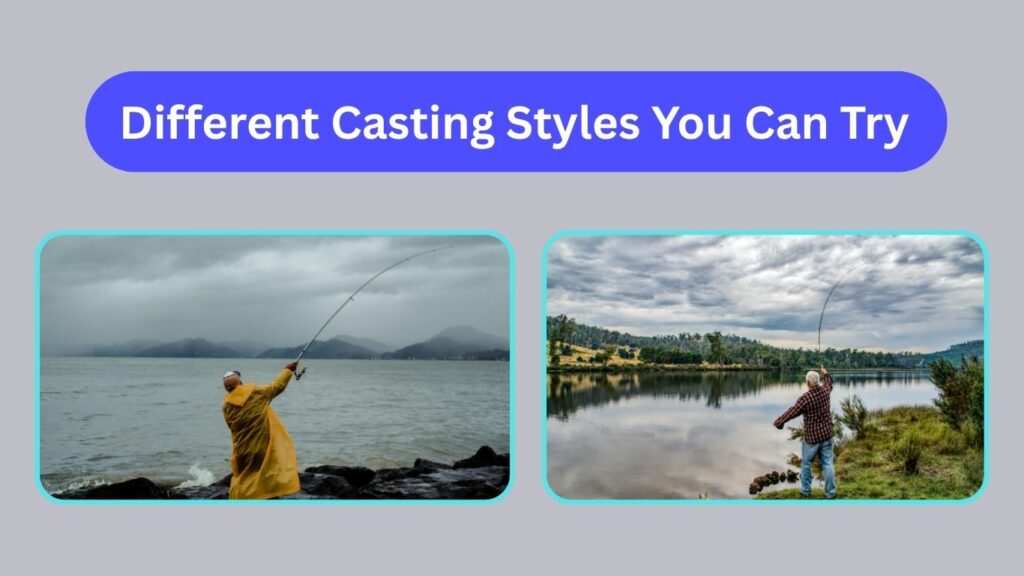
Once you’ve learned the basic cast and feel more confident, you can try different ways to cast your line. Each casting style is useful in different situations. Here are three popular ones:
Overhead Cast
This is the most common and easiest casting style, especially for beginners.
To do it, bring your rod straight back over your shoulder, like you’re getting ready to throw a ball. Then swing it forward in a smooth motion and release the line.
This style helps you cast your bait far and straight, making it great for open spaces like lakes or big rivers.
Sidearm Cast
The sidearm cast is useful when you’re fishing in a place with low tree branches or strong wind.
Instead of going over your shoulder, swing the rod out to your side, like hitting a tennis ball with a racket.
This cast keeps the bait lower to the ground or water, so it doesn’t get blown off course by the wind. It’s also helpful when fishing under docks or near thick brush.
Underhand Cast
This is a gentle, short-distance cast that’s great for tight spaces, like when you’re fishing from a dock or boat.
Hold the rod low and swing it lightly upward from below, letting the bait drop softly into the water.
It’s perfect for quiet, close-up fishing, especially when you don’t want to scare the fish away.
Common Casting Mistakes and How to Fix Them
Even experienced anglers make mistakes sometimes. Here are some common problems beginners face, and how to fix them:
Mistake 1: The Line Doesn’t Go Far
What’s happening: You might be holding your finger on the line for too long, which stops the line from flying freely.
How to fix it: Try to release your finger just as the rod moves forward and points at your target. This will help the line launch better.
Mistake 2: The Line Flies Up into the Air
What’s happening: If your line goes too high or curves upward, you might be casting at too steep an angle.
How to fix it: Use a smoother, flatter swing instead of lifting the rod too much. Keep the motion easy and level, not jerky or too high.
Mistake 3: The Line Gets Tangled
What’s happening: The line might twist or wrap around the rod, especially if the bail is left open or the line isn’t straight.
How to fix it: Before each cast, check for knots or loose loops in your line. After you cast, always close the bail by hand (not just by reeling in), as this helps the line stay tight and smooth.
By practicing these casting styles and watching out for common mistakes, you’ll get better with every trip to the water. Keep your movements calm and steady, and don’t worry if it takes a few tries to get it right; every great angler starts with practice.
How to Cast with a Spincast Rod
Spincast rods are one of the easiest types of fishing rods to use, especially for kids or complete beginners. They have a closed-face reel and a push button, which makes casting simple and fun. Here’s how to do it:
Step 1: Hold the Rod
Hold the rod in your strong hand, with the reel facing up. Put your thumb on the button at the back of the reel.
Step 2: Press and Hold the Button
Press the button down with your thumb and keep it held down. This keeps the line from coming out too early.
Step 3: Swing the Rod Forward
Point the tip of the rod behind you, then swing it forward in a smooth motion, just like you’re gently throwing something.
Step 4: Let Go of the Button
As the rod swings forward and points toward the water, lift your thumb off the button.
This will let the line fly out and carry your bait into the water.
Step 5: Stop the Line and Reel In
If you want to stop the line early, press the button again to stop it. To bring the line back in, turn the reel handle slowly and smoothly.
This type of rod is great for practicing, and you’ll be casting like a pro in no time.
How to Cast with a Baitcasting Rod (For Experienced Fishers)
Baitcasting rods are a bit trickier and are usually used by more experienced anglers. They give you more control and accuracy, but you need to be careful, or the line might tangle (called a backlash). Here’s how to cast with a baitcaster:
Step 1: Press the Thumb Bar
There’s a bar or button at the back of the reel. Press it with your thumb; this unlocks the spool and lets the line move freely.
Step 2: Hold the Spool with Your Thumb
After pressing the thumb bar, keep your thumb gently on the spool (the part that holds the line). This stops the line from coming out too fast.
Step 3: Swing the Rod Forward
Bring the rod back, then swing it forward just like with other rods. As the rod tip points toward the target, lift your thumb slightly to let the line come out.
Step 4: Use Your Thumb to Control the Line
As the line flies out, keep your thumb close to the spool. Gently press down to slow the spool if it spins too fast. This helps you avoid tangles or “bird nests,” which happen when the spool spins faster than the line goes out.
Step 5: Reel It In
Once your bait hits the water, turn the reel handle to start reeling in. Baitcasters give you more power and control, but it takes time to get the hang of them, so don’t worry if you mess up at first.
With practice, both spincast and baitcasting rods can help you become a better angler. Just take your time, go slow, and enjoy the learning process.
Casting a fishing rod might seem hard at first, but with a little practice and the right steps, it becomes easy and fun. Whether you’re using a spinning rod, a spincast rod, or a baitcaster, learning how to cast properly helps you enjoy fishing more and catch more fish. Always start by setting up your rod the right way, choosing the right casting style for your surroundings, and paying attention to common mistakes. Stay patient, keep practicing, and most importantly, have fun by the water.
FAQs
1. What’s the easiest fishing rod for beginners to use?
The easiest rod for beginners is the spincast rod. It has a push-button reel that makes casting simple and easy to control, great for kids or first-timers.
2. Why does my fishing line get tangled when I cast?
Tangling happens when the spool spins too fast or the line is loose. Always check your line before casting, and remember to close the bail manually (not by reeling). If you’re using a baitcaster, use your thumb to control the spool speed.
3. How do I make my cast go farther?
To cast farther, use a smooth and steady motion. Let go of the line at just the right moment, when the rod tip is pointing forward. Also, avoid jerky movements and keep your cast straight and relaxed.
4. What’s the difference between spinning and baitcasting rods?
A spinning rod has a reel underneath and is easier to use, especially for light fishing. A baitcasting rod has the reel on top and gives you more control and power, but it’s harder to learn and easier to tangle if you’re not careful.
5. Can I practice casting without going to the water?
Yes, you can practice casting in your backyard or even at a park using just a small weight (like a casting plug) instead of a hook. This helps you get used to the motion and improve your accuracy without needing to be near a lake or river.