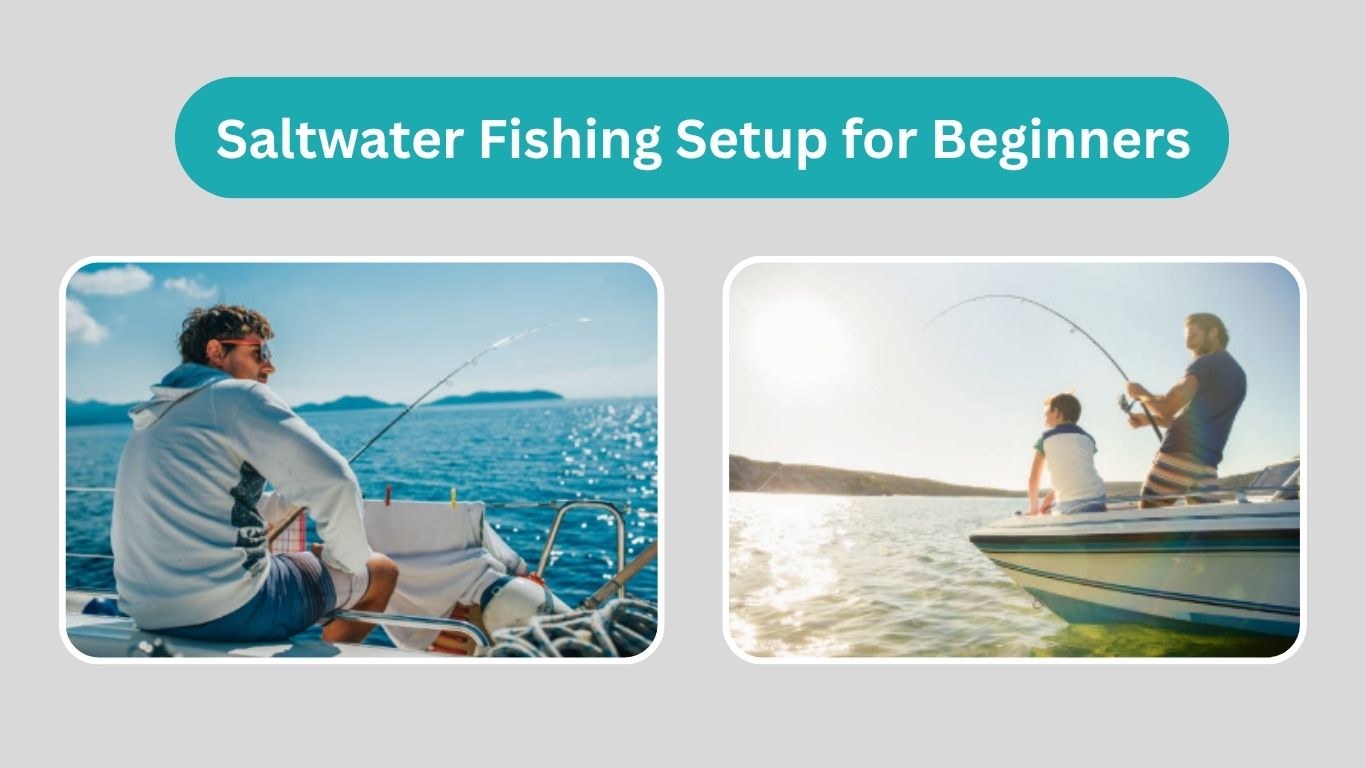
Saltwater fishing is a fun and exciting way to spend time outdoors and catch many different kinds of fish. You can fish from the beach, a pier, or a boat. The ocean is full of fish and adventure. But if you are just starting, it can be a little confusing.
- What fishing rod should you use?
- What kind of bait works best?
- How do you take care of your gear after fishing in salty water?
Don’t worry, this simple guide will help you. We’ll explain everything step by step, using easy words. You’ll learn what gear you need, like rods, reels, fishing line, hooks, and bait, and how to set it all up. Once you understand the basics and practice a little, you’ll be ready for your first saltwater fishing trip.
Types of Saltwater Fishing
Before you start putting your gear together, it’s helpful to understand the different ways people fish in the ocean. Saltwater fishing can be done in many places, from the sandy shore to deep out at sea. Each type is a little different, and knowing about them will help you choose the right setup.
1. Surf Fishing (Beach Fishing)
Surf fishing means standing on the beach and casting your fishing line out into the waves. You don’t need a boat, just a long fishing rod and strong line. The waves bring fish close to the shore, so you can catch fish like pompano, whiting, and bluefish right from the sand. It’s a peaceful way to fish, and you get to enjoy the ocean breeze and sounds.
2. Pier Fishing
Pier fishing is done from a wooden or concrete platform that stretches out over the water. Piers are great places to fish because they reach deeper water without needing a boat. Many beginners start here because it’s easy to access, and you can catch a variety of fish like snapper, mackerel, and sheepshead. You also get to meet other people who are fishing, which makes it a friendly experience.
3. Inshore Fishing
Inshore fishing takes place close to land, usually in calm, shallow waters like bays, channels, rivers, or around mangroves. You can do this from a small boat, a kayak, or even from the shore. The water is not too deep, and it’s full of fish like redfish, sea trout, and snook. It’s a great option for beginners because the water is calmer and the fish are easier to catch.
4. Offshore Fishing (Deep Sea Fishing)
Offshore fishing is done far from the coast, usually in very deep water. You need a boat to get there, and the fish are often bigger and stronger, like tuna, grouper, mahi-mahi, or even sharks. This type of fishing can be exciting and challenging, but it’s usually better for people with some experience. It also requires stronger gear and more planning.
Basic Saltwater Fishing Gear You Need
Before you go fishing in the ocean, you need to get the right gear. Saltwater fishing is different from fishing in lakes or rivers because the water is salty, and the fish are often bigger and stronger. That means your equipment needs to be strong and made to handle saltwater.
Here’s a simple list of the basic items you need, with clear explanations:
1. Saltwater Fishing Rod
This is the long stick you hold and use to cast your line. For beginners, a medium-heavy rod that’s about 7 to 9 feet long is a good choice. It’s strong enough to handle most fish in the ocean but still easy to use.
Make sure the rod is corrosion-resistant, which means it won’t rust or get damaged by the salt in the ocean water.
2. Saltwater Reel
The reel is the part attached to your rod that holds your fishing line and lets you cast and reel it back in. A spinning reel is the best for beginners because it’s simple and easy to control.
Pick a reel made for saltwater, look for one with sealed parts or stainless steel, so it doesn’t rust or break from salt.
3. Fishing Line
This is the line that connects your hook to the reel. You can use:
- Monofilament line – It’s stretchy, cheap, and good for beginners.
- Braided line – It’s thin, strong, and lasts longer, but costs more.
For most saltwater fishing, choose a line with 20 to 30-pound test strength. That means it can handle fish that weigh up to 20 or 30 pounds.
4. Hooks
Hooks are what catch the fish when they bite your bait. A circle hook is best for beginners because it’s easy to use and doesn’t hurt the fish as much.
Get a pack with sizes from 1/0 to 4/0. These sizes are good for catching many types of saltwater fish like snapper, redfish, and sea trout.
5. Sinkers (Fishing Weights)
Sinkers are small weights that help your bait sink down into the water. The type of sinker you use depends on where you’re fishing:
- Pyramid sinkers – Best for fishing from the beach where there are waves.
- Egg sinkers – Good for fishing in calm, shallow water like bays or inshore areas.
Use heavier sinkers if the water is deep or if there’s a strong current.
6. Swivels
Swivels are small metal connectors you put between your fishing line and your hook or leader. They stop your line from twisting, which can happen when your bait spins in the water.
They’re cheap, easy to use, and very helpful.
7. Leader Line
This is a short, strong piece of line that goes between your hook and your main line. It helps stop fish from biting through the line or getting scared by a visible line.
Use a fluorocarbon leader with 20 to 40-pound test strength. This type of line is nearly invisible underwater and very tough.
8. Bait
Bait is what attracts the fish to your hook. You can use different types depending on the fish and where you’re fishing:
- Live bait – Like shrimp, squid, or mullet. Fish love live bait because it looks and smells real.
- Cut bait – Pieces of fish like sardines or mackerel. It gives off a strong smell that attracts fish.
- Artificial bait (lures) – Plastic or metal bait made to look like real fish. Examples: soft plastic worms, metal spoons, or jigs. Lures are reusable and clean, but they take more practice.
9. Tackle Box
A tackle box is like a small toolbox for your fishing gear. It has little sections to keep your hooks, sinkers, swivels, extra line, and lures all in one place. It helps you stay organized so you don’t lose small parts.
10. Pliers
Pliers are a must-have tool for saltwater fishing. They help you:
- Take hooks out of a fish’s mouth
- Cut the fishing line
- Bend or fix the tackle
Look for rust-resistant pliers made for fishing.
11. Bucket or Cooler
You’ll need something to store the fish you catch or hold your bait. A simple plastic bucket works fine for live bait, but if you want to keep your fish fresh, use a cooler with ice.
How to Set Up Your Saltwater Fishing Rod (Step-by-Step Guide)
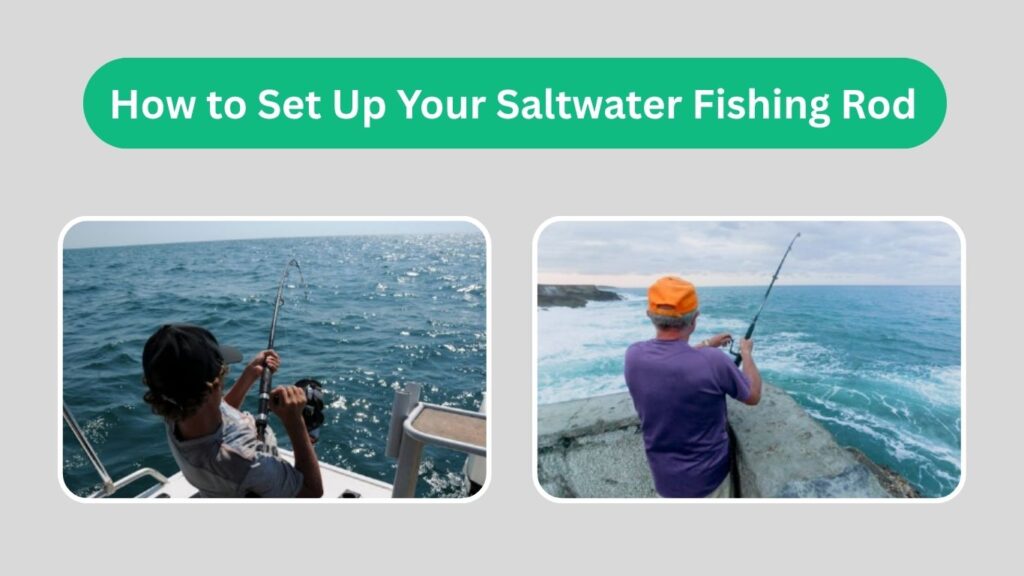
Now that you have all your gear, it’s time to put it together. Setting up your saltwater fishing rod may look tricky at first, but don’t worry, it’s simple once you know the steps. Follow this easy guide, and you’ll be ready to fish in no time.
Step 1: Attach the Reel to the Rod
Your fishing reel is the part that holds your fishing line. It needs to be safely attached to your fishing rod.
- Look near the handle of your rod for the reel seat; it’s a small section with a ring or clamp.
- Take the foot of the reel (the flat metal part on the bottom) and slide it into the reel seat.
- Tighten the reel seat by twisting the ring or locking system until the reel feels firm and doesn’t move.
Step 2: Add Fishing Line to the Reel (Spooling)
Now you need to put fishing line on your reel so you can cast and catch fish.
- Open the bail on the reel. This is the small metal arm that flips open and closed.
- Tie the end of your fishing line to the spool (the center part of the reel) using a simple arbor knot.
- Flip the bail back to the closed position.
- Hold the line gently between your fingers to keep it tight and start turning the reel handle slowly.
- Keep reeling until the spool is almost full, but leave about 1/8 inch of space at the top. Don’t overfill it.
Step 3: Add a Leader Line
The leader line is a strong, clear piece of fishing line that goes between your hook and the main fishing line. It helps prevent fish from seeing the line or biting through it.
- Cut about 2 feet (60 cm) of fluorocarbon leader line.
- Use a double uni knot (or a swivel if that’s easier) to connect your main line to your leader line.
Step 4: Tie On the Hook and Add a Sinker
Now it’s time to get your hook and sinker ready so you can catch fish.
- Take one end of the leader line and tie on your circle hook using a fisherman’s knot or improved clinch knot.
- Next, add a sinker (weight) above the hook. There are different ways to do this:
Option 1: Sliding Sinker Rig
- Slide the sinker onto your main line before tying on the swivel. The sinker can move freely, which lets the fish take the bait without feeling the weight.
Option 2: Dropper Rig
- Tie a separate short piece of line coming off your main line, and attach the sinker there. This keeps the hook and bait above the bottom.
Step 5: Put Bait on Your Hook
Now, the final step, adding bait to your hook.
- For live bait (like shrimp or small fish):
Gently slide the hook through the back, just behind the head, or through the lips. Be careful not to hurt the bait too much; it needs to stay alive and wiggle in the water to attract fish. - For cut bait (like pieces of fish or squid):
Push the hook through the thickest part of the bait so it stays on firmly when you cast. Make sure the hook point is exposed so the fish can get hooked easily.
Simple Saltwater Rigs for Beginners
When you go fishing, how you set up your line matters. A fishing rig is the way you connect your hook, sinker, and other parts to your fishing line. There are many types of rigs, but some are perfect for beginners because they are easy to make and work well in different places.
Here are two simple and effective saltwater rigs you can try:
1. Fish Finder Rig
This rig is perfect for surf fishing (from the beach) or pier fishing. It helps you catch fish that stay close to the ocean floor, like redfish, drum, or flounder. It also lets the fish swim away a little without feeling the weight of the sinker, which makes them more likely to bite.
How to make it:
- Take your main fishing line (the one from your reel).
- Slide a sinker (like a pyramid sinker) onto the line. This weight will help your bait sink to the bottom.
- Next, slide on a plastic bead. This bead protects your knot from the weight hitting it.
- Tie a swivel to the end of the main line using a strong knot (like an improved clinch knot).
- Now, take about 1 to 2 feet of leader line (a strong, clear line) and tie it to the other end of the swivel.
- Tie your hook to the end of the leader line.
2. Popping Cork Rig
This rig is great for inshore fishing in shallow waters like bays, marshes, or mangroves. It works really well when you’re using live bait like shrimp. The popping cork floats on top of the water and makes a popping sound when you twitch the rod. That noise attracts fish by sounding like baitfish splashing.
How to make it:
- Tie a popping cork (a floating bobber that makes noise) to your main fishing line.
- On the other end of the cork, attach about 1 to 2 feet of leader line.
- Tie a hook to the end of the leader.
- Hook your live shrimp or bait to the hook.
Common Saltwater Fish for Beginners
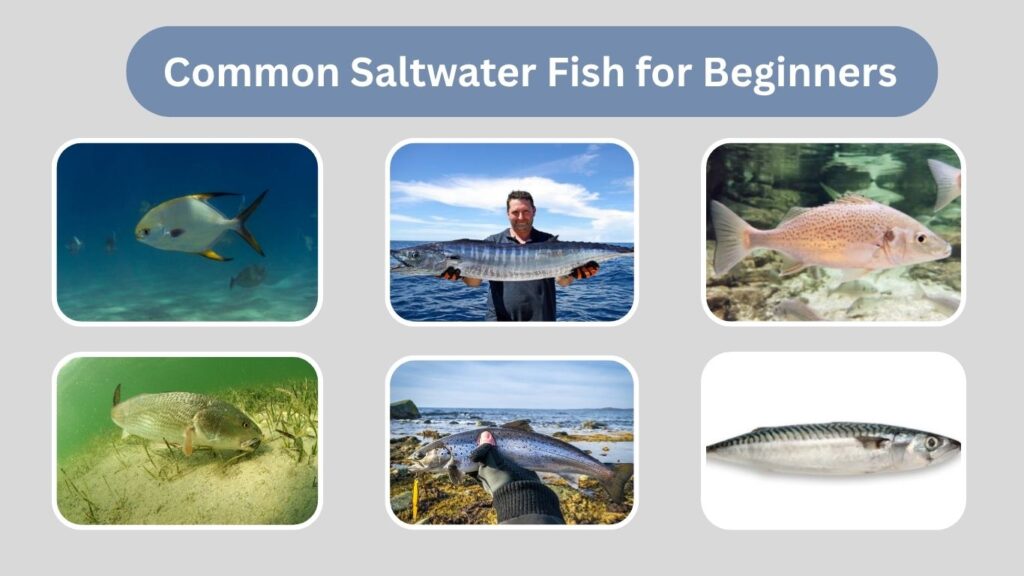
When you’re just starting with saltwater fishing, it’s helpful to know which fish are easier to catch. These fish are found close to shore, in shallow water, and often bite simple bait. They’re fun to catch and don’t require fancy gear.
Here are some of the most common saltwater fish that beginners often catch:
Pompano
- Where to Find: In the surf (waves near the beach) and along sandy shores.
- What to Use: Small shrimp or sand fleas (tiny crabs that live in wet sand).
- About the Fish: Pompanos are small, shiny silver fish that swim in groups. They fight hard for their size, making them fun to catch. They’re also great to eat!
Whiting (also called Kingfish)
- Where to Find: In the surf or near piers.
- What to Use: Pieces of shrimp or squid.
- About the Fish: Whiting are long, silver fish that stay close to the bottom. They are gentle biters and perfect for beginners. They’re not big, but they’re tasty and easy to reel in.
Snapper (like Mangrove Snapper)
- Where to Find: Around rocks, docks, and inshore structures like bridges or jetties.
- What to Use: Live bait (small fish or shrimp) or cut bait (fish chunks).
- About the Fish: Snappers are smart, fast, and love hiding in cover. They have sharp teeth and fight well, so be ready! They’re very popular for both catching and eating.
Redfish (Red Drum)
- Where to Find: In bays, near grassy shorelines, oyster beds, and mangroves.
- What to Use: Live or dead shrimp, crab, or soft plastic lures.
- About the Fish: Redfish are strong and can grow large, but even smaller ones are fun to catch. They have a reddish body and a black spot on their tail. Great fighters and often caught near the bottom.
Sea Trout (Spotted Seatrout)
- Where to Find: In estuaries, grassy flats, and shallow coastal waters.
- What to Use: Live shrimp, soft plastic lures, or small baitfish.
- About the Fish: Sea trout have spots along their sides and are common in warm, shallow water. They are easy to find and put up a nice fight when hooked.
Mackerel (like Spanish Mackerel)
- Where to Find: Near piers, jetties, and from boats just off the coast.
- What to Use: Metal spoons, flashy lures, or small live bait.
- About the Fish: Mackerel are fast-swimming fish with sharp teeth. They like chasing shiny bait and often swim in big groups. When they bite, they hit hard and run fast.
Saltwater fishing is an exciting and rewarding hobby, perfect for beginners who want to enjoy the outdoors and try something new. Whether you’re fishing from the beach, a pier, or a small boat, there are many simple and fun ways to get started. With the right gear, like a sturdy rod and reel, strong fishing line, hooks, bait, and basic tools, you’ll be ready to catch a variety of saltwater fish like pompano, whiting, redfish, and more.
By learning how to set up your rod, choosing the right rig, and knowing where to fish, you’ll quickly build confidence and skills. Don’t worry about getting everything perfect on your first try; fishing takes a little practice, but it’s easy to learn and great for all ages. Remember to rinse your gear with fresh water after each trip to keep it in good shape. Most importantly, relax, enjoy the ocean, and have fun on your saltwater fishing adventure.