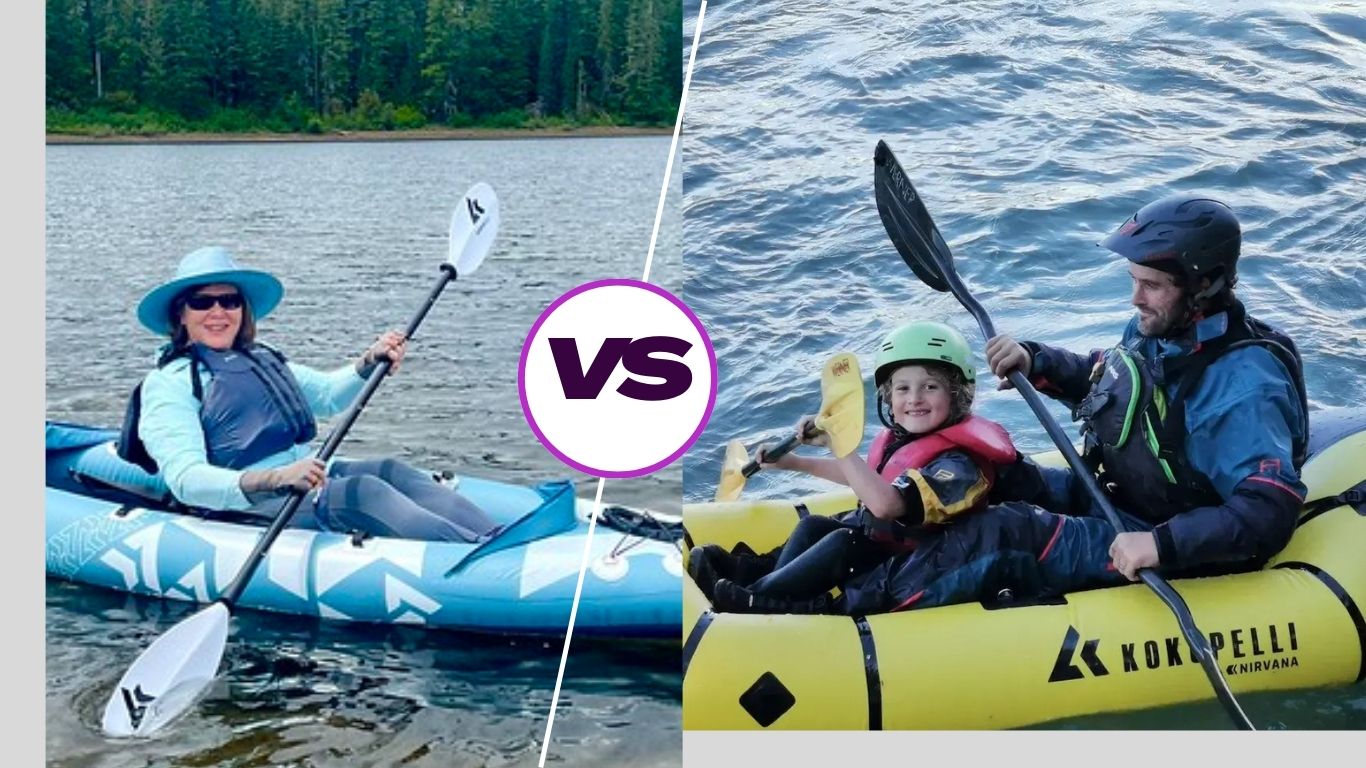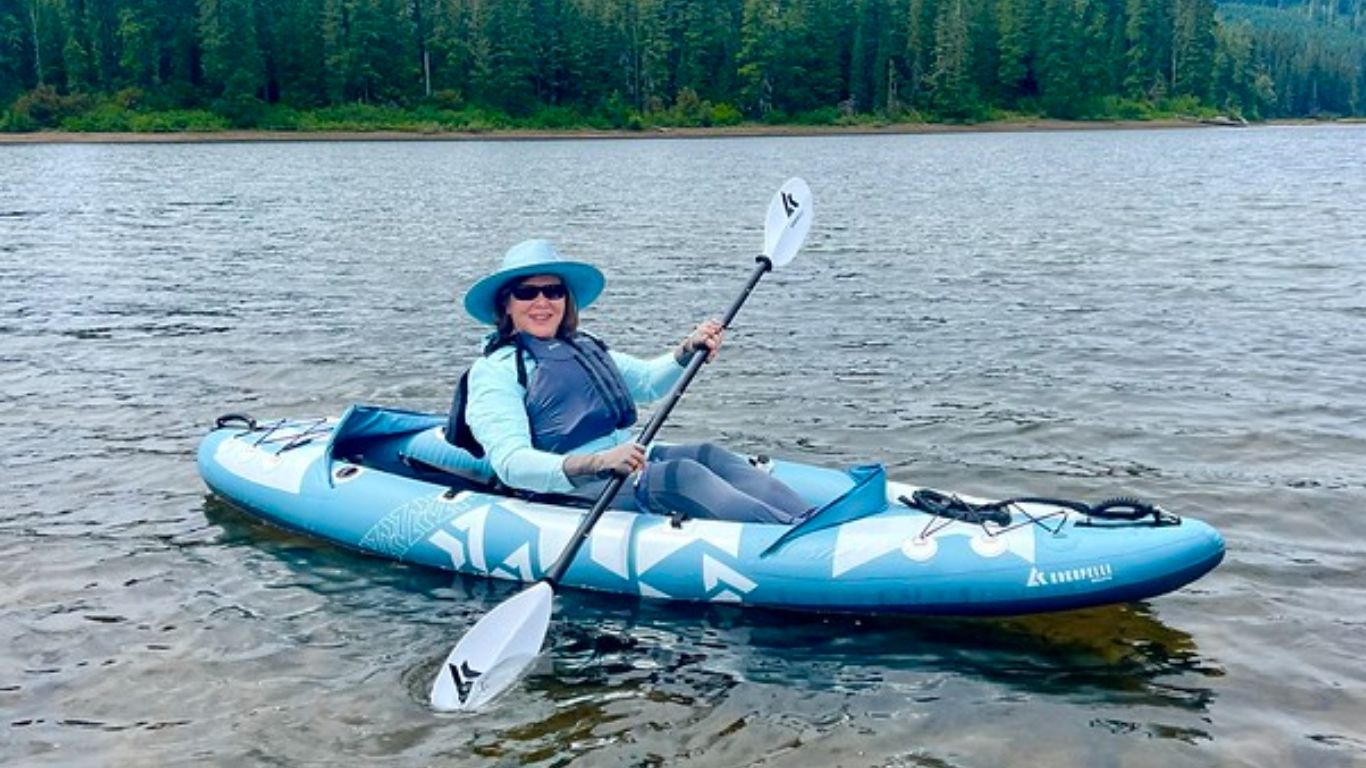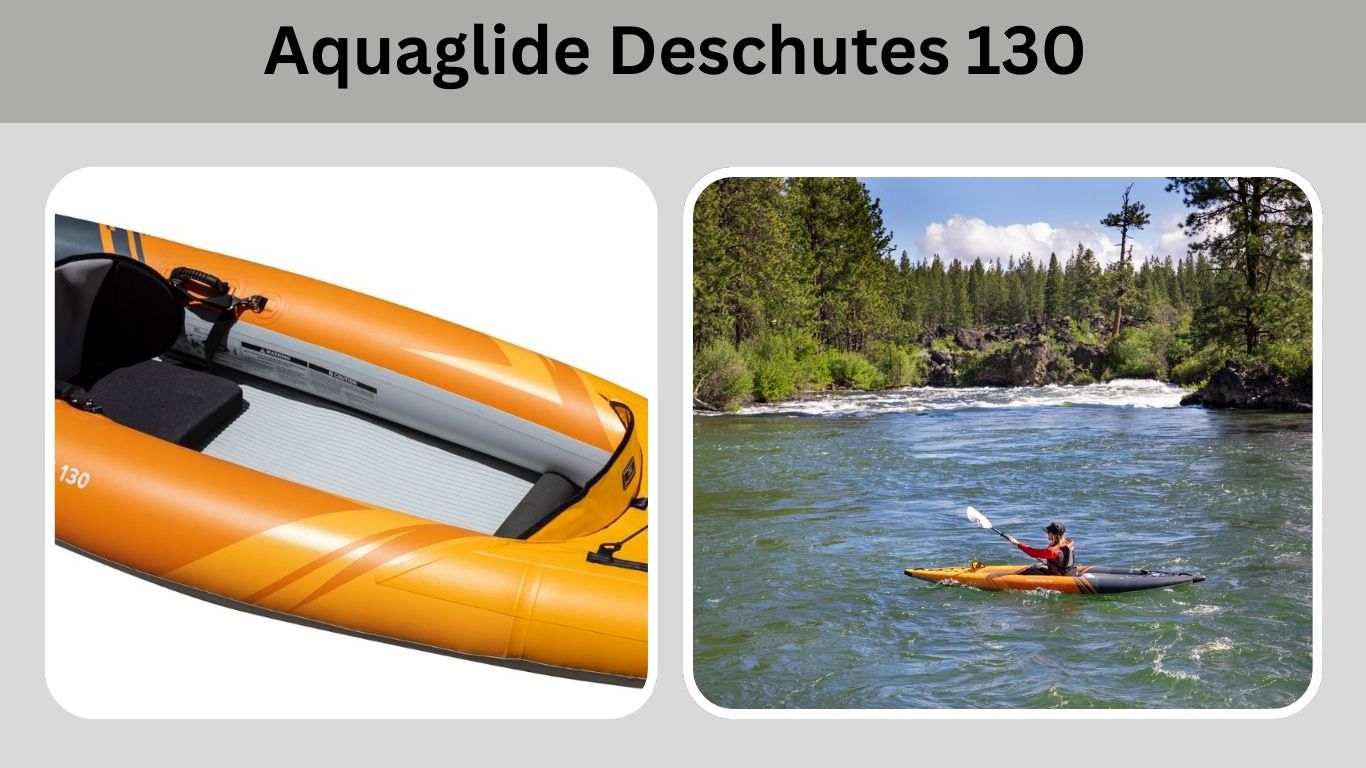
The Aquaglide Deschutes 130 is a solo inflatable kayak designed for paddlers who want a mix of portability, comfort, and performance. At just 22 pounds, it’s light enough to carry by hand, yet it can hold up to 400 pounds, making space for both you and your gear. Its long, narrow shape cuts smoothly through calm waters, while the open cockpit and comfortable seat make every paddling trip relaxed and enjoyable.
Overview
The Aquaglide Deschutes 130 is a touring-style inflatable kayak aimed at people who enjoy day trips on lakes, slow rivers, and other calm waterways. It’s not meant for whitewater or ocean surf, but within its intended range, it delivers a great balance of stability, tracking, and ease of use. Inflatable kayaks are often seen as a compromise, but this model is built with premium materials and thoughtful features that make it a serious option for casual paddlers and travelers alike.
The hull is made from tough Duratex™ single-layer PVC, which keeps the weight down while remaining stiff and durable. Its low profile and narrow width reduce wind resistance and help the kayak maintain speed with less effort. The EVA-covered floor lowers the paddler’s center of gravity, which improves stability and comfort for longer outings. The open cockpit design makes it easy to get in and out, while splash guards help keep water from dripping into your lap.
It’s a kayak built with convenience in mind: a lightweight frame for carrying, quick setup for spontaneous trips, and good storage options for gear. The included Core 2.0 seat offers comfortable back support and breathability, making it possible to paddle for hours without discomfort. With features like a quick-release fin for better tracking and multiple carry handles, the Deschutes 130 feels like a kayak designed for real-world use, not just for looks.
Key Features
- The kayak is lightweight at 22 pounds but can carry up to 400 pounds of paddler and gear.
- Its long, narrow design ensures smooth tracking and easy gliding through the water.
- An open cockpit with Splash-Guard™ areas makes entry simple while keeping you drier.
- Durable Duratex™ construction provides strength, puncture resistance, and low maintenance.
- The FeatherFrame crosspiece adds structure without adding heavy frame parts.
- An EVA-covered floor improves stability, comfort, and easy cleaning.
- The Core 2.0 seat offers padding, back support, and breathability for comfort.
- D-rings and bungee cords at both ends allow secure gear storage.
- Multiple carry handles make transportation easy for one or two people.
- A weedless tracking fin improves steering and avoids snagging on plants.
- A drain plug allows quick water removal for easy cleaning.
- The included duffel bag makes compact storage and transport simple.
- It can be inflated quickly with a 12V electric pump and topped off with a hand pump.
How to Set It Up
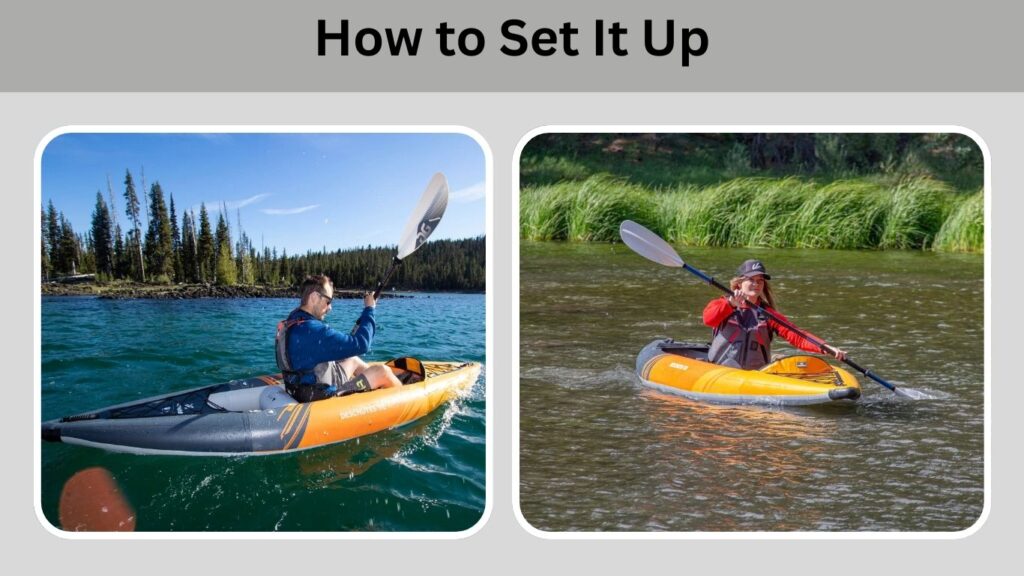
Step 1 – Unpack and Prepare
- Remove the kayak from its duffel-style travel bag.
- Unroll it on a flat, clean surface away from sharp objects to avoid punctures.
Step 2 – Inflate the Main Air Chambers
- Start with the front (bow) chamber.
- Inflate the rear (stern) chamber next.
- Finish with the floor chamber.
- For speed, use a 12V electric pump for the initial inflation, then top off with a hand pump to reach the correct pressure.
Step 3 – Install the FeatherFrame Crosspiece
- Place the crosspiece inside the cockpit.
- This provides stiffness and structure without adding heavy frame parts.
Step 4 – Attach and Adjust the Seat
- Secure the Core 2.0 seat to the attachment points.
- Adjust the backrest to a comfortable angle for proper support.
Step 5 – Install the Tracking Fin
- Turn the kayak slightly on its side.
- Attach the quick-release weedless fin to the underside of the hull to improve tracking.
Step 6 – Final Checks
- Make sure all valves are tightly closed.
- Check the kayak for proper firmness.
- Load your gear into the storage areas.
Your Aquaglide Deschutes 130 is now ready for the water.
How to Use It
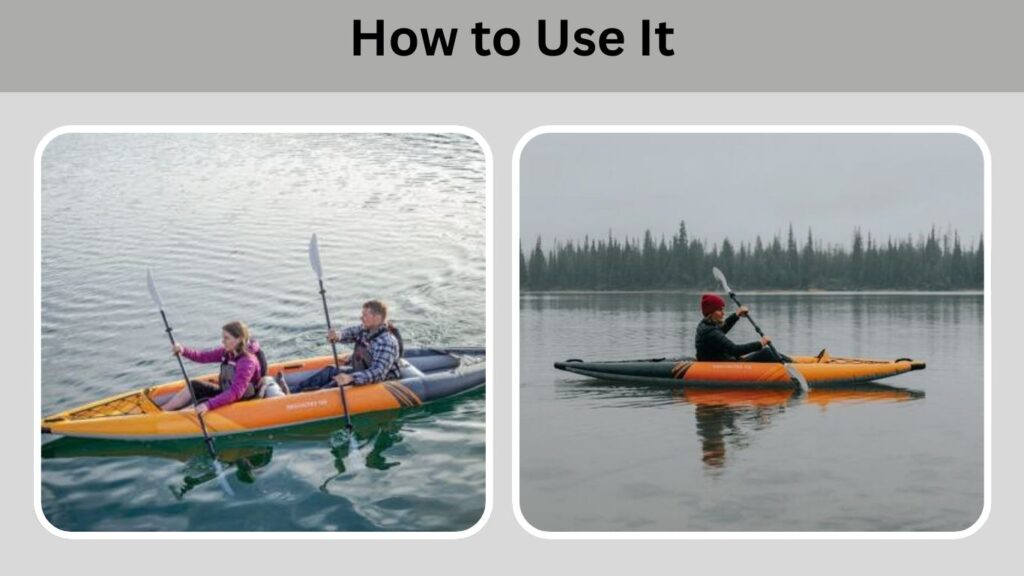
Using the Aquaglide Deschutes 130 is straightforward and beginner-friendly. When you’re ready to launch, carry it by the side handles or by the bow and stern handles if two people are helping. Position it in shallow water so the fin isn’t scraping the bottom, and hold the kayak steady while stepping into the open cockpit. Because the cockpit is wide and open, entering and sitting down feels natural and stable.
Once seated, adjust your foot position and make sure the seat back is at a comfortable angle. With your paddle in hand, use slow, even strokes to get moving. The kayak’s long and narrow design allows it to glide efficiently, so you don’t need to paddle hard to maintain speed. The fin helps keep your course straight, so steering is mostly done with small, gentle strokes rather than sharp turns.
When paddling, it’s best to keep your body relaxed and your movements smooth. This reduces fatigue and lets you enjoy the surroundings. If you’ve brought gear, make sure it’s secured under the bungees or attached to the D-rings so it doesn’t shift or fall out. For fishing or photography, the kayak’s stability allows for pausing and focusing without wobbling.
After your trip, bring the kayak back to shallow water and carefully get out, keeping your weight centered until you’re fully standing. Carry it out of the water to a flat spot, open the drain plug to let water out, and rinse the kayak with fresh water to remove dirt or salt. Allow it to dry fully before deflating and rolling it back into its bag for storage. Proper drying prevents mold and keeps the material in good shape for years.
Pros and Cons
Pros
- Extremely lightweight and easy to carry.
- High weight capacity for solo paddlers plus gear.
- Smooth glide and excellent tracking for calm water.
- Quick and simple setup process.
- Durable Duratex™ material for long-lasting use.
- Comfortable, supportive seat for long paddles.
- Good storage options with bungees and D-rings.
- Multiple carry handles for easy transport.
- Fin improves straight-line paddling.
- Easy to rinse, drain, and dry.
Cons
- Not designed for rough water or whitewater conditions.
- The pump is not included, so it must be purchased separately.
- Less rigid than a hard-shell kayak, so slightly slower.
- Must be dried completely before storage to avoid mildew.
How the Aquaglide Deschutes 130 Compares to Other Kayaks
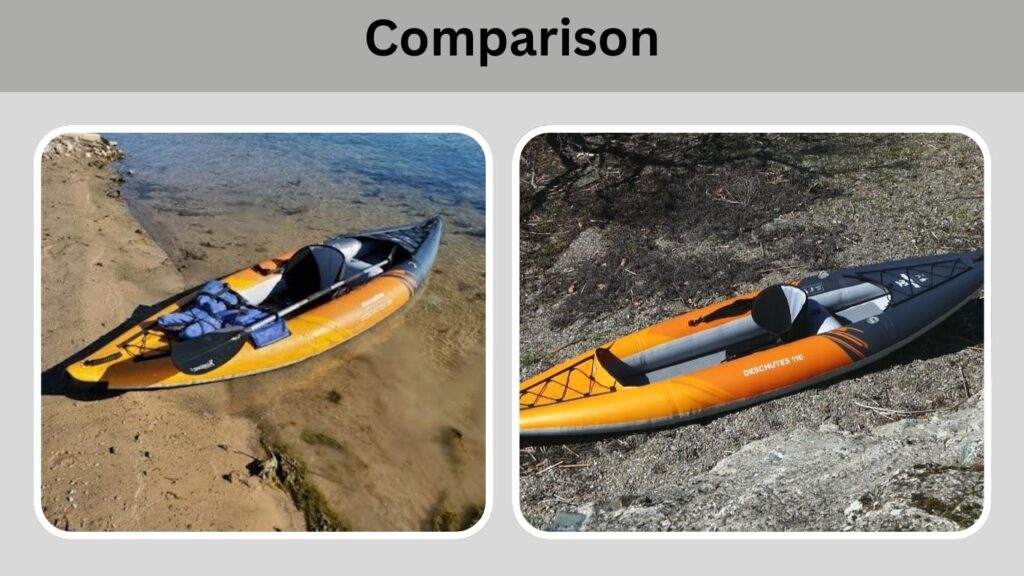
When choosing a kayak, it’s helpful to see how it stacks up against similar models in the same category. The Aquaglide Deschutes 130 competes with several other inflatable touring kayaks, each with its strengths and weaknesses. Below are three comparisons that highlight where the Deschutes 130 shines and where other models might have the edge.
1. Aquaglide Deschutes 130 vs. Advanced Elements AdvancedFrame
The Advanced Elements AdvancedFrame is one of the most popular inflatable touring kayaks on the market, known for its excellent rigidity and performance. Unlike the Deschutes 130, it uses an aluminum rib frame in the bow and stern, which gives it a shape and feel closer to a hard-shell kayak. This extra rigidity improves speed and tracking, especially in choppier water.
However, that comes with added weight; the AdvancedFrame weighs about 36 pounds, compared to the Deschutes 130’s 22 pounds. The AdvancedFrame also takes slightly longer to set up because of its internal frame structure, whereas the Deschutes 130 can be inflated and ready to go in minutes. For paddlers who prioritize speed and performance over portability, the AdvancedFrame is a strong choice, but for those who value lightweight and quick setup, the Deschutes 130 remains more convenient.
2. Aquaglide Deschutes 130 vs. Sea Eagle 370
The Sea Eagle 370 is a well-known tandem inflatable kayak that can also be paddled solo. It’s larger and offers more seating capacity, making it a better option for those who occasionally want to bring a partner. However, its wider design and extra seating mean it’s not as sleek or fast as the Deschutes 130.
The Sea Eagle is more of an all-rounder, capable of handling mild whitewater (up to Class III), whereas the Deschutes is strictly for flatwater touring. The 370 is also heavier at around 32 pounds and bulkier to pack, which makes it less ideal for solo travelers. If you often paddle with a friend and need a versatile kayak, the Sea Eagle might make more sense, but if you’re looking for a nimble, fast, and solo-oriented craft, the Deschutes 130 is the better match.
3. Aquaglide Deschutes 130 vs. Intex Excursion Pro K1
The Intex Excursion Pro K1 is a budget-friendly inflatable kayak designed for solo paddlers. It’s lighter than many inflatables, weighing about 27 pounds, but still heavier than the Deschutes 130. The Excursion Pro is made from laminated PVC and includes features like fishing rod holders and adjustable footrests, making it attractive to anglers. However, it doesn’t match the Deschutes 130 in terms of speed, tracking, or build quality. The Deschutes’ Duratex™ material and streamlined touring design give it better long-distance performance and a more premium feel.
The Excursion Pro’s main advantage is its low cost; it’s typically much cheaper than the Deschutes 130, so it’s a good choice for beginners on a tight budget. For paddlers willing to invest more for a higher-quality, longer-lasting kayak, the Deschutes 130 offers a significant upgrade.
Conclusion
The Aquaglide Deschutes 130 Inflatable Kayak is a practical, comfortable, and highly portable option for solo paddlers who spend most of their time on calm waters. Its lightweight build makes it easy to carry and store, yet it has a generous weight capacity for carrying extra gear. The smooth tracking, comfortable seat, and simple setup make it appealing to both beginners and experienced kayakers who value convenience.
While it’s not intended for rough waters, it’s an excellent companion for day trips, fishing, or quiet explorations. If portability, comfort, and ease of use are your top priorities, the Deschutes 130 delivers all of that in a well-designed package.