Transporting a kayak can be one of the trickiest parts of any paddling adventure, especially if you’re covering long distances from your vehicle to the water. The C-Tug Kayak Cart has become a favorite among kayakers for its durability, versatility, and ability to handle multiple terrains with ease. Built from tough, non-corroding materials and designed for quick assembly, it promises to make moving your kayak simple and stress-free. In this complete guide, we’ll explore its features, performance, pros and cons, and whether it’s the right cart for your paddling needs.
What is the C-Tug Kayak Cart?
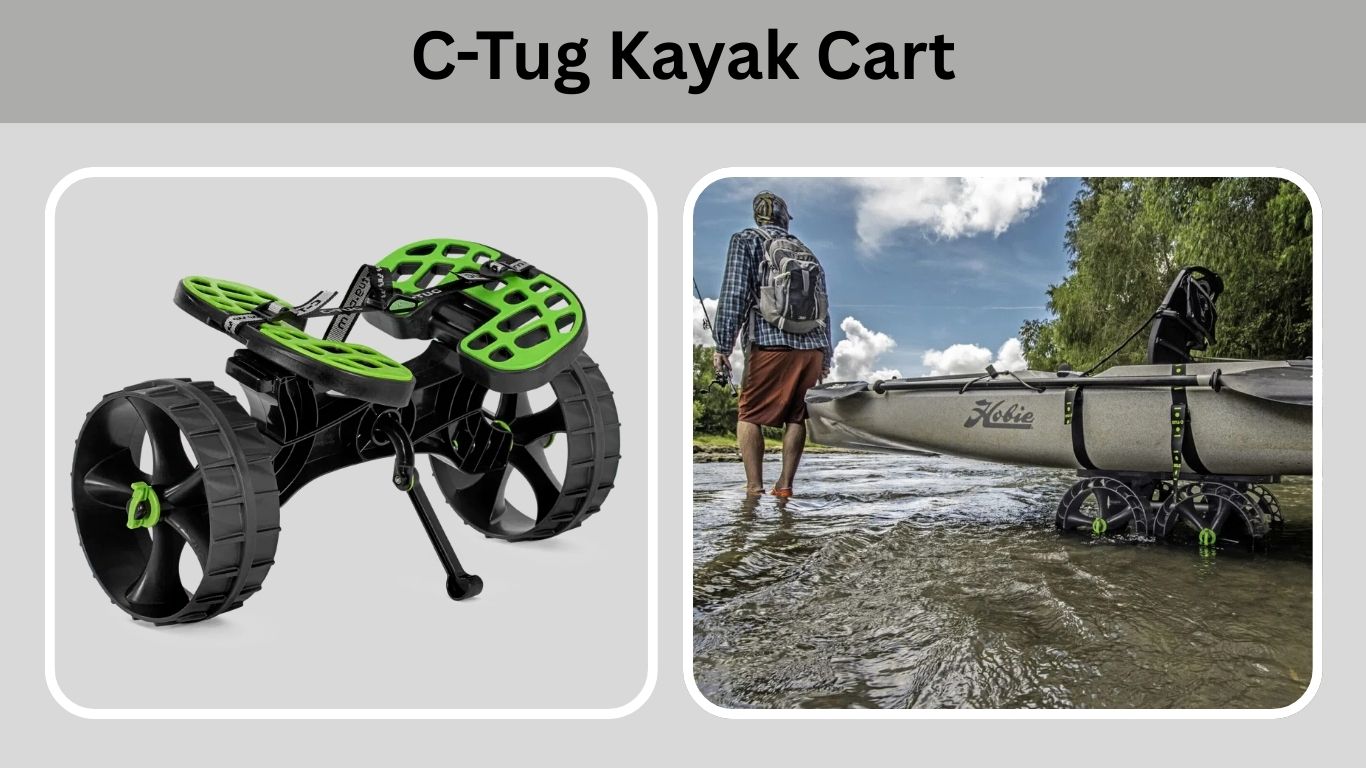
The C-Tug Kayak Cart is a portable kayak transportation system designed to make moving your kayak from your vehicle to the water effortless. Unlike traditional metal carts, it’s made from high-quality, non-corroding composite materials, making it ideal for both freshwater and saltwater environments. Its lightweight, tool-free assembly and disassembly make it a favorite among paddlers who value convenience without sacrificing strength.
Purpose & Function
The main purpose of the C-Tug is to eliminate the physical strain of carrying a kayak over long distances or challenging terrains. By securing your kayak onto the cart with straps, you can roll it smoothly to your launch site rather than dragging or lifting it.
Who It’s Designed For
- Recreational Kayakers: Those who paddle for leisure and want an easy transport solution.
- Touring Paddlers: Kayakers covering longer distances who need reliable equipment.
- Fishing Kayak Owners: Anglers who often carry heavy gear along with their kayak.
- Canoe & SUP Users: Versatile enough to work with other watercraft when adjusted properly.
Key Features of the C-Tug Kayak Cart
The C-Tug Kayak Cart is designed to combine strength, convenience, and adaptability, making it a reliable choice for both casual paddlers and seasoned kayak adventurers. Every part of its construction is built to withstand demanding conditions while keeping transport simple.
- Heavy-Duty Composite Build: Made from reinforced, corrosion-proof plastics that won’t rust, even after years of saltwater use.
- High Weight Capacity: Can carry up to 260 lbs (120 kg), perfect for fully loaded fishing or touring kayaks.
- All-Terrain Puncture-Free Wheels: Rolls smoothly over sand, gravel, grass, and rocky paths without the risk of flats.
- Quick, Tool-Free Assembly: Snaps together in seconds and breaks down just as fast for hassle-free storage.
- Compact & Lightweight: Easily fits inside most kayak hatches or storage compartments when disassembled.
- UV-Resistant Materials: Protects against damage and fading from prolonged sun exposure.
- Secure Strap System: Keeps your kayak firmly in place, even on uneven trails or inclines.
Dimensions & Specifications
The C-Tug Kayak Cart offers a balanced mix of size and portability, making it easy to transport while still accommodating large, heavy kayaks. Its measurements and weight capacity are tailored for paddlers who need a dependable hauling solution.
- Overall Length: Approximately 25 inches (63.5 cm)
- Overall Width: Approximately 10 inches (25.4 cm)
- Cart Weight: Around 10 lbs (4.5 kg)
- Wheel Diameter: 10 inches (25.4 cm) puncture-free design
- Load Capacity: Up to 260 lbs (120 kg)
- Strap Length: Adjustable to fit various kayak widths
- Material: Reinforced composite plastic and stainless steel axles
How to Assemble the C-Tug Kayak Cart
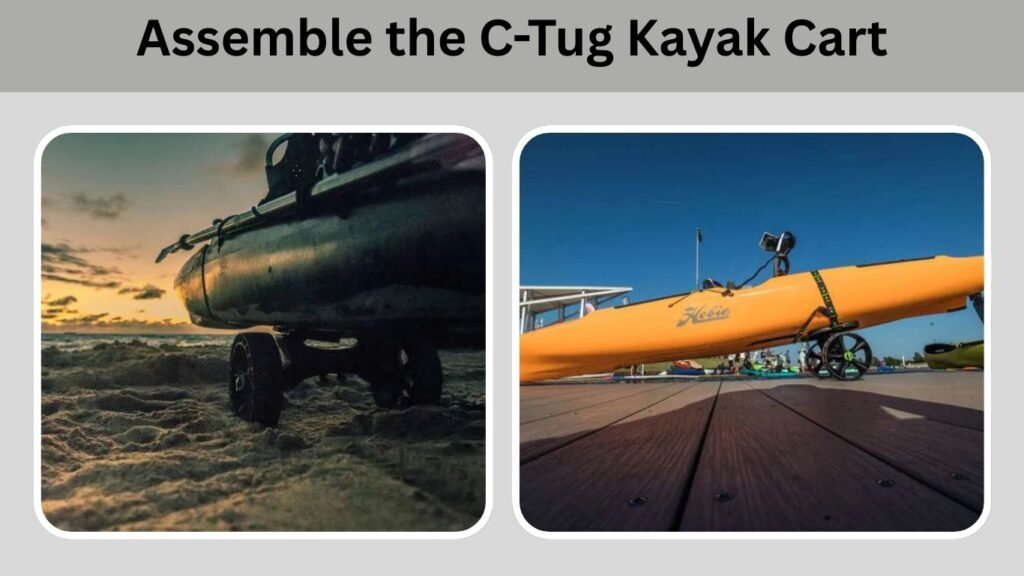
The C-Tug Kayak Cart is designed for tool-free, quick assembly that even first-time users can manage in minutes. Its modular parts lock firmly together, ensuring stability during transport, and can be taken apart just as easily for storage. Here’s a detailed step-by-step guide.
Step-by-Step Assembly Guide
- Unpack and Arrange Parts
Lay out all the components: two hull pads/frame halves, central axle, two puncture-free wheels, kickstand, and straps. Make sure everything is clean and free from debris before starting. - Join the Frame Halves
Align the two hull pad sections so their connection joints face each other. Firmly push them together until you hear a “click,” indicating they’re securely locked. - Engage the Kickstand
Flip the kickstand downward so the cart stands upright. This will keep it stable while you attach other parts and load your kayak later. - Insert the Axle
Slide the stainless-steel axle through the central channel of the frame. Ensure it protrudes evenly on both sides to keep weight distribution balanced. - Attach the Wheels
Take one wheel, align it with the axle end, and push it in until the locking tab clicks into place. Repeat for the second wheel. Tug lightly on each wheel to confirm they’re fully seated. - Adjust the Hull Pads
Rotate or shift the padded surfaces to match your kayak’s hull shape—whether it’s V-shaped, rounded, or flat—so the kayak sits securely. - Position the Cart Under the Kayak
Place the cart slightly behind the kayak’s midpoint, ideally under the stern’s balance point. This placement ensures smooth rolling and reduces the strain on your arms when pulling. - Load the Kayak
Lift the stern and gently set it onto the cart’s pads, keeping the keel centered over the axle for stability. - Secure the Straps
Thread the strap under the frame bar on one side, pull it over the kayak, and loop it under the opposite frame bar. Tighten the strap so it holds the kayak firmly in place.
- For narrow hulls or uneven terrain, cross the straps in an “X” pattern to prevent lateral movement.
- For narrow hulls or uneven terrain, cross the straps in an “X” pattern to prevent lateral movement.
- Final Stability Check
Rock the kayak gently from side to side. If there’s any movement, re-tighten the straps before moving. - Ready to Roll
Fold the kickstand upward, grab the kayak’s bow handle, and begin rolling toward your launch site, taking it slow at first to ensure the cart is stable.
Disassembly for Storage
Taking apart the C-Tug Kayak Cart after use is quick and straightforward, allowing it to fit neatly inside most kayak hatches or a storage bag. Start by setting the kickstand down so the cart remains stable, then loosen and remove the straps before lifting your kayak away. Next, press the quick-release tabs on each wheel to detach them from the axle, and slide the axle completely out of the frame.
Separate the two hull pad sections by pressing the locking lugs and pulling them apart. Roll up the straps neatly to avoid tangles, and if the cart was used in sand or saltwater, rinse every part with fresh water before drying. Once dry, pack all components together for safe storage until your next trip.
Performance in Real-World Conditions
The C-Tug Kayak Cart is built to handle a variety of environments, making it a dependable option for paddlers who launch from different types of terrain. Its design ensures stability, smooth movement, and minimal effort, even when carrying heavy, fully loaded kayaks.
- On Sand: The wide, puncture-free wheels reduce drag and roll more smoothly than narrow wheels, especially on firm or damp sand. In very soft sand, pulling at a steady pace rather than pushing prevents sinking.
- On Gravel & Rocky Paths: The treaded wheels grip well, preventing slippage, while the composite frame absorbs minor bumps, keeping the kayak steady.
- On Grass & Dirt Trails: The cart moves quietly and with minimal resistance, even when the ground is uneven.
- On Pavement & Hard Surfaces: Rolling is effortless, requiring less pulling force, and the wheels show minimal wear even after repeated trips.
Pros and Cons
Pros
- Durable composite construction that won’t rust or corrode
- High weight capacity suitable for heavy fishing and touring kayaks
- Puncture-free wheels that handle multiple terrains
- Quick, tool-free assembly and disassembly
- Compact and lightweight for easy storage in kayak hatches
- UV-resistant materials for long-term outdoor use
- Secure strap system for stability during transport
Cons
- Higher price compared to budget kayak carts
- Straps may loosen slightly if not tightened correctly
- Soft sand performance, while good, still requires steady pulling effort
Maintenance & Longevity Tips
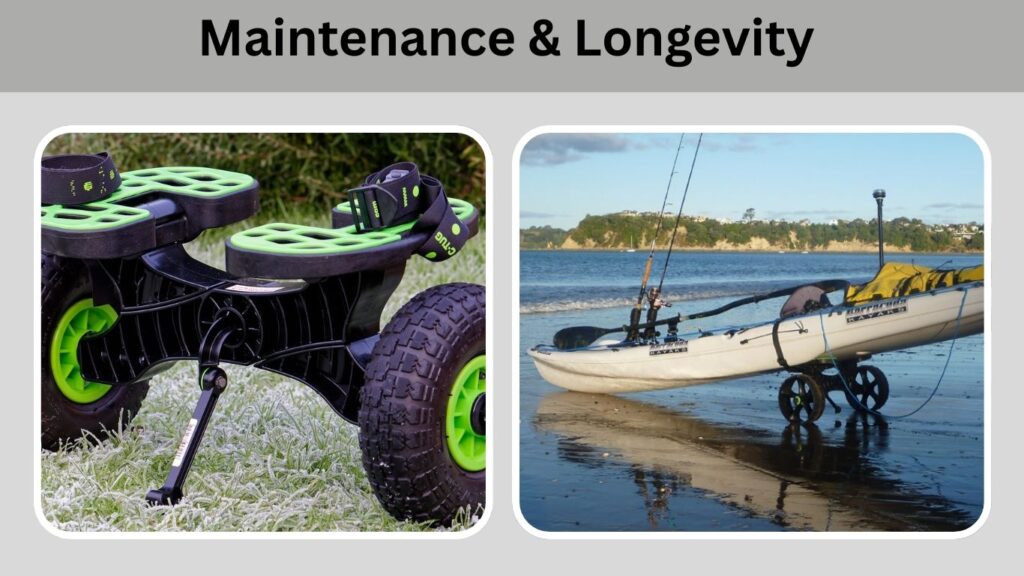
With proper care, the C-Tug Kayak Cart can last for many years, even with frequent use in challenging environments. Following a few maintenance practices will help preserve its performance and appearance.
- Rinse After Saltwater Use: Salt can build up on the axle and wheel components, so rinsing with fresh water after every trip prevents corrosion and wear.
- Inspect Straps Regularly: Check for fraying, looseness, or damage, and replace straps if they no longer hold tension securely.
- Check Wheel Locks: Make sure the wheel locking tabs engage properly before every use to avoid accidental detachment during transport.
- Clean Sand and Debris: Remove grit from the axle and frame joints to keep assembly smooth and prevent premature wear.
- Store in a Cool, Dry Place: Keeping the cart out of prolonged sun exposure when not in use will extend the life of the UV-resistant materials.
- Replace Worn Parts Promptly: The C-Tug has replaceable components, so swapping out worn wheels or straps can restore like-new performance without replacing the entire cart.
Best Use Cases
The C-Tug Kayak Cart is versatile enough to suit different paddling situations, making it a valuable tool for a wide range of water sports enthusiasts. It excels when convenience, durability, and terrain adaptability are top priorities.
Solo Paddlers: Ideal for those who need to transport a kayak without help, thanks to its easy rolling and lightweight design.
Kayak Fishing Trips: Handles the extra weight of fishing gear, coolers, and tackle boxes without strain.
Touring & Expedition Paddling: Perfect for long-distance trips where multiple portages are required, reducing fatigue between launches.
Coastal Adventures: With its non-corroding frame, it’s reliable for saltwater launches from beaches or rocky shores.
FAQs
Inland Waterways: Works equally well on lakes, rivers, and reservoirs where terrain may vary from grass to gravel.
How much weight can the C-Tug Kayak Cart hold?
The C-Tug can carry up to 260 lbs (120 kg), making it suitable for most fishing and touring kayaks, even when fully loaded with gear.
Can the C-Tug be used for canoes or SUP boards?
Yes. While it’s designed for kayaks, its adjustable hull pads and straps make it compatible with canoes and some stand-up paddleboards.
Does it work on soft sand?
It performs well on firm or damp sand, but in very soft sand, pulling at a steady pace works better than pushing to prevent the wheels from sinking.
How do I replace the wheels?
Wheel replacement is simple—press the quick-release tab on each wheel, slide it off the axle, and snap the new wheel into place until it clicks.
Is it worth the price compared to cheaper options?
Yes, if you paddle frequently. Its durability, ease of use, and multi-terrain capability often outweigh the initial cost, especially for long-term use.