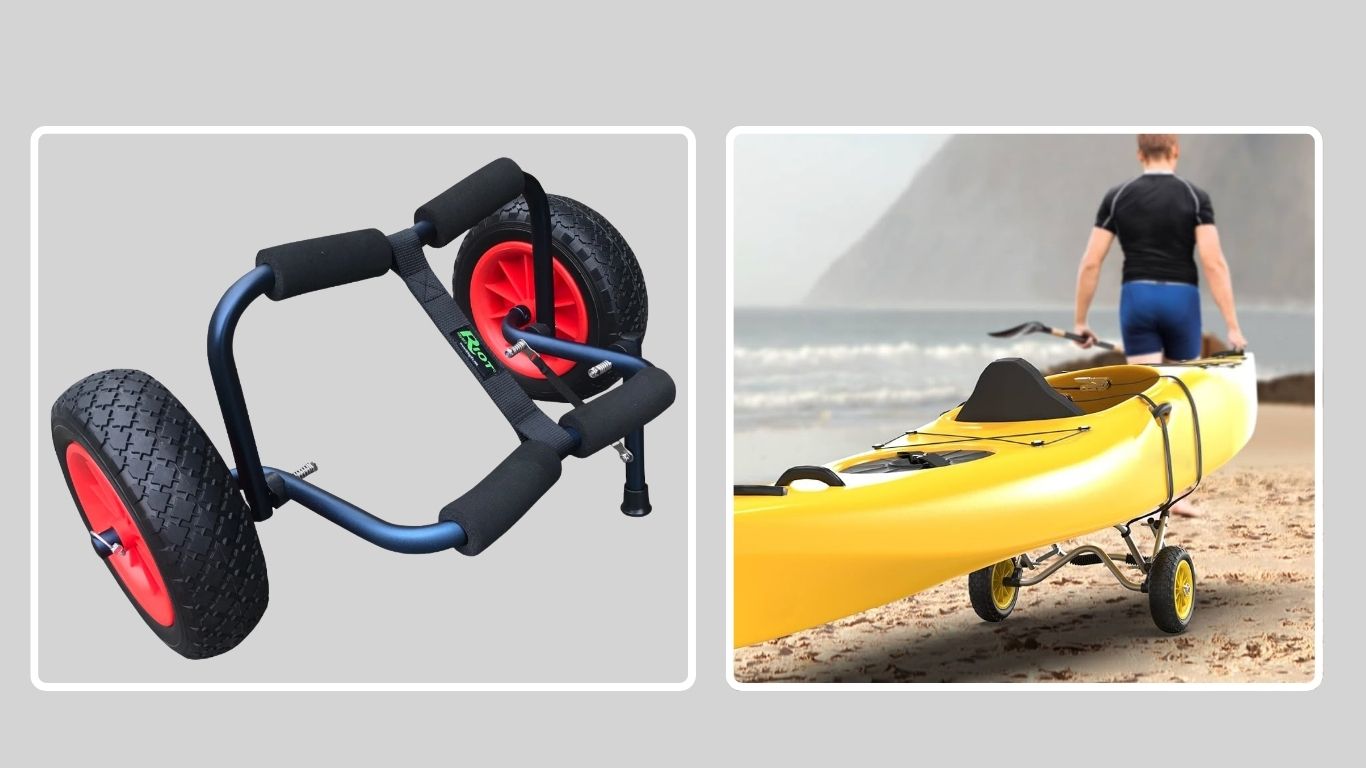
Whether you’re heading to a calm lake or a rugged coastal spot, one challenge every kayaker eventually faces is how to move their kayak from the car to the water. If you’ve ever dragged your kayak across gravel, mud, or sand, you know it’s no fun—and it can damage both your gear and your back.
That’s where a kayak cart comes in. These simple but essential accessories let you roll your kayak over all kinds of terrain, saving time, energy, and frustration. But choosing the right one isn’t just about buying the most expensive cart on the shelf. It’s about understanding your kayak, your route, and the features that matter most.
In this guide, we’ll help you confidently choose the perfect kayak cart for your needs.
Understand the Two Main Types of Kayak Carts
Before getting into specs and wheels, you need to know the basic styles of kayak carts available:
1. Plug-in (Scupper) Carts
These are designed specifically for sit-on-top kayaks. The cart’s arms fit directly into the scupper holes (drainage holes on the bottom of the kayak), creating a snug and secure fit.
Pros:
- Quick setup
- Minimal straps required
- Stable fit for compatible kayaks
Cons:
- Only compatible with kayaks that have scupper holes
- Improper use can crack the plastic around scupper holes
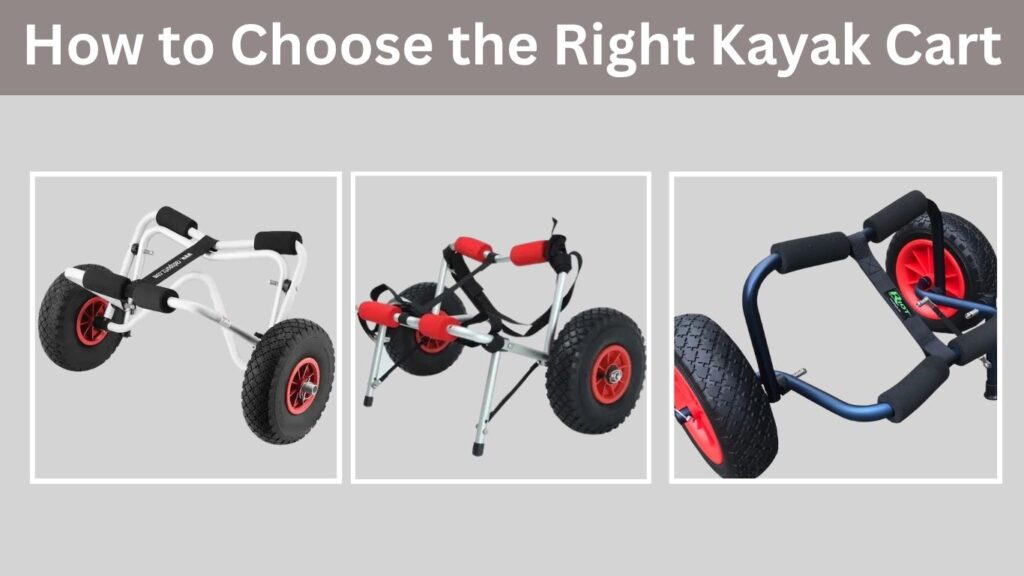
2. Strap-Style (Platform) Carts
These carts cradle the kayak’s hull and use straps to secure it. They’re versatile and work with nearly every kayak type, including sit-in and specialty designs.
Pros:
- Universal fit
- Adjustable for different kayak sizes
- No risk to scupper holes
Cons:
- Requires setup and tightening
- May shift slightly if not secured tightly
Key Features to Look For in a Kayak Cart
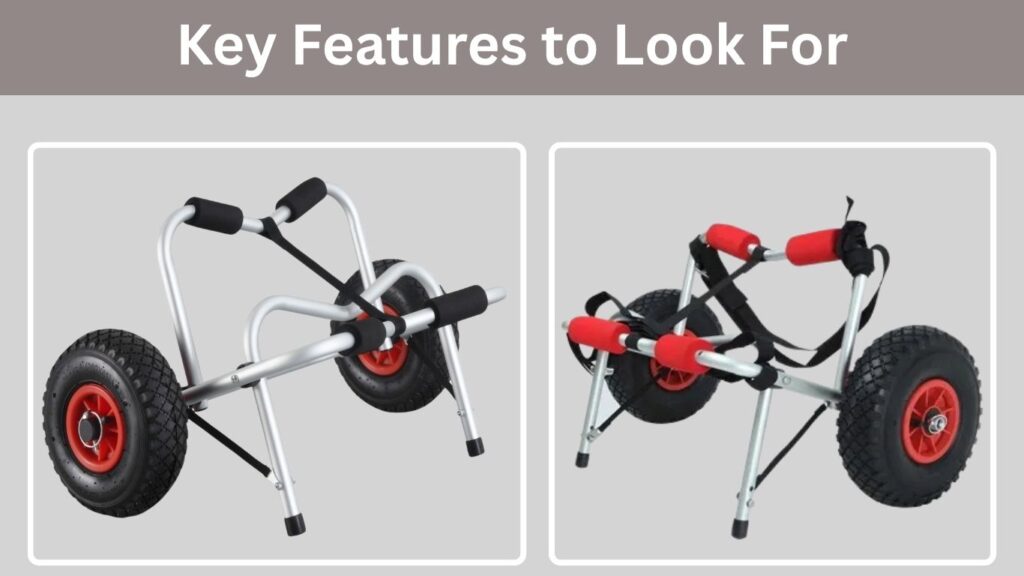
Not all kayak carts are created equal. Here’s what you need to consider before choosing:
1. Wheel Type
The wheels make all the difference, depending on where you plan to roll your kayak.
- Hard Plastic Wheels – Good for smooth pavement or docks.
- Pneumatic (Air-Filled) Wheels – Excellent for sand, mud, or rocky paths. They absorb shock and glide over soft surfaces.
- Foam-Filled (Never-Flat) Wheels – Best for mixed-use conditions. No air needed, and they won’t puncture.
2. Frame Material
- Aluminum: Lightweight, rust-resistant, and ideal for saltwater environments.
- Steel: Durable and strong, but can rust if not coated or maintained.
- Plastic or Polymer: Lightweight and rust-proof, but may not be as durable over time.
3. Weight Capacity
Add the total weight of your kayak plus any gear inside it. Choose a cart rated at least 20–30% higher than that total to ensure long-lasting performance.
Example:
- Kayak weight: 70 lbs
- Gear: 20 lbs
- Choose a cart rated at 100 lbs or more
4. Portability & Storage
Some carts fold down for easy storage in your kayak or car. Look for:
- Removable wheels
- Foldable frame
- Lightweight build
Step-by-Step Guide: How to Choose the Right Kayak Cart
Step 1: Know Your Kayak Type
Start by checking whether you have a sit-on-top or sit-in kayak. Sit-on-top models with scupper holes can use plug-in carts. All others will need strap-style carts.
Pro Tip: Always measure the distance between your scupper holes if using a plug-in cart. Not all models are universal.
Step 2: Consider Your Launch Location
Think about where you’ll be rolling your kayak most often.
Beach launches → Use wide pneumatic tires.
Rough trails → Foam-filled or rugged tread wheels are best.
Smooth parking lots or ramps → Hard plastic wheels will work fine.
Step 3: Estimate Your Load
Include kayak weight, gear, tackle boxes, coolers, or anything else inside the boat when rolling.
Don’t skimp on load rating. Overloading will wear out the cart quickly and may damage your kayak.
Step 4: Choose the Right Frame and Build Quality
For long-term use:
- Go with aluminum if you’ll be near saltwater.
- Steel is fine if you’re mostly in freshwater or on short trails.
- Make sure the frame has foam padding or rubber grips to protect your hull.
Step 5: Check for Storage & Ease of Use
If you plan to carry the cart in your kayak during the trip:
- Look for a foldable model with quick-release wheels.
- Some models even store inside hatches or under deck rigging.
Comparison Table: Plug-in vs Strap-style Kayak Carts
| Feature | Plug-in Cart (Scupper) | Strap-style Cart |
| Fits Scupper Holes | Yes | No |
| Universal Fit | Limited | Yes |
| Ease of Setup | Quick | Moderate |
| Terrain Versatility | Medium | High |
| Ideal for Sit-in Kayaks | No | Yes |
| Best for Beach Use | Depends on wheels | With pneumatic wheels |
Real-World Tips for a Smooth Haul
Here are some quick tips from seasoned paddlers:
- Don’t overload: Even if your cart says it can carry 150 lbs, it’s best to stay well below that for long hauls.
- Secure your kayak tightly with straps—especially on rough ground.
- Use padding on contact points to avoid hull dents or scratches.
- Rinse wheels and frame with freshwater after each trip to remove sand, salt, and grime.
- Test before your first real trip: Roll it in your backyard or driveway to get familiar with setup and balance.
FAQs
Do I need a kayak cart if I paddle short distances?
If your launch site is just a few steps from your vehicle and you have a lightweight kayak, you might not need a cart. However, for longer distances, rough terrain, or heavier kayaks, a cart can save your back and reduce wear on your kayak’s hull. Even short trips can feel long when you’re carrying extra gear.
Can I use any kayak cart on the beach?
Not all kayak carts perform well on sandy terrain. For beaches, it’s essential to choose a cart with wide pneumatic (air-filled) tires that won’t sink into soft sand. Standard plastic or narrow wheels often dig in and make transport much harder. Some carts are designed specifically for beach use, so check the product description before purchasing.
Will a strap-style cart damage my kayak hull?
No, a strap-style cart is safe for your kayak as long as it’s used correctly. Make sure the cart’s contact points are padded with foam or rubber, and the straps are snug but not overly tight. Avoid dragging the cart over sharp rocks or uneven surfaces while loaded, which could cause dents or pressure marks on softer hulls.
What’s the best kayak cart for a tandem kayak?
Tandem kayaks are heavier and longer, so you’ll need a high-capacity cart—ideally one rated for 150 lbs or more. Look for a cart with a wider base and adjustable platform to handle the kayak’s size and weight evenly. Pneumatic tires are also helpful for absorbing the extra load on rough or uneven trails.
Can I store my kayak cart inside the kayak while paddling?
Yes, many modern kayak carts are made to be portable and easy to store. Folding frames and removable wheels allow them to collapse down into a compact size that fits inside large dry hatches or storage compartments. If internal space is limited, you can strap the cart securely onto the deck using bungee cords.
Some kayakers break down the cart and store the pieces in bow or stern hatches. Others prefer deck storage, especially if quick access is needed at landing points. Just ensure the cart is well-secured to avoid movement while paddling. When buying a cart, look for terms like “collapsible,” “quick-release wheels,” or “deck storage compatible” to ensure it fits your needs.
Final Thoughts
A kayak cart might not seem like the most exciting accessory, but it can be the difference between an easy trip and a frustrating one. Whether you’re solo paddling to a quiet cove or gearing up for a long day of fishing, the right cart helps you get there with less effort and less risk of damage.