Whether you’re gliding across a calm lake or battling coastal winds, one overlooked accessory can save your trip—a paddle leash. I learned this firsthand during a windy fishing trip when my paddle drifted off, leaving me to paddle back with my hands. A good leash keeps your paddle secure and within reach. In this guide, I’ll share key types, buying tips, and what’s worked best for me on the water.
What is a Paddle Leash?
A paddle leash is a cord or strap that connects your kayak paddle to your boat, preventing it from floating away if dropped or knocked loose.
Primary Purpose and Use Cases
Its main job is to protect your paddle from being lost in the water—especially helpful in rough conditions, during fishing, or when taking breaks.
- Useful during windy conditions or waves
- Crucial when multitasking (e.g., fishing, photography)
- Ideal for beginners and solo paddlers
Who Needs It Most?
Not every paddler uses a leash, but for certain activities, it’s a must:
- Kayak anglers who need to put down their paddle frequently
- Touring paddlers covering long distances
- Beginners who are more likely to drop their paddles
- Photographers or explorers using both hands while on the water
Types of Paddle Leashes
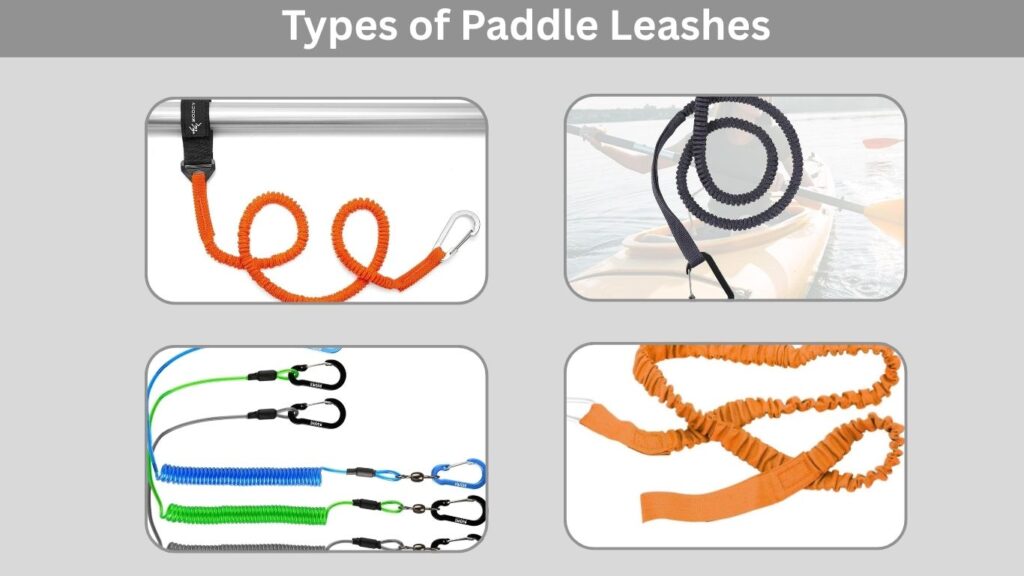
There’s no one-size-fits-all paddle leash. Different types are designed for different environments and user preferences. Some prioritize flexibility and stretch, while others are built for durability or ease of use. Understanding the common types will help you pick the one that matches your kayaking needs best.
Coiled Paddle Leash
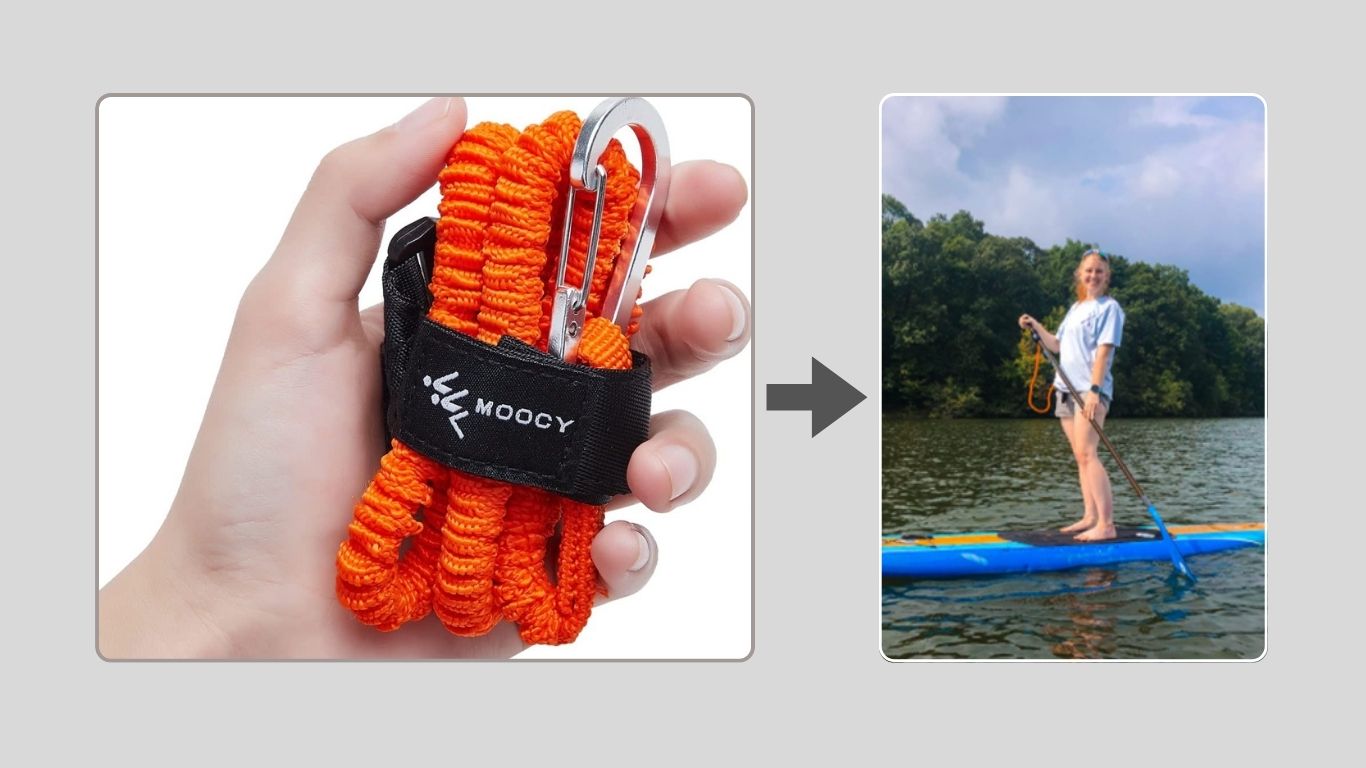
This type stretches as needed and coils back to stay compact when not under tension. It’s popular among paddlers who want to keep the leash out of the way while still having flexibility. The coil design reduces drag and prevents tangling, making it ideal for recreational and touring kayaks.
Straight Bungee Leash
Straight bungee leashes don’t have coils, so they remain extended at all times. They offer strong elasticity and are simple to use, but they might dangle or get caught more easily. These are often chosen by budget-conscious kayakers or those who prefer a basic, straightforward setup.
Retractable Paddle Leash
This style works much like a retractable dog leash, automatically adjusting to the length needed. It’s a premium option that gives you a clean, hassle-free experience, though it comes at a higher cost. It’s a favorite among serious paddlers who want gear that stays out of the way but still works reliably.
DIY Paddle Leash
For those who enjoy crafting their own gear or need a temporary solution, DIY paddle leashes made from paracord or elastic rope can be effective. While they might lack the polish of commercial versions, they can be surprisingly durable and tailored to personal needs.
Key Features to Look For
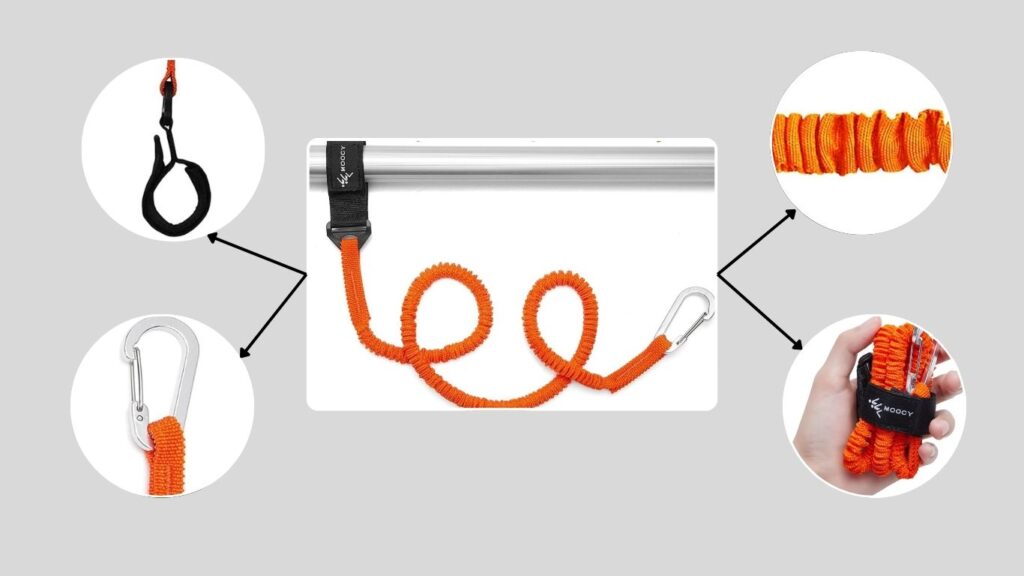
Choosing the right paddle leash isn’t just about the type—it’s also about the features that make it durable, functional, and safe. Here are the most important features to consider before buying:
Material Quality: Look for high-grade materials like marine-grade bungee cords or reinforced nylon. These resist saltwater corrosion and UV damage, lasting longer even with regular use.
Length and Stretchability: A good paddle leash should stretch far enough to allow full paddle movement but retract to avoid getting in your way. Too short can feel restrictive; too long can drag in the water.
Clip Quality: Check the clip or carabiner that attaches the leash to your kayak or paddle. Metal clips are strong but should be rust-resistant. Plastic ones are lightweight but can break under pressure.
Swivel Mechanism: Some leashes come with a swivel that prevents twisting and tangling as you move your paddle. This feature adds comfort and reduces wear and tear over time.
Comfort and Non-interference: You don’t want a leash that’s constantly in your way. Choose one that’s lightweight and flexible enough to move naturally with your paddle stroke.
Where to Attach a Paddle Leash
A paddle leash is only as effective as where and how you attach it. Many beginners get this wrong, leading to tangled cords or even lost paddles. The goal is to keep it secure without interfering with your movement or safety. Here’s how to do it properly.
Kayak Paddle Shaft
One common method is attaching the leash directly to the paddle shaft using Velcro straps or a loop. This keeps it simple and allows flexibility, but make sure the strap is tight enough so it doesn’t slide around during paddling.
Kayak D-ring or Seat Frame
You’ll need a strong anchor point on your kayak to secure the other end of the leash. Many kayaks come with built-in D-rings or rigging points near the seat. If not, you can add a D-ring with adhesive or screws. The seat frame is another option—just ensure the leash doesn’t cross over your lap and limit movement.
Safety Tips on Placement
Avoid attaching the leash near your legs where it can tangle or create a tripping hazard. Always do a dry test before heading out—sit in your kayak and simulate paddling to check if the leash stays out of the way and doesn’t pull on the paddle.
Paddle Leash vs. Paddle Tether — What’s the Difference?
Many paddlers confuse paddle leashes with paddle tethers, but they serve different purposes. While both help secure gear, their designs, functions, and ideal uses vary. Understanding the distinction can help you make a smarter gear choice for your kayaking adventures.
| Feature | Paddle Leash | Paddle Tether |
| Primary Use | Keeps paddle connected to kayak | Secures paddle to a fixed point (like deck) |
| Design | Coiled, straight, or retractable cord | Usually straight, shorter, less flexible |
| Flexibility | High – allows full paddle movement | Limited – mostly used when paddle isn’t in use |
| Best For | Active paddling, fishing, touring | Parking paddle temporarily or during transport |
| Movement Range | Expands and retracts easily | Fixed or limited movement |
| User Preference | Ideal for hands-free paddling | Better for backup security |
Common Mistakes to Avoid
Even with the right paddle leash, improper use can lead to frustration—or worse, losing your paddle. Many new paddlers make simple but costly mistakes when setting up or using their leash. Here are some of the most common issues to watch out for and how to avoid them.
Using Cheap Clips
Low-quality clips can snap under pressure or corrode quickly in saltwater. Always invest in rust-resistant, marine-grade clips or carabiners that can handle constant exposure to the elements.
Wrong Length Selection
A leash that’s too short can restrict your paddle strokes, while one that’s too long may drag in the water or tangle around your gear. Choose a length that allows full movement but retracts cleanly when not in use.
Letting It Drag in Water
A dragging leash creates drag and can snag on submerged objects, potentially tipping your kayak. Make sure the leash is coiled or retractable, or keep the slack managed if using a straight one.
Ignoring Safety Factors
Don’t attach the leash near your feet or where it could tangle during an emergency. Also, avoid wrapping it around your wrist or paddle shaft in a way that could trap you if you capsize.
FAQs
Can I kayak without a paddle leash?
Yes, but it’s risky—especially in windy or fast-moving water. A leash gives you peace of mind knowing your paddle won’t float away if dropped.
Do paddle leashes interfere with paddling?
Not if chosen and attached correctly. A well-sized, coiled leash with a smooth swivel will stay out of the way and move naturally with your paddle strokes.
Can I use a paddle leash for other gear?
Yes, many paddlers use them to secure fishing rods, dry bags, or landing nets. Just ensure the weight and tension are appropriate for the gear you’re attaching.
How long should a paddle leash be?
Most are between 3 to 6 feet when unstretched. For regular paddling, a leash that stretches up to 6 feet is ideal—it allows full range without excessive slack.
Are paddle leashes suitable for whitewater kayaking?
Not usually. In whitewater, they can become a hazard if they get caught or tangle in rapids. Whitewater kayakers generally avoid using them for safety reasons.