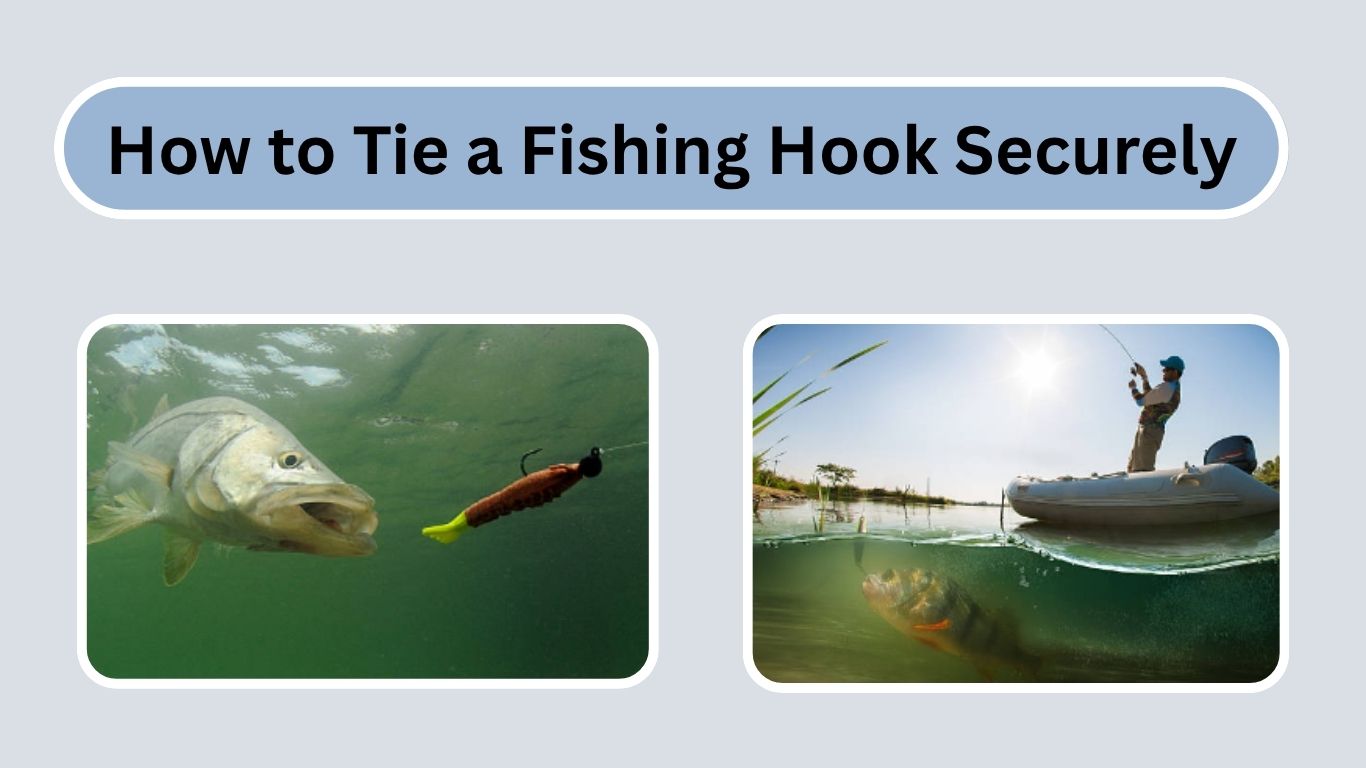
Fishing is a fun and relaxing hobby that many people enjoy. Whether you fish in a river, lake, or the open sea, one skill is very important: tying your fishing hook securely. It might seem simple, but a strong knot can make the difference between catching a fish and losing it. If your knot is weak or tied the wrong way, your hook can slip off when a fish bites, and you might lose the big catch you were hoping for.
In this guide, we’ll explain why tying a hook correctly is so important, show you some of the best knots for anglers, and give you step-by-step instructions to master them. Everything is explained in easy words so beginners can follow along without confusion.
Why Does Tying a Hook Securely Matter?
When you go fishing, your line, hook, and bait face a lot of pressure. Imagine this: a big fish grabs your bait and starts pulling hard. If your knot is loose, the line will slip out of the hook’s eye, and the fish will escape. This can be frustrating, especially if you’ve waited for hours to get that bite.
Here are a few reasons why tying a strong knot is important:
- Prevents losing fish – A secure knot keeps the hook in place even when a fish pulls hard.
- Saves time – A good knot means you don’t have to keep retying hooks during your trip.
- Protects your line – If tied correctly, the knot won’t damage the line. Poor knots can weaken the line and make it snap easily.
- Improves your chances of success – When your knot is strong, you can focus on catching fish instead of worrying about gear problems.
Tools You Need Before You Start
Tying a hook doesn’t require many tools, but here are a few basic items that make the process easier:
- Fishing line – Choose the right line for the type of fishing you’re doing.
- Hook – Different hooks for different fish, but the knot-tying steps are similar.
- Scissors or nail clippers – To cut the extra line after tying the knot.
- Optional: Knot-tying tool – This tool helps beginners tie knots faster.
Best Knots for Tying a Fishing Hook
There are many knots anglers use, but you don’t need to learn them all at once. Here are some of the most common and easiest knots to start with:
- Improved Clinch Knot – Best for beginners, easy and strong.
- Palomar Knot – Very strong, great for braided and monofilament lines.
- Snell Knot – Perfect for circle hooks and when you want extra strength.
- Loop Knot – Gives your bait or lure more movement in the water.
Let’s go through each one step by step.
1. The Improved Clinch Knot
This is one of the most popular fishing knots because it’s simple and strong. Many anglers use it for all kinds of fish.
How to Tie the Improved Clinch Knot:
- Pass the end of the line through the eye of the hook.
- Wrap the short end around the main line 5 to 7 times.
- Pass the short end through the small loop near the hook eye.
- Then pass it through the big loop you just created.
- Wet the line with water or saliva and pull both ends to tighten.
- Trim the extra line.
When to Use It:
- Great for most freshwater and saltwater fishing.
- Works well with light to medium lines.
2. The Palomar Knot
The Palomar Knot is known for its strength. It’s quick to tie and works well with braided lines, which can be slippery.
How to Tie the Palomar Knot:
- Double about 6 inches of line and pass it through the hook eye.
- Tie a loose overhand knot with the doubled line.
- Pass the hook through the big loop you just made.
- Wet the line and pull both ends to tighten the knot.
- Trim the extra line.
When to Use It:
- Great for big fish because it’s strong.
- Best with braided and monofilament lines.
3. The Snell Knot
The Snell Knot is very strong because it attaches the hook to the line without bending it. It’s often used for circle hooks.
How to Tie the Snell Knot:
- Pass the line through the hook eye from the point side.
- Make a loop with the short end next to the hook shank.
- Wrap the short end around the hook shank and the line 6–8 times.
- Pull the main line to tighten everything.
- Trim the extra line.
When to Use It:
- Perfect for big fish.
- Works well with live bait rigs.
4. The Loop Knot
The Loop Knot is useful when you want your lure or bait to move freely. It creates a small loop instead of a tight knot.
How to Tie the Loop Knot:
- Make an overhand knot about 10 inches from the end of the line.
- Pass the short end through the hook eye.
- Bring the short end back through the overhand knot.
- Wrap the short end around the main line 4 times.
- Put the short end back through the overhand knot loop.
- Tighten the knot and trim the extra line.
When to Use It:
- Great for artificial lures.
- Useful when fishing for active fish that chase moving baits.
Tips for Strong Knots
- Always wet the knot before tightening. This reduces friction and makes the line stronger.
- Pull the knot slowly and evenly to avoid damaging the line.
- Don’t use too few wraps; 5–7 turns are best for most knots.
- Trim the extra line but leave a small tag end (about 1/8 inch).
Common Mistakes to Avoid
- Not wetting the knot – Dry knots can weaken the line.
- Overlapping wraps – The coils should be neat, not crossing each other.
- Using the wrong knot for the line type – Some knots work better with braided lines than monofilament.
- Pulling too hard at once – Tighten slowly to avoid breaking the line.
Practice Makes Perfect
If you’re new to fishing, practice at home before your trip. Use an old hook and some extra line to tie knots repeatedly until you feel comfortable. Start with the Improved Clinch Knot and then try others. The more you practice, the faster and better you’ll get.
Extra Tips for Different Fishing Situations
- Saltwater Fishing – Use stronger knots like the Palomar or Snell for big fish.
- Freshwater Fishing – The Improved Clinch Knot works well for most species.
- Big Fish – Use double-line knots or a Snell for extra strength.
- Lure Fishing – Use a Loop Knot for better lure action.
Final Thoughts
Tying a fishing hook securely is the foundation of successful fishing. Even with the best gear, a weak knot can cost you a big catch. Start with easy knots like the Improved Clinch Knot, then move on to stronger ones such as the Palomar or Snell Knot for bigger fish.
Practice at home before your trip to make knot-tying quick and reliable. Always wet the line before tightening and check your knot before casting. A strong knot means confidence on the water, more fish, and less frustration. Take the time to learn and practice, it’s a small effort for a big reward. Happy fishing!