The Jeep Gladiator is built for adventure, and if you love kayaking, adding a reliable kayak rack makes your trips easier and safer. Whether you’re heading to a lake for a relaxing paddle or to the ocean for fishing, a proper rack ensures your kayak is secure, protected, and easy to transport. In this guide, we’ll explore the best kayak rack options for the Jeep Gladiator, how to install them, tips for safe use, and everything you need to know before choosing one.
Why Kayak Racks Matter for Jeep Gladiator Owners
If you own a Jeep Gladiator and enjoy kayaking, a kayak rack is more than just an accessory; it’s a must-have. Without a proper rack, transporting a kayak can be risky. Strapping it directly to the roof or bed without support may lead to scratches, dents, or even damage to your kayak. A rack provides the stability needed to keep your kayak in place while driving, even on rough trails or highways.
Another reason kayak racks matter is safety. A loose or shifting kayak can distract you while driving or even become dangerous to others on the road. By using a well-designed rack, you ensure the kayak stays firmly secured throughout the journey.
Racks also add convenience. Loading and unloading become quicker, allowing you to spend less time struggling with gear and more time on the water. Plus, they help maximize space by keeping your truck bed free for other camping or fishing equipment.
Simply put, a kayak rack makes every trip smoother, safer, and more enjoyable, perfectly matching the adventurous spirit of the Jeep Gladiator.
Understanding the Jeep Gladiator’s Design for Racks
The Jeep Gladiator is unique because it combines the rugged off-road ability of a Jeep with the utility of a pickup truck. This design makes it an excellent vehicle for carrying outdoor gear, such as kayaks. To choose the right rack, it’s important to understand how the Gladiator is built.
The truck comes with a five-foot bed, which is shorter than the standard pickup bed. While this bed can carry camping gear, coolers, or fishing equipment, it’s not long enough to safely support a kayak without extra help. That’s where bed-mounted racks or over-the-bed systems come in handy.
The Gladiator’s roof structure also allows the installation of roof-mounted racks. This option works well if you want to keep the truck bed free for other items. However, the extra height can make loading heavier kayaks more challenging, especially for solo adventurers.
Another important factor is the weight capacity. The Gladiator is designed for hauling and towing, so it can handle the added load of kayaks and racks with ease. Still, it’s important to check the rack’s own weight limit and the kayak’s size to make sure everything fits securely.
Because of its versatile design, the Jeep Gladiator can support multiple rack styles, roof, bed, or hitch-mounted, giving owners the flexibility to choose based on their needs and lifestyle.
Types of Kayak Racks for Jeep Gladiator
One of the biggest advantages of owning a Jeep Gladiator is its ability to adapt to different adventures. Thanks to its rugged build and truck bed design, several types of kayak racks can fit this vehicle. Each type has its own strengths, weaknesses, and best-use scenarios. Before investing in one, it’s important to understand how each rack works, what it offers, and which option matches your kayaking lifestyle.
Roof-Mounted Kayak Racks
Roof-mounted kayak racks are a classic option for many vehicles, and the Jeep Gladiator is no exception. These racks attach directly to the roof of the cab, giving you a sturdy base to transport one or more kayaks while leaving the truck bed open for other gear.
Benefits:
- Keeps the truck bed free for camping, fishing, or biking equipment.
- Works well for shorter kayaks that don’t extend far beyond the cab.
- Compatible with different kayak cradles, including J-style carriers and stackers.
Challenges:
The main drawback is the height factor. The Gladiator already sits higher than most SUVs, and adding a kayak on top can make loading more difficult. Solo kayakers or shorter individuals may struggle to lift a heavy kayak overhead without help or a loading tool. Another thing to consider is clearance; parking garages, drive-thrus, or even low-hanging branches can become obstacles.
Best For:
Roof racks are ideal if you usually carry just one kayak or if you want to maximize bed space for other equipment. They’re also a good option for people who take occasional trips and don’t mind the extra lifting effort.
Bed-Mounted Kayak Racks
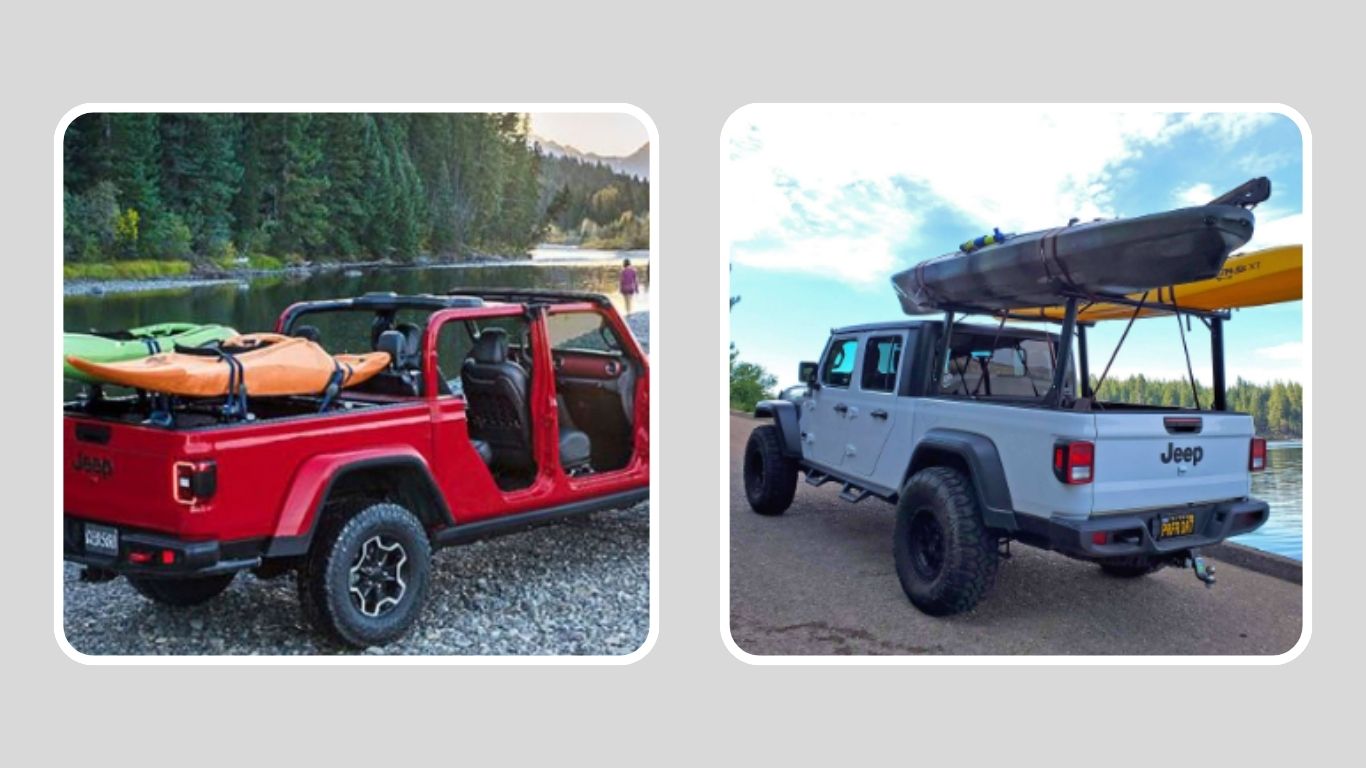
Bed-mounted racks are often the go-to choice for Jeep Gladiator owners because they combine strength, convenience, and flexibility. These racks mount directly over the truck bed, creating a raised platform that can support kayaks of different lengths. Many come with adjustable crossbars, so you can carry multiple kayaks or even mix in other gear like surfboards or rooftop tents.
Benefits:
- Much easier to load and unload compared to roof racks, since the kayak sits lower.
- Can carry heavier kayaks without straining your shoulders.
- Adjustable systems allow for multiple kayaks or mixed gear.
- Keeps kayaks stable even on bumpy off-road trails.
Challenges:
One trade-off is that some bed racks can block part of the truck bed’s usable space, especially if they have large support frames. Depending on the design, you might need to reorganize how you pack other equipment. Some models are also more expensive because of their heavy-duty construction.
Best For:
Anglers, campers, and frequent travelers who carry gear regularly will find bed-mounted racks to be the most practical and secure option. If you often take long trips or haul multiple kayaks, this setup will save you time and energy.
Hitch-Mounted Kayak Racks
Hitch-mounted racks attach to the Gladiator’s rear hitch receiver, making them an excellent choice for carrying extra-long kayaks. These racks often act as extenders, supporting the kayak from the back while the front rests on a roof rack or a bed rack.
Benefits:
- Easy installation, just slide it into the hitch and secure it.
- Ideal for long kayaks that don’t fit fully on the roof or bed.
- Great temporary option if you don’t always need a rack system.
- Easy to remove when not in use.
Challenges:
Hitch racks take up the towing hitch, so if you plan to pull a trailer, boat, or camper, you’ll need a different solution. They also extend the length of the Jeep, which means you’ll need to be extra careful when reversing or parking in tight spaces.
Best For:
Kayakers who own long touring or sea kayaks, or those who want a flexible, easy-to-remove rack option. It’s especially useful if you don’t want to commit to a full bed or roof system.
Inflatable and Portable Racks
Not everyone needs a permanent kayak rack system. For casual paddlers or those who take their kayak out just once in a while, inflatable or portable racks can be a budget-friendly solution. These racks usually use inflatable pads or foam blocks that sit on top of the roof, with straps securing the kayak in place.
Benefits:
- Affordable compared to permanent rack systems.
- Easy to install and remove, no tools required.
- Lightweight and compact, making them simple to store.
Challenges:
The biggest drawback is stability. Inflatable and portable racks don’t hold up well against strong winds, long highway drives, or rough terrain. They also offer less protection to the kayak and the vehicle. Over time, the straps and pads may wear down more quickly than solid rack systems.
Best For:
Occasional kayakers, renters, or those who want a simple setup without making permanent modifications to their Jeep Gladiator. They’re best suited for short, casual trips rather than long-distance adventures.
Each rack type brings something different to the table:
- Roof-mounted racks are perfect for single kayaks and freeing up bed space.
- Bed-mounted racks offer the most strength and convenience for regular users.
- Hitch-mounted racks are excellent for extra-long kayaks or flexible setups.
- Inflatable racks work as a temporary, budget-friendly solution for light use.
By understanding these differences, Jeep Gladiator owners can choose the rack type that matches their lifestyle, kayak size, and adventure plans.
Top Kayak Rack Options for Jeep Gladiator in 2025
With so many racks available, choosing the right one can feel overwhelming. To make things easier, here are some of the most reliable and popular kayak racks that fit perfectly with the Jeep Gladiator. These options cover a range of budgets, styles, and needs, so you can pick one that matches your adventures.
Yakima OverHaul HD
The Yakima OverHaul HD is one of the most popular heavy-duty bed-mounted racks for Jeep Gladiator owners. Designed with strength and versatility in mind, it can carry kayaks, bikes, surfboards, or even rooftop tents.
Key Features:
- Adjustable height for different load setups.
- Heavy-duty construction, capable of carrying up to 500 lbs on-road.
- Works with Yakima accessories for added customization.
- Strong tie-down points for kayaks of different lengths.
Pros:
- Extremely durable and versatile.
- Perfect for multi-sport adventurers.
- Adjustable height makes it easier to load.
Cons:
- On the expensive side.
- Installation takes some time.
Best For: Gladiator owners who want one rack system that can handle everything, from kayaks to camping gear, without compromise.
Thule Xsporter Pro
The Thule Xsporter Pro is another bed rack designed for strength and flexibility. Thule is known for its high-quality outdoor gear, and this rack lives up to the reputation.
Key Features:
- Adjustable height for easy loading.
- Aerodynamic design that reduces wind noise.
- Strong aluminum build for long-lasting durability.
- Compatible with Thule accessories for extra gear.
Pros:
- Sleek design reduces drag on the highway.
- Easy to adjust for different types of loads.
- High weight capacity supports multiple kayaks.
Cons:
- Premium price tag.
- May require extra accessories for certain kayak types.
Best For: Adventurers who value both style and function, and who frequently switch between hauling kayaks, bikes, or roof boxes.
Rhino-Rack T-Load Hitch Mount
For those who prefer a hitch-mounted option, the Rhino-Rack T-Load Hitch Mount is a favorite. It’s designed as a load assist and extension rack, which is especially helpful for long kayaks.
Key Features:
- Adjustable height to match the roof or bed racks.
- Easily mounts to the Gladiator’s hitch receiver.
- Built-in crossbar for stable kayak support.
- Foldable design for storage when not in use.
Pros:
- Great for transporting extra-long kayaks.
- Easy to install and remove.
- Helps reduce lifting strain during loading.
Cons:
- Occupies the towing hitch, limiting trailer use.
- Not as stable alone, works best when paired with another rack.
Best For: Kayakers with touring or sea kayaks who need additional support for long-distance trips.
Mopar Gladiator-Specific Racks
For those who prefer original equipment, Mopar offers kayak racks designed specifically for Jeep Gladiator models. Since these are OEM (original equipment manufacturer) parts, they fit perfectly without modifications.
Key Features:
- Custom-fit design for Jeep Gladiator.
- Factory-grade quality with Jeep branding.
- Works seamlessly with Gladiator’s bed and roof mounts.
- Backed by Jeep’s warranty.
Pros:
- Perfect fit with no guesswork.
- Designed to match Gladiator’s rugged style.
- Reliable and backed by Jeep support.
Cons:
- Limited customization compared to third-party brands.
- Often more expensive than aftermarket options.
Best For: Jeep loyalists who want a hassle-free, factory-fit solution.
Budget-Friendly Alternatives
Not everyone wants to spend top dollar on a premium rack system. Luckily, there are budget-friendly kayak racks that work well with the Gladiator while keeping costs down. Options like TMS Adjustable Utility Racks or Leader Accessories Kayak Racks provide solid performance for a fraction of the cost.
Key Features:
- Adjustable frames for different loads.
- Steel construction for strength.
- Basic design but functional for most kayaks.
Pros:
- Affordable price point.
- Easy to install and remove.
- Good option for occasional kayakers.
Cons:
- May lack the extra features of premium racks.
- Not as stylish or aerodynamic.
- Lower weight limits compared to high-end options.
Best For: Casual kayakers who want a reliable rack without breaking the bank.
Whether you’re looking for heavy-duty versatility (Yakima OverHaul HD, Thule Xsporter Pro), long kayak support (Rhino-Rack T-Load), a factory-fit solution (Mopar), or a budget-friendly choice, there’s a kayak rack option for every Jeep Gladiator owner. The right rack depends on how often you kayak, how much gear you carry, and how much convenience you want when loading and unloading.
Tips for Safely Loading and Transporting Kayaks
Once your Jeep Gladiator has the right rack installed, the next challenge is loading the kayak correctly and making sure it stays secure on the road. Proper loading is just as important as the rack itself. A poorly positioned kayak or loose strap can cause damage, distractions, or even dangerous accidents. The following steps will help you load, secure, and transport your kayak safely and confidently.
Step 1: Preparing Your Kayak Before Loading
Before lifting your kayak onto the rack, take a moment to prepare it. Empty out any loose gear such as paddles, life jackets, or fishing tackle. Not only will this make the kayak lighter to carry, but it also prevents items from shifting or flying out while driving. If your kayak is wet or sandy, give it a quick rinse to avoid scratching the vehicle or the rack’s padding. Preparing ahead of time makes the loading process smoother and safer.
Step 2: Positioning the Kayak Correctly on the Rack
How you position the kayak depends on the type of rack you’re using. On a roof rack, the kayak should be centered and balanced with equal weight on both sides of the vehicle. For bed-mounted racks, the kayak should rest evenly across the crossbars, with the bow (front) slightly forward to reduce wind drag. If you’re using a hitch-mounted rack, align the rear of the kayak so it extends only as far as necessary, keeping overhang within safe limits. Correct positioning prevents shifting and reduces strain on the rack system.
Step 3: Using Straps and Tie-Downs Securely
Once the kayak is in place, it’s time to secure it with straps. Use high-quality cam straps or ratchet straps designed for watercraft, as regular ropes may loosen during travel. Place the straps over the kayak and loop them through the rack’s tie-down points, then tighten them until snug. Avoid overtightening, as this could deform the kayak’s hull.
For added security, use bow and stern lines, which attach the front and rear of the kayak to your Jeep’s bumpers or tow hooks. They prevent forward and backward shifting, especially at highway speeds or in windy conditions. Double-check that all straps are flat against the kayak and not twisted, since twisted straps can vibrate and make loud noises during travel.
Step 4: Checking Weight Distribution
Even if your rack is secure, poor weight distribution can affect driving stability. Make sure the kayak is not leaning to one side or angled unevenly. If you’re carrying two kayaks, space them evenly on the rack with padding in between to prevent rubbing. Overloading one side of the Gladiator can cause handling issues, especially on turns or rough roads. Take a step back after strapping everything down to visually confirm the kayak is balanced and aligned with the Jeep.
Step 5: Road Safety Checks Before Driving
Before hitting the road, always perform a final inspection. Tug on the kayak from different sides to ensure it doesn’t shift. Check each strap and retighten if needed. If you’re traveling a long distance, it’s a good habit to stop after the first 15–20 minutes of driving to recheck the straps. Vibrations and wind pressure can sometimes loosen them slightly, and catching this early prevents problems later.
While driving, maintain moderate speeds, especially on highways or during windy conditions. Avoid sudden lane changes or sharp turns that could put extra stress on the rack system. Remember that roof-mounted kayaks increase vehicle height and hitch-mounted kayaks increase length, so be extra cautious when entering garages, parking lots, or tight spaces.
Bonus Tips for Easier Loading
- Use a loading assist tool: Products like rollers or lift systems help if you’re lifting solo.
- Get help for heavy kayaks: If your kayak is large or fishing-specific, it’s always easier and safer with two people.
- Protect your straps: Twisting straps slightly near the buckle can reduce highway “strap humming.”
- Plan: If you know you’ll be driving in heavy rain or wind, secure an extra strap for peace of mind.
Loading and transporting a kayak doesn’t have to be stressful. By preparing the kayak, positioning it correctly, securing it with quality straps, checking weight distribution, and performing safety checks, you’ll ensure every trip is smooth and worry-free. With these steps, your Jeep Gladiator and kayak rack will work together perfectly to carry you to your next adventure.
Additional Accessories for Kayak Racks
A kayak rack on its own can do the job, but with the right accessories, your setup becomes safer, more secure, and much easier to use. Accessories not only protect your kayak and Jeep but also save time during loading and unloading. Whether you’re a casual paddler or a serious adventurer, these extras can make a big difference.
Tie-Down Straps and Ratchets
The most essential accessory for any kayak rack is a good set of straps. Standard rope isn’t reliable for highway speeds, but cam straps or ratchet straps are designed to hold tight without slipping. Cam straps are often easier to use because they don’t risk overtightening, while ratchet straps provide extra strength for heavy or long kayaks. Investing in high-quality straps ensures your kayak stays firmly in place during the entire trip.
Tip: Always keep an extra set of straps in your Jeep. They can be a lifesaver if one breaks or if you need extra security for long drives.
Bow and Stern Tie-Downs
In addition to straps over the kayak, bow and stern tie-downs are highly recommended. These lines attach the front (bow) and back (stern) of the kayak to secure points on the Jeep, like tow hooks or bumpers. They keep the kayak from shifting forward or backward during sudden stops or strong winds. For highway travel, they add another layer of safety and stability.
Padding and Foam Blocks
Kayaks have delicate hulls that can scratch or warp if they’re pressed directly against hard metal. That’s where padding, foam blocks, or rubber protectors come in. Many racks include built-in padding, but extra foam can be added to crossbars or tie-down points to prevent wear over time. This is especially useful for composite kayaks or brightly colored plastic kayaks that show marks easily.
Locks and Security Systems
Your kayak and rack are valuable investments, and leaving them unattended can be risky. Locking straps or rack-specific lock systems help protect against theft. Many premium brands like Thule and Yakima offer lock cores that integrate with their racks. A simple cable lock can also be looped through the kayak and rack as a deterrent. Having a lock means you can stop for food or rest without worrying about your gear.
Ladder Extenders and Load Assist Tools
One of the biggest challenges with the Jeep Gladiator is its height. Getting a kayak on top of a roof-mounted rack can be tough, especially for solo paddlers. Ladder extenders, rollers, or lift-assist arms make this process easier. For example, some accessories slide out from the rack to act as a temporary support arm, so you can lift one side of the kayak at a time. Others use rollers that let you slide the kayak up and onto the rack without heavy lifting.
Factors to Consider Before Buying a Kayak Rack
Choosing the right kayak rack for your Jeep Gladiator is not just about picking the first one that fits. A good rack should match your lifestyle, the type of kayaks you use, and how you plan to transport them. Since a kayak rack is an investment that you’ll likely use for years, it’s worth taking the time to evaluate your options carefully. Below are the most important factors to keep in mind before making a purchase.
1. Type of Kayak You Own
Kayaks come in many different styles: fishing kayaks, touring kayaks, whitewater kayaks, tandem kayaks, and recreational kayaks. Each has a different size, weight, and shape, which directly affects which rack will work best.
- Fishing kayaks are often heavier and wider, requiring stronger racks with higher weight capacities.
- Touring and sea kayaks are long and slim, making bow and stern tie-downs essential for stability.
- Tandem kayaks need wider or dual rack systems to support their size.
- Recreational kayaks are lighter and shorter, so roof or bed racks are usually sufficient.
Knowing your kayak’s exact dimensions and weight is the first step toward choosing the right rack.
2. Number of Kayaks You Plan to Carry
Some Jeep Gladiator owners only transport one kayak, while others want to carry two or even more. Racks are designed with specific load limits, and while a single kayak can fit on most racks, carrying two requires additional planning.
- J-style racks often allow two kayaks to fit side by side.
- Stacker racks can hold multiple kayaks vertically, saving space.
- Bed racks may also allow for dual setups if you need to transport more than one.
If kayaking is a family activity, investing in a multi-kayak rack will save time and effort in the long run.
3. Rack Weight Capacity
Every rack system has a maximum weight capacity, and exceeding it can damage the rack, your kayak, or even your Jeep. Fishing kayaks can weigh 80–120 pounds, while lightweight recreational kayaks may be only 40–50 pounds. Always compare the rack’s load rating with your kayak’s weight and remember to account for additional accessories, like paddles or gear stored on the rack.
4. Jeep Gladiator Setup and Compatibility
The Jeep Gladiator’s unique design gives you multiple mounting options: roof, bed, or hitch. But not all racks are compatible with every trim or accessory.
- If you have a tonneau cover on the truck bed, some racks may not fit properly.
- Roof racks need strong crossbars that can handle both the kayak’s weight and highway wind resistance.
- Hitch-mounted racks require a compatible hitch receiver.
Always check the rack manufacturer’s compatibility guide to avoid surprises after purchase.
5. Ease of Loading and Unloading
The Gladiator sits higher than many sedans or SUVs, which makes lifting kayaks onto a roof rack challenging. If you often kayak alone, you’ll want a rack with load-assist features such as rollers, slide-out arms, or lower bed-mounted systems. These features may cost more but can prevent injuries and save time, especially when dealing with heavy kayaks.
6. Durability and Build Quality
A kayak rack will face rain, sun, wind, and road debris. Choosing a rack made from rust-resistant steel, powder-coated aluminum, or heavy-duty composites ensures it lasts longer. Look for weatherproof padding and UV-resistant straps, since cheaper materials can wear out quickly under tough outdoor conditions.
7. Security Features
Kayaks and racks are valuable, making theft prevention a priority. Some racks include locking mechanisms that secure the kayak to the rack and the rack to the Jeep. If theft is a concern, especially when parking in public areas, make sure your rack has integrated or optional locks.
8. Budget and Value
Kayak racks range from under $200 for basic setups to over $800 for premium systems with multiple features. While it’s tempting to go for the cheapest option, think about the long-term value. A higher-quality rack may last longer, protect your kayak better, and save money on potential repairs or replacements. Consider your budget, but also balance it with durability and convenience.
9. Frequency of Use
If you only kayak a few times a year, a portable rack or foam block system may be enough. But if kayaking is a weekly or monthly adventure, investing in a durable, permanent rack system will pay off in the long run. Frequent use also means ease of installation and removal should be a deciding factor.
10. Future Needs
Think about how your kayaking habits might change. You may only transport one kayak today, but what if you buy a second one later? Or what if you upgrade to a heavier fishing kayak? Choosing a rack that can adapt to future needs can save you from having to buy a new system later.
Buying a kayak rack for your Jeep Gladiator is more than just a purchase; it’s an investment in safe and enjoyable adventures. By considering your kayak type, number of boats, Gladiator setup, loading needs, durability, and budget, you’ll find the perfect rack that makes every trip smooth and worry-free. A little research upfront ensures you won’t regret your choice down the road.
Best Practices for Using Jeep Gladiator Kayak Racks
Once you’ve chosen the right kayak rack for your Jeep Gladiator, the next step is making sure you use it correctly. A rack does more than just hold your kayak; it protects your gear, your vehicle, and everyone on the road around you. Improper use can lead to damage, accidents, or even losing your kayak while driving. To keep your trips safe and stress-free, here are the best practices every Gladiator owner should follow when using a kayak rack.
1. Always Secure the Kayak Properly
It’s tempting to throw the kayak on the rack and tighten a couple of straps, but proper securing is essential. Use high-quality cam straps or ratchet straps designed for kayak transport. The kayak should not shift when you push or pull on it. Over-tightening can damage the hull, while under-tightening allows movement that can loosen the kayak’s mid-drive.
Pro tip: Always use bow and stern tie-downs in addition to side straps, especially when driving at highway speeds. This reduces wind stress and prevents front-to-back shifting.
2. Double-Check Before Driving
Before you hit the road, walk around your Jeep Gladiator and check the following:
- Are the straps tight but not crushing the kayak?
- Are bow and stern lines secured to strong points (like tow hooks or hitch loops)?
- Are loose strap ends tied off so they don’t flap in the wind?
- Does the kayak sit centered and balanced on the rack?
Taking two minutes for this quick inspection can prevent accidents and give you peace of mind.
3. Drive with Extra Caution
Driving with a kayak on your rack is different from driving without one. The added height and wind resistance can affect your speed, fuel economy, and handling.
- Avoid sudden braking or sharp turns. The kayak creates extra drag and weight that shifts momentum.
- Slow down on highways. Wind noise and pressure increase dramatically above 65 mph, which can loosen straps or stress the rack.
- Watch for low clearances. Parking garages, drive-thrus, and tree branches can be hazards with a roof-mounted kayak.
Think of your Jeep Gladiator as “taller and heavier” when carrying kayaks.
4. Protect Your Kayak from Damage
Kayaks can get scratched or dented during transport if not properly protected. Use padding on contact points, either built into the rack or added with foam blocks or pool noodles. Straps should never be twisted too tightly over delicate areas like seats or hatches. For longer trips, consider a kayak cover to shield against bugs, rocks, and UV rays.
5. Practice Loading and Unloading
Loading a kayak on a Jeep Gladiator can be challenging due to its height. If you kayak often, practice a routine that works best for you:
- Use a step stool or portable ladder for roof-mounted racks.
- Consider racks with load-assist systems like sliding arms or rollers.
- If loading alone, always lift with your legs, not your back, to avoid injury.
Practicing at home before your first big trip makes the process much smoother.
6. Perform Regular Rack Maintenance
A kayak rack is exposed to the elements, so regular care keeps it reliable. Every few months:
- Check bolts, nuts, and clamps for tightness.
- Inspect straps for fraying or wear.
- Look for rust, cracks, or bent parts.
- Lubricate moving joints if your rack has foldable arms.
Simple upkeep ensures your rack lasts for years without unexpected failures.
7. Remove the Rack When Not in Use
While some Jeep Gladiator owners leave their kayak racks on permanently, removing them when not in use has benefits. It reduces wind resistance, improves gas mileage, and prevents unnecessary wear. However, if you kayak frequently, leaving the rack on may be more convenient. Choose the option that matches your lifestyle.
8. Store Accessories Safely
Straps, tie-downs, and load-assist tools are small but essential. Store them in a dedicated bag or box in your truck bed or cab so you’re never caught without them. Wet straps should be dried before storage to prevent mold and weakening.
9. Be Mindful of Weather Conditions
Strong winds, heavy rain, or snow can make kayak transport riskier. If possible, avoid transporting kayaks in extreme conditions. Wind can create uplift forces on the kayak, and ice or rain can make the straps slippery. If you must drive, stop periodically to check your setup.
10. Respect Local Regulations
In some states or regions, transporting a kayak that sticks out beyond the vehicle’s length may require a red safety flag on the rear. Always check local laws to avoid fines and ensure compliance with road safety rules.
Using a kayak rack on your Jeep Gladiator is straightforward once you get into the habit of following best practices. By properly securing the kayak, driving cautiously, protecting your gear, and maintaining your rack, you’ll enjoy worry-free trips every time. The goal is simple: keep your kayak safe, your Jeep undamaged, and your adventure stress-free.
Maintenance and Care for Your Jeep Gladiator Kayak Rack
A Jeep Gladiator kayak rack is a long-term investment, and with proper care, it can last for years of outdoor adventures. Since racks are constantly exposed to sun, rain, dust, and road vibrations, neglecting maintenance can lead to rust, loose fittings, or even rack failure. Regular upkeep not only extends the life of your rack but also ensures safe and reliable kayak transport every time you hit the road. Below are the most important maintenance and care practices every Jeep Gladiator owner should follow.
Clean the Rack Regularly
After long trips, especially near saltwater or muddy areas, it’s crucial to wash your rack. Salt and dirt can corrode metal parts or weaken straps over time.
- Use mild soap and water to clean the rack.
- Rinse thoroughly to remove sand, dust, or road grime.
- Wipe dry with a microfiber cloth to prevent water spots and rust.
For coastal kayakers, rinsing the rack after every trip is essential since saltwater is highly corrosive.
Inspect for Wear and Tear
A quick visual inspection goes a long way in spotting early problems. At least once a month, check for:
- Loose bolts or nuts on clamps and crossbars.
- Cracks or bends in the rack structure.
- Worn-out straps or tie-downs that may snap under tension.
- Rust spots or chipped paint that expose metal to moisture.
Catching small issues early prevents them from becoming bigger, costly problems later.
Protect Against Rust and Corrosion
Most racks are made from steel or aluminum, but even durable metals need protection.
- Apply a rust-prevention spray or a light coat of silicone lubricant on bolts and joints.
- Touch up scratches or chips in the paint with rust-resistant spray paint.
- For aluminum racks, check for oxidation (white powdery spots) and clean with a metal-safe cleaner.
This is especially important for Gladiator owners who live in rainy or coastal areas.
Care for the Straps
Straps are just as important as the rack itself. They hold the kayak in place and face constant tension and exposure.
- Wash straps with mild soap and water if they get dirty.
- Dry them completely before storage to avoid mold or weakening.
- Replace straps immediately if you see fraying, cuts, or worn buckles.
- Store them in a cool, dry place rather than leaving them in direct sunlight inside your truck bed.
Think of straps as safety gear; if they fail, the whole setup fails.
Lubricate Moving Parts
If your kayak rack has foldable arms, sliding rails, or load-assist features, lubricating is a must. Use silicone spray or light machine oil on hinges, joints, and rollers to keep them smooth and rust-free. Avoid heavy grease, which can attract dust and dirt.
Seasonal Checks
Different seasons bring different challenges for kayak racks:
- Summer: High UV rays can fade and weaken plastics and rubber. Use a UV-protectant spray on rubber padding.
- Fall: Leaves and dirt may clog joints; keep them clean.
- Winter: Ice and snow add extra weight and can cause rust. Remove snow buildup promptly.
- Spring: Pollen and dust may stick; rinse frequently.
Doing seasonal checks ensures your rack is ready year-round.
Remove the Rack During Long Breaks
If you won’t be kayaking for months, consider removing the rack from your Jeep Gladiator. This reduces wear from constant weather exposure and improves fuel efficiency by lowering wind resistance. Store the rack in a clean, dry place, preferably indoors.
Store Kayaks and Accessories Properly
If you’re storing your rack for a season, keep all straps, tie-downs, and mounting tools together in a dedicated storage bag. This makes reinstallation easier and ensures you don’t lose essential parts. Avoid tossing straps into a damp truck bed where they can degrade unnoticed.
Check Weight Limits Regularly
Over time, a rack’s structural integrity can weaken slightly from constant use. Revisit the manufacturer’s weight limit recommendations periodically and avoid overloading. If you notice sagging crossbars or bending under normal loads, it may be time for a replacement.
Replace Parts When Necessary
Kayak racks are made to last, but individual parts wear out sooner. Don’t hesitate to replace:
- Old straps with new, heavy-duty versions.
- Rusty bolts with stainless steel ones.
- Worn padding with fresh foam or rubber.
Replacing parts on time is much cheaper than buying an entirely new rack after a failure.
Proper maintenance is the difference between a kayak rack that lasts one season and one that lasts a decade. By cleaning, inspecting, lubricating, and protecting your rack regularly, you ensure safe and smooth kayaking trips with your Jeep Gladiator. A little care now saves time, money, and hassle in the future, keeping both your kayak and your Jeep in top shape.
Jeep Gladiator Kayak Racks vs. Other Vehicle Racks
When choosing a kayak rack, the type of vehicle you drive makes a big difference. The Jeep Gladiator stands out because it’s not a regular SUV or a typical pickup truck; it combines the off-road strength of a Jeep with the practicality of a truck bed. This unique design affects how kayak racks are installed, how much weight they can carry, and how they perform compared to racks made for other vehicles. Let’s look at how Gladiator kayak racks compare with racks for SUVs, trucks, and vans.
Jeep Gladiator vs. SUV Kayak Racks
- Mounting Options: SUVs usually rely on roof racks, which can be limiting if you’re carrying larger kayaks. The Jeep Gladiator, on the other hand, offers both roof-mounted and bed-mounted rack options. This flexibility gives Gladiator owners more choices.
- Height Factor: SUVs tend to be taller, which makes lifting a heavy kayak onto the roof harder. With the Gladiator, especially when using a bed rack, loading is often easier since you don’t have to reach as high.
- Capacity: Most SUVs can carry one or two kayaks at most. The Gladiator’s extended rack systems can handle multiple kayaks without crowding.
Winner: Jeep Gladiator, because it allows for both roof and bed racks, giving you more freedom.
Jeep Gladiator vs. Pickup Truck Kayak Racks
- Design: Pickup trucks are great for bed-mounted racks, but most do not have the Jeep-style roof and removable doors that the Gladiator offers. This makes the Gladiator more adaptable for adventure gear beyond just kayaks.
- Bed Length: Many pickup trucks come with longer beds, which can help carry longer kayaks. The Gladiator has a shorter 5-foot bed, so racks are almost always needed for proper support.
- Rack Fit: The Gladiator’s bed rails and structure are designed for aftermarket rack systems, while some pickup trucks may require additional drilling or modifications.
Winner: Tie pickup trucks may have an edge in bed length, but the Gladiator is more versatile with both roof and bed options.
Jeep Gladiator vs. Van Kayak Racks
- Space: Vans often provide a long, flat roofline for kayak racks. However, they are not built for rugged off-road adventures like the Gladiator.
- Durability: A van rack works well for casual paddlers who stick to paved roads. But if you’re heading to remote lakes or rivers on rough trails, the Gladiator’s off-road capability and strong rack mounts perform better.
- Installation: Van racks often require roof drilling or custom brackets, while Gladiator racks typically mount to existing rails or the bed system, making installation easier.
Winner: Jeep Gladiator, because it’s designed for outdoor adventures where vans struggle.
Jeep Gladiator vs. Jeep Wrangler Kayak Racks
Since many Jeep owners consider both models, it’s worth a direct comparison:
- Wrangler: Known for off-road ability, but lacks a truck bed. Kayak racks are limited to roof setups, which can be tricky for larger kayaks.
- Gladiator: Keeps the off-road strength of the Wrangler while adding a truck bed that supports bed racks, bed extenders, and heavier setups.
- Ease of Use: Loading kayaks onto a Gladiator is generally easier than a Wrangler since you can combine the roof and bed systems.
Winner: Gladiator, because it offers more carrying solutions without sacrificing Jeep’s adventure DNA.
Key Takeaways
- SUVs → Good for roof racks, but limited by height and space.
- Pickup trucks → Great for long beds, but may need modifications.
- Vans → Spacious roofs but not adventure-ready.
- Wrangler → Iconic off-roader, but lacks bed versatility.
- Gladiator → Combines off-road capability with truck bed practicality, making it the most
flexible option for kayak transport.
While every vehicle type has its strengths, the Jeep Gladiator strikes a balance between rugged adventure and practical hauling. Its combination of roof and bed rack compatibility, off-road toughness, and modular design makes it one of the best vehicles for kayaking enthusiasts. Whether you’re comparing it to SUVs, pickups, vans, or even the Wrangler, the Gladiator consistently stands out as the most adaptable choice.
Tips for Safe Kayak Transport with the Jeep Gladiator
Transporting a kayak may sound simple: just strap it down and drive. But in reality, many accidents and damages happen because the kayak wasn’t properly secured. The Jeep Gladiator gives you a strong base for hauling, but you still need to follow best practices to keep your kayak, your vehicle, and other drivers safe. Here are detailed tips every Gladiator owner should follow when transporting kayaks.
1. Choose the Right Rack for Your Needs
Not all racks are built the same. Some are designed for short trips, while others are made for rugged trails. If you often carry one lightweight kayak, a simple roof rack with J-cradles might be enough. But if you’re hauling two or more kayaks, or larger ocean kayaks, a bed rack or bed extender is safer. Always match your rack choice with the size and weight of your kayak.
2. Position the Kayak Correctly
How you place your kayak matters.
- On Roof Racks: The kayak should sit evenly on both cradles, slightly tilted if using
J-cradles.
- On Bed Racks: The kayak should be centered so weight is balanced across the rack.
- With Bed Extenders: Allow at least two-thirds of the kayak’s length to rest on the
Gladiator’s bed and extender for proper support.
Improper placement can lead to shifting or wind drag that makes driving harder.
3. Use Quality Straps, Not Ropes
While ropes may seem handy, they loosen more easily than straps. Always use cam buckle straps or ratchet straps made for outdoor gear. These provide consistent tension without slipping. For extra protection, use padded straps to avoid scratching your kayak.
4. Secure Both the Bow and Stern
Many people only strap the kayak in the middle, but that’s not enough. Always tie down the bow (front) and stern (back) using additional straps or ropes. On the Jeep Gladiator, you can attach these to:
- The front bumper hooks or tow hooks (for the bow).
- The rear bumper or hitch loops (for the stern).
This prevents the kayak from swaying or lifting when driving at highway speeds or in strong winds.
5. Double-Check Rack and Straps Before Driving
Before hitting the road:
- Tug the kayak firmly to make sure it doesn’t shift.
- Check strap tightness. They should be snug but not crushing the kayak.
- Ensure the rack itself is fully locked or bolted to the Gladiator.
A two-minute check can save you from hours of headache if something goes wrong mid-drive.
6. Drive with Care
Even when secured, kayaks add extra wind resistance and weight to your Jeep. Keep these driving tips in mind:
- Lower Speeds: Don’t push your speed on highways. Around 65 mph or less is safer.
- Watch Crosswinds: Kayaks act like sails. Grip the wheel firmly when winds hit from the side.
- Avoid Sudden Stops: Brake smoothly to prevent extra strain on straps and racks.
7. Protect Your Jeep and Kayak
To prevent damage:
- Place foam pads or rubber mats under roof racks to avoid scratches.
- Use kayak covers if traveling long distances to protect from UV rays, bugs, or road debris.
- Apply anti-rust spray on metal rack parts if you often drive near saltwater.
8. Plan for Loading and Unloading
Kayaks can be heavy, especially fishing or tandem kayaks. Instead of lifting alone:
- Ask a friend to help. Two people make loading much safer.
- If solo, consider using a kayak lift system or roller attachments that reduce strain.
- Always lift with your legs, not your back, to avoid injury.
9. Follow Legal Requirements
In many states, if your kayak sticks out more than 3–4 feet from the back of your Gladiator, you must attach a red flag (daytime) or a red light (nighttime). Check local regulations to avoid fines and ensure safety for other drivers.
10. Inspect After Every Trip
Once you reach your destination:
- Check for strap wear or fraying.
- Inspect rack bolts and clamps for loosening.
- Look over your kayak for dents or pressure marks from straps.
Keeping an eye on these details ensures your setup lasts for many trips.
The Jeep Gladiator makes kayak hauling easier than most vehicles, but the responsibility of proper loading, securing, and driving is still on you. With the right rack system, good straps, careful positioning, and safe driving habits, you can enjoy stress-free adventures knowing your kayak is safe from start to finish.
Conclusion
Jeep Gladiator kayak racks offer a perfect combination of versatility, durability, and convenience for every kayaking adventure. Whether you choose a roof, bed, or hitch-mounted option, selecting the right rack and using it properly ensures your kayak stays secure while protecting your vehicle. With regular maintenance, quality accessories, and safe transport practices, your Gladiator can handle any journey, whether a short local paddle or a long weekend getaway. Investing in a reliable rack system means more freedom, safety, and enjoyment on every trip.