Kayaking is one of the best ways to explore rivers, lakes, and coastlines, and if you own a Jeep Wrangler, you already have the perfect adventure partner. But carrying a kayak safely on your Jeep can be tricky without the right setup. That’s where a kayak rack comes in. A well-chosen rack makes loading easier, keeps your kayak secure, and protects your vehicle during travel. In this guide, we’ll explore the best Jeep Wrangler kayak racks and how to pick the right one.
Why a Kayak Rack is Essential for Jeep Wrangler Owners
If you love kayaking and own a Jeep Wrangler, a kayak rack isn’t just an accessory; it’s a must-have. While Wranglers are built tough for adventures, they aren’t designed to carry large items like kayaks without extra help. A proper kayak rack makes your trips easier, safer, and more enjoyable.
First, it keeps your kayak secure during travel, whether you’re driving on highways or bumpy trails. Without a rack, strapping a kayak directly to your Jeep can damage the paint, roof, or even the kayak itself. A rack spreads out the weight evenly and holds the kayak in place, reducing the risk of slipping or wobbling.
Second, it saves space. Instead of stuffing gear inside your Jeep or squeezing passengers, you can keep your kayak on top or behind with a rack. This means more room for coolers, paddles, life vests, and camping gear.
Finally, a rack gives you peace of mind. You don’t have to worry about your kayak shifting in the middle of a trip. Instead, you can focus on the road and the adventure ahead. For anyone who loves combining off-road driving with kayaking, a good rack is the bridge that connects your Jeep Wrangler with the water.
Things to Consider Before Buying a Jeep Wrangler Kayak Rack
Before you pick a kayak rack for your Jeep Wrangler, it’s important to know that not every rack works for every setup. Your Jeep’s model, roof type, and travel style all play a big role. Here are the key things you should think about:
1. Jeep Wrangler Roof Type
Wranglers come with hardtops, soft-tops, or no roof at all. Hardtops usually handle roof racks better because they are sturdier. Soft-tops often need special mounts or hitch racks since they can’t support heavy weights.
2. Rack Capacity
Think about how many kayaks you plan to carry. Some racks are made for just one kayak, while others can hold two or even more. Always check the weight limit to avoid damaging your Jeep or the rack.
3. Compatibility
Not all racks fit directly onto a Wrangler. Some need crossbars, while others attach to the hitch or bumper. Make sure the rack you choose matches your Jeep’s setup.
4. Ease of Installation
Do you want a rack you can quickly attach and remove, or a permanent setup? Quick-mount racks are convenient for weekend trips, while sturdier systems are better for frequent kayakers.
5. Material and Durability
Look for racks made from strong, weather-resistant materials like aluminum or coated steel. Since Jeep Wranglers often go off-road, your rack should handle dirt, rain, and rough use.
6. Budget
Kayak racks range from budget-friendly to high-end models with lift-assist features. Decide if you want a simple solution or advanced options that make loading easier.
By keeping these factors in mind, you’ll be able to find a rack that fits your Jeep Wrangler perfectly and supports your kayaking lifestyle.
Types of Kayak Racks for Jeep Wrangler
Jeep Wrangler owners have several choices when it comes to carrying kayaks. The best rack depends on your Jeep’s roof type, how many kayaks you want to haul, and how much effort you want to put into loading. Let’s go through the main options:
1. Roof-Mounted Racks
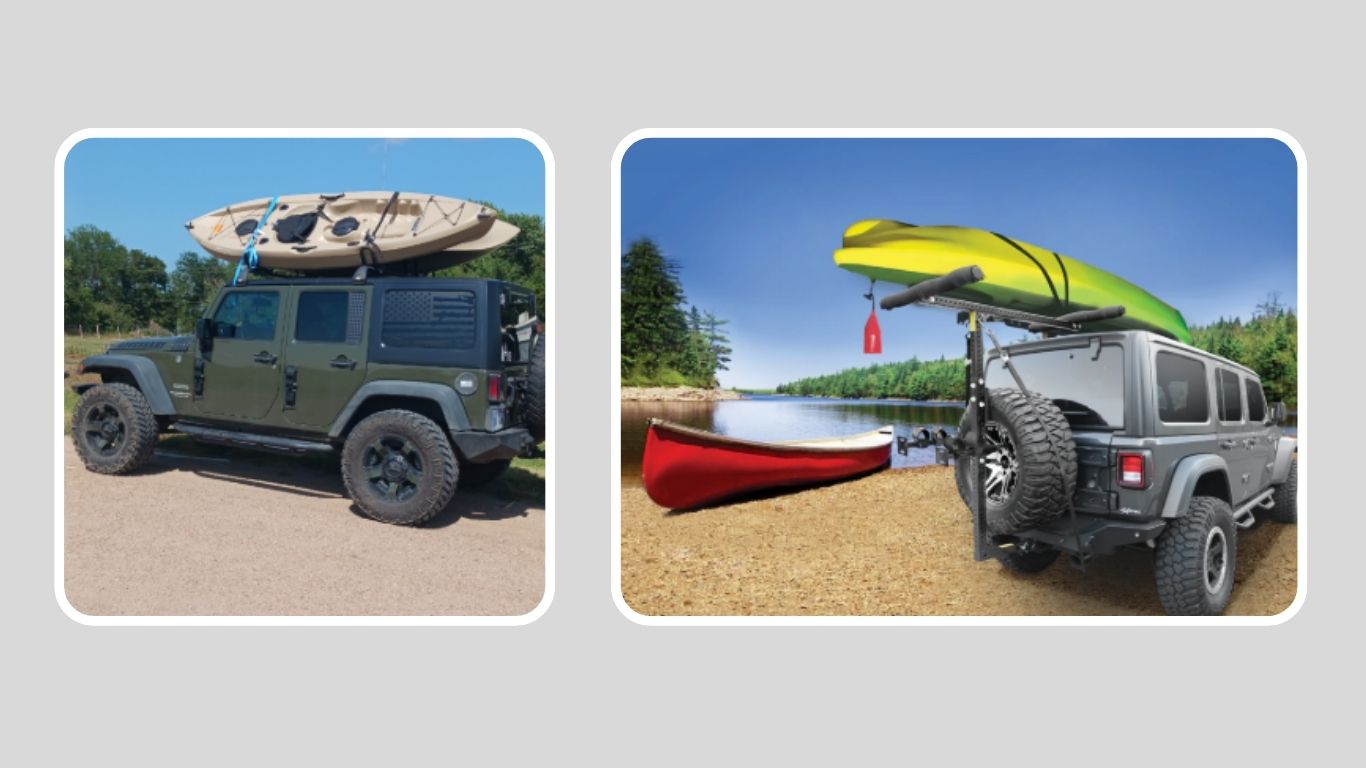
Roof racks are the most popular choice for Wranglers with a hardtop. They use crossbars to hold different types of kayak carriers:
- J-Style Racks – These hold the kayak on its side, saving space so you can carry more than one kayak. They’re also easy to load from the side of the Jeep.
- Saddle or Flat Racks – These let the kayak sit flat on top of the Jeep. This style is very stable, especially for long highway drives.
- Stackers – Best for families or groups, stackers allow you to carry multiple kayaks upright at the same time.
2. Hitch-Mounted Racks
If you have a soft-top Jeep or don’t want to use the roof, hitch-mounted racks are a great solution. They connect to the trailer hitch at the back of the Wrangler. These racks are easier to load since you don’t have to lift the kayak as high. The downside is that they usually carry fewer kayaks compared to roof setups.
3. Trailer Options
For people who often carry two or more kayaks, a trailer might be the best choice. Kayak trailers attach to your Jeep’s hitch and can haul multiple boats without stressing the roof. They’re great for families, group trips, or heavy fishing kayaks.
4. DIY Solutions
Some Jeep owners build their own racks using steel or PVC. While this can save money, DIY racks aren’t always as secure or durable as store-bought options. Still, they can work for light use or short trips.
Each type has its own advantages, so choosing the right one depends on how often you kayak, how heavy your boats are, and what kind of Jeep Wrangler you drive.
Top Kayak Rack Options for Jeep Wrangler
Finding the right kayak rack for your Jeep Wrangler is all about matching your needs with the right features. Do you kayak alone or with family? Do you have a lightweight recreational kayak or a heavy fishing kayak? Do you want a premium system with lift assist or a simple budget rack that just gets the job done?
To help you choose, here are some of the top kayak rack options for Jeep Wrangler owners in 2025, with detailed breakdowns of features, pros and cons, and the type of paddler each rack suits best.
1. Thule Hullavator Pro – Best for Easy Loading
The Thule Hullavator Pro is often called the “luxury kayak rack” because of its built-in gas-assisted lift system. Instead of lifting your kayak above your head, you simply pull the rack down to the side of your Jeep. This brings the loading height to about waist level. You then place your kayak in the cradle and let the lift system help raise it back onto the roof.
For Jeep Wrangler owners who often head out alone or who own heavier fishing/touring kayaks, this rack makes life so much easier. It’s especially helpful for shorter paddlers or anyone with back or shoulder issues.
Key Features:
- Lift-assist system reduces up to 40 lbs of kayak weight during lifting.
- Corrosion-resistant aluminum frame designed for outdoor use.
- Wide cradles with padding that protect the kayak’s hull.
- Can hold 1 kayak up to 75 lbs and 36″ wide.
- Fits most Thule and aftermarket crossbars.
Pros:
- Makes solo loading possible.
- Strong, premium build that lasts years.
- Protects both the kathe yak and the Jeep from scratches.
Cons:
- Expensive compared to standard racks.
- Only carries one kayak at a time.
- Adds extra weight to your roof system.
Best For: Solo adventurers, owners of heavy kayaks, and Jeep Wrangler drivers who don’t mind investing in comfort and convenience.
2. Yakima JayLow Kayak Rack – Best for Versatility
The Yakima JayLow is one of the most popular kayak racks for Jeep Wranglers because of its flexibility. It can work in two ways: as a J-cradle for one kayak, or as a vertical stacker that can hold two kayaks side by side. This makes it perfect if you sometimes paddle alone but also want the option to bring a friend.
Another advantage is that the rack folds down flat when not in use, so you don’t have to remove it every time you’re done kayaking. That’s convenient if you take your Jeep on daily drives and don’t want extra height sticking out.
Key Features:
- Dual-position: J-style (for 1 kayak) or vertical stacker (for 2 kayaks).
- Weight limit: 80 lbs (single) or 110 lbs (double).
- Universal fit with most crossbars.
- Built-in tie-down straps included.
- Tool-free installation.
Pros:
- Very versatile, adapts to different needs.
- Compact fold-down design saves space.
- Fairly affordable compared to premium racks.
Cons:
- Still requires overhead lifting.
- Straps need careful tightening for highway speeds.
Best For: Jeep Wrangler owners who want one rack that can handle both solo and group trips without needing a trailer.
3. Rhino-Rack Nautic 570 – Best for Long-Distance Stability
If your kayaking trips usually involve long highway drives, the Rhino-Rack Nautic 570 is a great choice. Unlike J-cradles, this rack uses a saddle-style system. The kayak lies flat across padded cradles, which reduces wind resistance and wobbling.
It can be loaded from either the front or rear, making it easier to slide a kayak onto the roof compared to side loading. The pads are soft and non-slip, ensuring the kayak stays in place while protecting its hull.
Key Features:
- Side-loading or rear-loading saddle design.
- Fits most crossbars, including factory Jeep systems.
- Supports up to 99 lbs.
- Made from UV-stable, waterproof materials.
Pros:
- Extremely stable on highways.
- Protects kayak surface with cushioned pads.
- Ideal for heavy-duty use and long trips.
Cons:
- Only holds one kayak.
- Loading still requires lifting to roof height.
Best For: Jeep owners who often travel long distances or need maximum stability on highways with heavier kayaks.
4. Malone Downloader Folding J-Style Rack – Best Mid-Range Option
The Malone Downloader is a dependable mid-range J-style rack that balances affordability with durability. Its folding design makes storage simple; you can just push it down when not in use instead of taking it off every time.
One standout feature is the built-in boarding ramp. This little addition helps guide your kayak into place, reducing the struggle of balancing it while lifting.
Key Features:
- Folding J-cradle design.
- Built-in loading ramp.
- 75 lb weight limit.
- Comes with cam buckle straps and tie-downs.
Pros:
- Affordable but durable.
- Easy to fold and store.
- Good for average-sized kayaks.
Cons:
- Not as smooth as premium racks.
- Limited to one kayak.
Best For: Weekend paddlers who want a reliable, foldable rack without breaking the bank.
5. Leader Accessories Folding J-Bar Rack – Best Budget Choice
If you’re just getting started with kayaking or want a simple solution, the Leader Accessories Folding J-Bar is an excellent budget pick. It doesn’t have fancy features, but it’s sturdy enough to carry most recreational kayaks.
Made from powder-coated steel, it can withstand weather and heavy use. However, it’s a bit bulkier than premium models, and you may want to upgrade the included straps for extra security.
Key Features:
- Universal mounting design.
- Rust-resistant steel frame.
- Supports up to 100 lbs.
Pros:
- Very affordable.
- Simple, effective design.
- Strong weight capacity for the price.
Cons:
- Bulkier design.
- The included straps aren’t the best quality.
Best For: Beginners or casual kayakers who want a low-cost, functional rack for occasional use.
6. Thule Compass – Best Multi-Style Rack
The Thule Compass is one of the most flexible racks you can buy. It supports J-style loading for one kayak, stacker mode for two kayaks, and even saddle-style loading. This makes it perfect for families or paddlers who like variety.
It folds flat when not in use and is built with Thule’s high-quality materials, ensuring long-lasting durability.
Key Features:
- Carries 1 kayak in J-style, 2 in stacker mode, or 1 in saddle mode.
- 130 lb weight limit (depending on setup).
- Foldable design.
- Fits most roof crossbars.
Pros:
- Extremely versatile.
- Compact storage when folded.
- High-quality build.
Cons:
- Pricey compared to simpler racks.
- It can take time to switch between modes.
Best For: Families or paddlers who want maximum flexibility from a single rack system.
7. Yakima ShowDown – Best for Side Loading
The Yakima ShowDown is another premium rack designed for easier loading. Unlike the Thule Hullavator, it doesn’t lift your kayak, but it does swing down to the side of your Jeep for waist-level loading. You then push the kayak back up into position.
This system reduces strain while still giving you a solid, roof-mounted option.
Key Features:
- Side-loading system with slide assist.
- 80 lb weight limit.
- Fits most crossbar systems.
Pros:
- Easier loading compared to fixed racks.
- Solid Yakima build quality and good for heavier kayaks.
Cons:
- Expensive.
- Only holds one kayak.
Best For: Jeep owners who want an easier alternative to lifting kayaks overhead but don’t need a full lift-assist system.
8. Kayak Trailer Options (Malone MicroSport & Yakima Rack and Roll) – Best for Multiple Kayaks
If you have a family or often kayak with friends, a trailer is the most stress-free way to carry multiple kayaks. Instead of balancing them on the roof, you just roll them onto the trailer at waist height.
- Malone MicroSport – Can carry up to 4 kayaks, lightweight yet strong, comes with optional upgrades like storage boxes.
- Yakima Rack and Roll – Aluminum frame, very smooth to tow, can carry up to 2–3 kayaks depending on setup.
Pros:
- Easiest loading method—no heavy lifting.
- Can carry 2–4 kayaks safely.
- Stable and safe for long trips.
Cons:
- More expensive than roof racks.
- Requires storage space for the trailer.
- Not ideal for tight city driving.
Best For: Families, groups, or paddlers with multiple kayaks who value convenience over compactness.
Installation Guide: How to Mount a Kayak Rack on a Jeep Wrangler
Installing a kayak rack on your Jeep Wrangler is easier when you break it down into steps. Here’s a full guide written in a descriptive style so you can follow along without confusion.
Step 1: Choose the Right Rack for Your Jeep’s Roof
The first step is deciding what kind of rack fits your Wrangler. If you have a hardtop roof, you can easily mount crossbars and a variety of kayak carriers. A soft-top Wrangler cannot hold weight directly, so a hitch-mounted rack or a frame system that attaches to the Jeep’s body is best. If you drive roofless, a hitch rack or trailer is the safest choice. Picking the right system based on your Jeep’s roof type is the foundation for the entire setup.
Step 2: Install the Crossbars (For Roof Racks)
If you are using a roof-mounted system, the next step is installing crossbars. These crossbars are the base that your kayak carrier will attach to. Measure the right spacing, usually two to three feet apart, then clamp or bolt them securely to your Jeep’s roof rails. Push on them to make sure they don’t shift, and always check their weight limit so they can handle your kayak’s size.
Step 3: Attach the Kayak Carrier
Once your crossbars are firmly in place, it’s time to attach the actual kayak carrier, such as J-cradles, saddles, or stackers. Position the carrier evenly on both crossbars, then lock it in with U-bolts, clamps, or mounting brackets. If you’re using a hitch-mounted rack instead, installation is simpler: just slide the rack into the Jeep’s hitch receiver, secure it with a safety pin, and check for wobbling.
Step 4: Load the Kayak Safely
Now comes the lifting. If you have a partner, the easiest way is to lift together, one person holds the bow, the other the stern, and sets the kayak into the cradle. If you’re loading alone, lean the kayak against the back of the Jeep on a towel or foam pad and then slide it onto the rack. Some racks, like the Thule Hullavator or Yakima ShowDown, have lift-assist features that lower the carrier down to your side, making solo loading effortless. Hitch racks and trailers are even easier since they sit lower, requiring less lifting.
Step 5: Secure the Kayak with Straps
After your kayak is in place, it must be strapped down tightly. Use cam buckle straps, not ratchet straps, since over-tightening can damage your kayak. Loop the straps over the kayak and under the crossbars, then pull them snug but not overly tight. Add bow and stern tie-downs by attaching ropes to your Jeep’s bumpers or tow hooks. This prevents the kayak from shifting forward or backward during your drive. To check, grab the kayak and give it a firm shake. If it feels solid, you’ve strapped it correctly.
Step 6: Do a Final Safety Check
Before you hit the road, double-check every strap, bolt, and connection. Make sure the kayak sits straight and doesn’t block your mirrors, headlights, or brake lights. Drive a short distance, stop, and re-tighten the straps, since they often loosen slightly at first. If you’re planning to go off-road, add an extra strap or two for extra security.
Installing a kayak rack for the first time may take about an hour, but once you’ve done it, future setups will only take 15–20 minutes. By following these steps, you’ll ensure your kayak is safe, your Jeep remains stable, and your adventure to the water starts smoothly.
Tips for Transporting Kayaks on a Jeep Wrangler
Once your kayak rack is installed, knowing how to transport your kayak safely is just as important as the rack itself. Jeep Wranglers are built for rugged roads, but when carrying a kayak, you need to take extra care to avoid damage and ensure smooth travel.
One of the most important tips is to always double-check your straps before starting a long trip. Even the strongest straps can loosen slightly from wind and road vibrations. After driving for about 15 to 20 minutes, it’s a good idea to pull over and retighten them. This simple habit can prevent shifting or sliding during your journey.
Another tip is to position your kayak correctly on the rack. The kayak should sit centered, with the weight evenly distributed across the crossbars or carriers. If the kayak is off-balance, it may cause unnecessary strain on one side of your rack and even affect how your Jeep handles on the road. A centered position also reduces wind drag, which can make your drive smoother and save fuel.
Speed is another factor to consider. While Jeep Wranglers are capable of driving fast, carrying a kayak changes the dynamics of your vehicle. High winds can put extra pressure on your rack and straps, so it’s safer to drive at moderate speeds. If you’re heading onto highways, stick to a comfortable pace and avoid sudden lane changes that might catch the kayak in the wind.
The weather also plays a role. On rainy days, wet straps can stretch, and on very hot days, they may loosen. That’s why it’s smart to check the tension of your tie-downs whenever the weather changes. If you’re driving in strong crosswinds, you’ll notice extra resistance. Slowing down and keeping both hands firmly on the wheel will help maintain control.
Finally, think about parking and clearance. A kayak on top of a Jeep Wrangler adds extra height, which means you might not fit under some garages, parking decks, or drive-throughs. Always keep the added height in mind to avoid accidents. If you’re carrying your kayak on a hitch-mounted rack instead, be cautious when reversing, since the kayak may extend far behind your Jeep.
By following these tips, you can make sure your kayak stays safe and your Jeep Wrangler performs at its best on the road. Transporting a kayak doesn’t have to be stressful. Once you get used to these precautions, it becomes second nature, and your focus can shift to enjoying the adventure ahead.
Best Jeep Wrangler Kayak Racks (Product Recommendations)
Choosing the right kayak rack for your Jeep Wrangler can feel overwhelming because there are so many good options on the market. To make it easier, here are some of the top-rated racks in 2025, each known for its durability, ease of use, and compatibility with Wranglers.
1. Thule Compass Kayak Rack
The Thule Compass is one of the most versatile kayak racks you can buy. It works in multiple positions, J-style, stacker, and saddle, so whether you want to carry one kayak or two, it adjusts to your needs. Its padded base protects the hull of your kayak, while the fold-down feature makes it easy to park in garages when not in use. Jeep owners love it because it’s rugged yet simple to install on standard crossbars.
2. Yakima JayLow Kayak Carrier
The Yakima JayLow is another popular choice for Jeep Wrangler drivers. It’s a J-style rack that flips into an upright stacker position, allowing you to carry up to two kayaks side by side. Built-in padding reduces scratches, and the system includes heavy-duty straps and bow/stern tie-downs for extra security. Its tool-free installation makes it beginner-friendly, and the design folds down neatly when not in use.
3. Rhino-Rack Nautic 570 Series
The Rhino-Rack Nautic 570 is designed with simplicity in mind. It features side-loading cradles with soft rubber pads that let you load the kayak directly from the side of your Wrangler. This is especially helpful if you’re shorter or struggle to lift a kayak overhead. It fits most crossbars, making it a reliable option for both hardtop and aftermarket Wrangler roof racks.
4. Malone Downloader Folding J-Style Carrier
The Malone Downloader is a foldable J-style rack built with rugged, corrosion-resistant material, making it a great choice for people who kayak in saltwater environments. It has a boarding ramp system that makes loading easier and comes with all the straps you’ll need. The fold-down feature ensures that you won’t face clearance issues when driving into garages or under low bridges.
5. Thule Hullavator Pro
For kayakers who want ultimate convenience, the Thule Hullavator Pro is a premium option. It features gas-assisted arms that lower the rack to the side of your Jeep, so you only need to lift your kayak waist-high. This system is perfect for heavier fishing kayaks or solo adventurers who don’t have help loading. Although it’s pricier than other racks, the ease of use makes it worth it for serious paddlers.
6. Yakima ShowDown Load-Assist Carrier
Similar to the Hullavator, the Yakima ShowDown is a side-loading rack that makes it easier to lift kayaks onto a tall Jeep Wrangler roof. It has a sliding system that reduces the strain of lifting heavy boats. While not as advanced as the Hullavator, it offers a balance between affordability and load-assist convenience.
7. Kayak Trailers (Multi-Kayak Option)
If you often travel with family or friends and need to haul three or more kayaks, a kayak trailer is worth considering. Brands like Malone and Yakima make sturdy trailers that connect to the Wrangler’s hitch. Trailers also save your roof rack for other gear and make loading and unloading much faster. The only downside is storage space, as trailers require room when not in use.
Installation and Setup Tips for Jeep Wrangler Kayak Racks
Even the best kayak rack won’t perform well if it’s not installed and set up properly. Proper installation ensures safety, protects your kayak, and prevents damage to your Jeep. There are a few tips and best practices every Wrangler owner should keep in mind when setting up a rack.
First, always read the manufacturer’s instructions carefully. Each kayak rack comes with specific guidelines on positioning, spacing, and fastening. Skipping this step can lead to improper installation, which could cause the kayak to shift while driving. Take your time during the first setup and keep all tools handy so nothing is missed.
Next, pay attention to rack alignment and spacing. The crossbars or base supports should be evenly spaced and parallel to each other. The kayak should sit centered on the rack so its weight is evenly distributed. Uneven placement can stress the rack, damage your Jeep’s roof, and make your vehicle harder to control, especially at higher speeds.
Tightening bolts and clamps correctly is also key. Many racks come with adjustable fittings, but it’s important to make sure everything is snug without over-tightening. Over-tightening can strip threads or bend parts, while loose bolts can allow the rack to wobble. Check and recheck all fasteners after the first short drive to ensure nothing has shifted.
Padding and protection are small details that make a big difference. Soft rubber pads, foam, or silicone covers protect your kayak’s hull from scratches and prevent the rack from rubbing against the Jeep’s roof. Make sure the kayak rests securely on these pads and that the tie-down straps do not chafe or scratch the surface.
When it comes to strapping the kayak, use high-quality cam buckle straps and always secure both the front and rear. Bow and stern tie-downs help prevent forward and backward movement, while straps across the kayak hold it tightly to the rack. Check the straps after a few miles of driving, as vibrations from the road can loosen them slightly.
For those who go off-road or on uneven terrain, adding an extra strap or two can give peace of mind. Rugged trails create more movement and jostling, so extra security keeps the kayak stable and prevents accidents.
Finally, remember regular maintenance. Inspect your rack before every trip, checking for loose bolts, worn straps, or damaged padding. Clean the rack periodically, especially if you paddle in saltwater or muddy environments, to prevent corrosion and keep it functioning for years.
By following these installation and setup tips, Jeep Wrangler owners can ensure their kayak racks are safe, durable, and ready for adventure. Proper care and attention to detail not only protect your equipment but also make every trip more enjoyable and stress-free.
Final Thoughts
A Jeep Wrangler kayak rack is more than just an accessory; it’s the key to unlocking endless water adventures. Choosing the right rack, installing it properly, and following safety and transport tips ensures your kayak stays secure while your Jeep performs reliably. Whether you prefer roof-mounted, hitch-mounted, or lift-assist systems, investing time in setup and maintenance makes every trip smoother and safer. With the right rack and preparation, your Wrangler becomes a true adventure vehicle, ready to take you from trail to water with confidence.