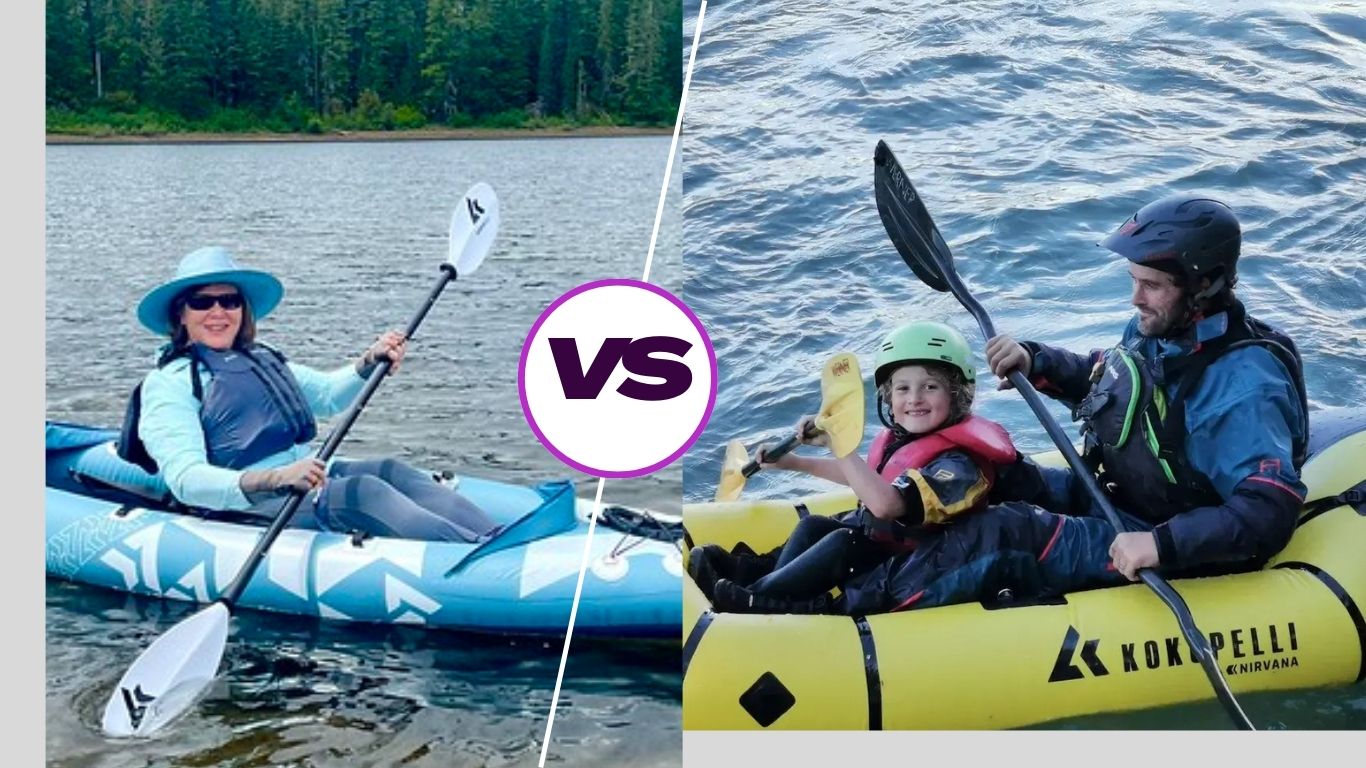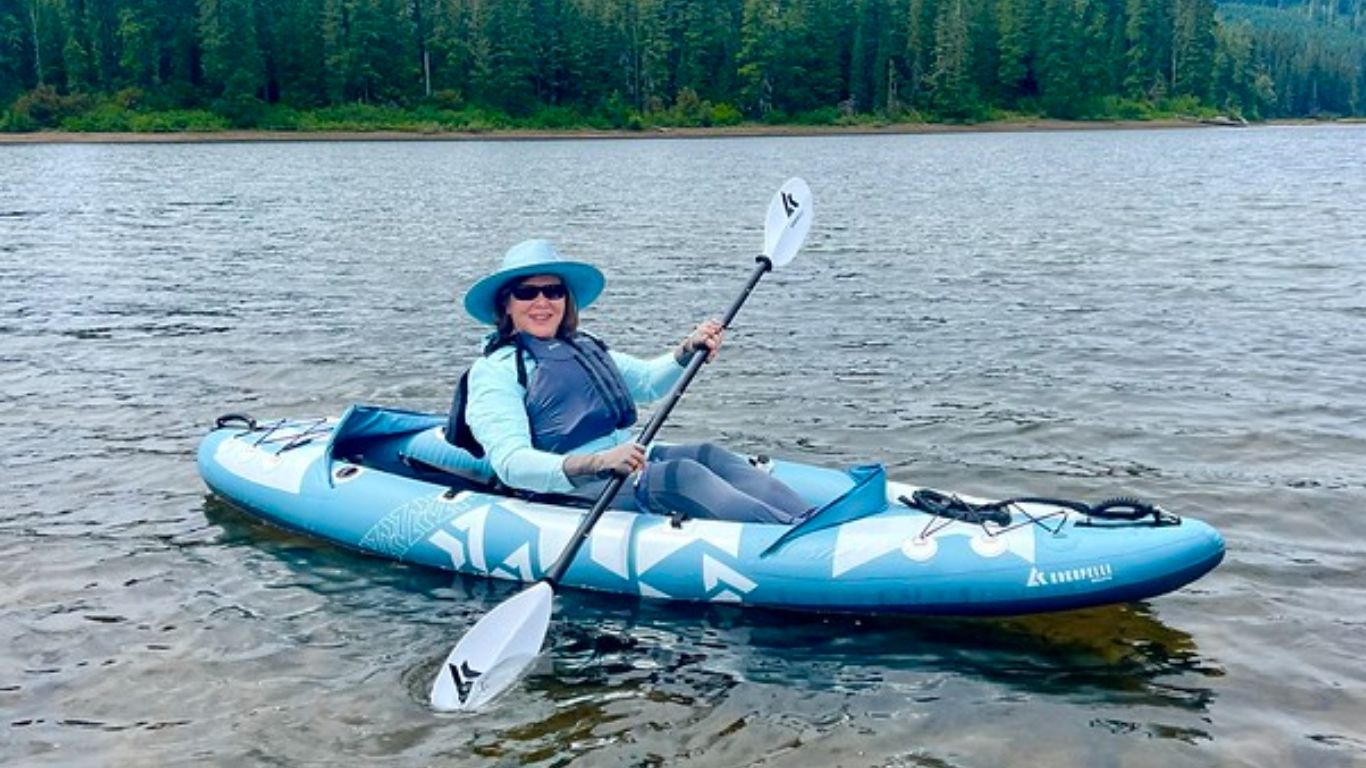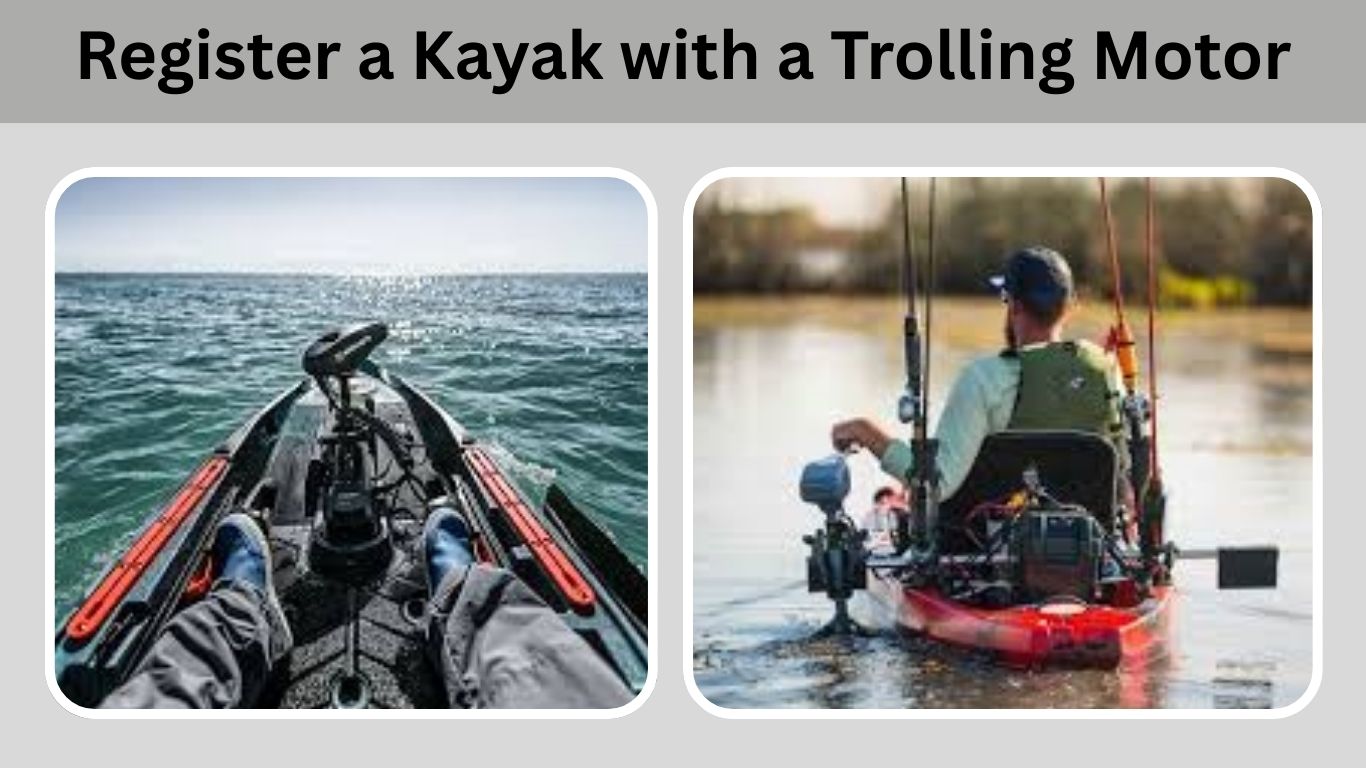
Kayaking has always been seen as a simple and relaxing way to enjoy the water. Most kayaks are small, lightweight, and powered only by paddles, which makes them easy to use without dealing with much paperwork. But things are changing. More people are adding trolling motors to their kayaks to go farther, fish more comfortably, and save energy. This raises an important question: if you put a motor on a kayak, do you have to register it? Let’s explore the full answer.
What is a Trolling Motor?
A trolling motor is a small motor designed to move a boat slowly and quietly. Unlike big outboard engines that roar and create waves, trolling motors are made for smooth and steady movement. That’s why they are loved by anglers (fishermen) who want to stay quiet so they don’t scare fish.
For kayaks, trolling motors are usually electric and run on a battery. They are lightweight, easy to attach, and provide enough thrust to move a kayak without much effort. Some trolling motors can be mounted at the back (stern), some at the front (bow), and some even on the side of a kayak with special brackets.
By adding one, you suddenly turn your kayak into a much more capable craft. You can travel longer distances without tiring your arms, fight against wind or current more easily, and spend more time fishing instead of paddling. But here’s the important detail: as soon as you add this motor, the law in most places stops treating your kayak like a “simple paddle craft” and starts treating it like a motorized vessel.
What is Kayak Registration?
Registration for boats works much like registration for cars. When you register a boat, the state or government gives you a unique number and sometimes a sticker that must be displayed on the boat. This proves the boat is legally recognized and allowed on the water.
The main reasons for registration are:
- To make sure boats can be identified easily in case of accidents or theft.
- To help law enforcement track down boats that break rules or cause damage.
- To collect fees that are often used to maintain waterways, ramps, and boating facilities.
For kayaks, registration rules are usually very light. A simple paddle kayak rarely needs to be registered in the United States. That’s why many people never think about it. But once you add a motor, the rules shift. The government sees it as a motorboat, even if it’s tiny, and motorboats are almost always required to be registered.
Why Adding a Motor Changes Things
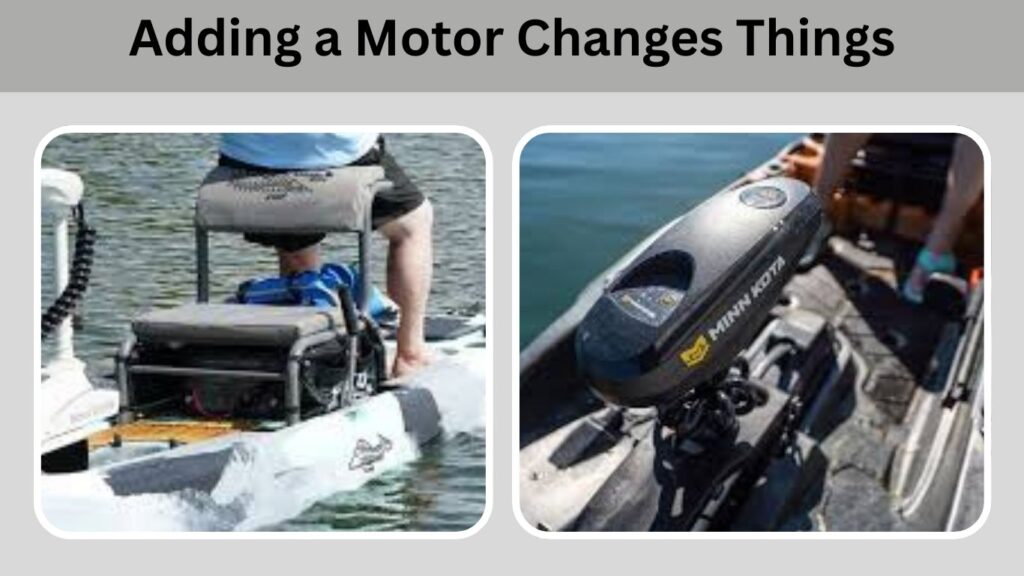
At first glance, it may seem unfair. Why should adding a small trolling motor to a kayak suddenly require paperwork? But the logic behind it is quite simple. A paddle-powered kayak is limited in speed, range, and impact. It’s considered low-risk, so most states don’t bother requiring registration.
But when you attach a motor, even a small electric one, your kayak becomes much more powerful. It can move faster, cover more distance, and enter waterways where bigger boats travel. A motorized kayak can also create more safety concerns because it shares space with larger vessels and may move differently than paddle-only boats.
From the perspective of law enforcement and safety officials, once you add a motor, you are no longer just paddling in a small craft; you are operating a motorized vessel. This brings responsibilities, like:
- Displaying a registration number so officers know your craft is legal.
- Follow the same boating rules as other motorized vessels.
- Sometimes, carrying extra safety gear, such as lights, is used at night.
In short, the motor changes the category of your kayak. Without it, it’s just a human-powered recreational craft. With it, it becomes a powered boat, and powered boats fall under stricter regulations almost everywhere.
State Laws in the U.S.
Boat registration laws in the U.S. are handled by individual states. This means the exact process, fees, and rules can differ depending on where you live. However, one rule is almost universal: if your kayak has a motor, it must be registered.
Here’s a closer look at how different states handle it:
- Texas – Paddle-only kayaks are free from registration. But the moment you add a trolling motor, it must be registered with the Texas Parks and Wildlife Department. The registration process includes paperwork, a fee, and a decal.
- Florida – A popular state for boating. Like Texas, paddle kayaks don’t need registration, but motorized kayaks do. You must display your registration number.
- California – Requires all motorized boats, including kayaks with trolling motors, to be registered. California also has some environmental fees connected to registration.
- New York – Clear and strict. Every motorized watercraft, regardless of size, must be registered. That includes kayaks, even if the motor is just a small electric trolling motor.
- Ohio – Has one of the most detailed systems. All kayaks with motors must be registered, and you’ll need to renew your registration every few years.
As you can see, while the details vary, the underlying rule is the same: motor = registration.
Special Cases
Not all kayaks are the same. Some special types of kayaks create questions, but the rule still usually applies:
- Inflatable Kayaks with Motors
Inflatable kayaks are light and portable. Some allow motor attachments. If you add one, the kayak must be registered, even though it’s inflatable. - Pedal Kayaks
Pedal-powered kayaks use your legs instead of a paddle. These are still considered human-powered. Registration is not required unless you attach a motor. - Fishing Kayaks
Many fishing kayaks are designed with mounts for trolling motors. As soon as you install and use the motor, you must register.
What Happens if You Don’t Register
Some kayakers think they can “fly under the radar” by not registering. After all, a kayak is small, and maybe no one will notice. But there are real risks if you ignore the rules:
- Fines – In most states, boating officers can stop you and issue a ticket. Fines may be small at first, but can become expensive if you repeatedly break the rules.
- Warnings and Confiscation – If you’re caught more than once, officers can prevent you from launching until your kayak is registered.
- Insurance Problems – If your kayak is in an accident and isn’t registered, insurance may not cover damages.
- Theft Issues – A registered kayak is easier to recover if stolen. Without registration, you may have no proof of ownership.
The bottom line: registering saves you from unnecessary trouble.
How to Register a Kayak with a Motor
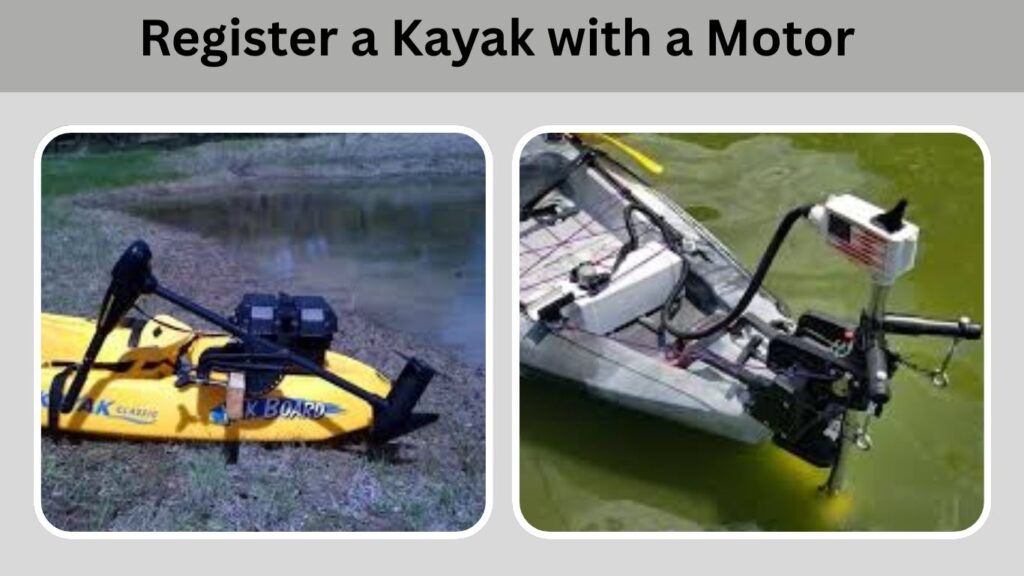
Registering a kayak with a trolling motor may sound complicated, but the process is usually straightforward. Think of it like registering a small car or motorcycle. Each state has its own office, often the Department of Motor Vehicles (DMV) or Department of Natural Resources (DNR), that handles boat registrations.
Here’s how the process usually works, step by step:
- Locate the Right Agency
First, find which state office handles boat registration. In some places, it’s the DMV. In others, it may be Parks and Wildlife or the Department of Natural Resources.
- Fill Out the Application
You’ll need to complete a registration form. This form asks for basic information such as the type of kayak, length, color, motor details, and your details.
- Provide Proof of Ownership
You may need to show a bill of sale, a receipt from purchase, or the manufacturer’s certificate of origin for the motor or kayak. If you built your motorized system, some states may require extra documentation.
- Pay the Registration Fee
The cost varies, but kayaks usually have the lowest registration fees compared to larger boats. Fees can range anywhere from $20 to $50 for a few years of registration.
- Receive Your Registration Number and Decals
Once approved, you’ll get a registration number and decal. These must be displayed on both sides of the kayak’s bow (front). The decal proves to officers that your kayak is legally registered.
This process may take a few days to a few weeks, depending on your state. Once done, you’re free to enjoy the water without worry.
Documents You Might Need
Different states ask for slightly different documents, but you should be prepared with:
- Bill of sale for the kayak
- Bill of sale for the trolling motor
- Manufacturer’s Statement of Origin (MSO)
- Your driver’s license or personal ID
- Completed application form
Keeping digital copies of these documents is also a good idea, especially when traveling.
Costs of Registration
The cost of registering a kayak with a trolling motor is usually affordable. Unlike big yachts or powerboats, kayaks fall into the cheapest category.
Examples:
- Texas – Around $32 for two years.
- Florida – Starts around $27.
- California – About $37 plus fees.
- New York – About $22.50 for smaller boats.
Even though costs vary, most states keep fees low for small crafts like kayaks.
Kayak Registration Outside the U.S.
The U.S. isn’t the only place with rules. Many other countries also require registration when a motor is attached.
- Canada – Kayaks without motors don’t need registration. But with a motor, you must get a license from Transport Canada.
- United Kingdom – Many waterways require a license even for paddle kayaks. Add a motor, and registration becomes even more necessary.
- Australia – Rules differ by state. In Queensland, for example, any boat with a motor must be registered, including kayaks.
So no matter where you are, the rule is almost always the same: motor = registration.
Final Thoughts
So, do you have to register a kayak with a trolling motor? The answer is simple: Yes, in almost every place you do.
A paddle-only kayak is usually exempt. But once you add a motor, even a tiny, quiet trolling motor, the law sees your kayak as a motorized vessel. That means you need to register it, display your numbers, and follow all local boating rules.
It may feel like extra work, but registration is inexpensive, fairly quick, and protects you from fines, theft issues, and legal trouble. It also ensures you can enjoy your motorized kayak freely, whether you’re fishing, exploring lakes, or covering long distances without paddling.
If you plan to add a trolling motor, check your state or country’s rules, gather your documents, and register your kayak. Once it’s done, you’ll have peace of mind and can focus on what matters, enjoying your time on the water.