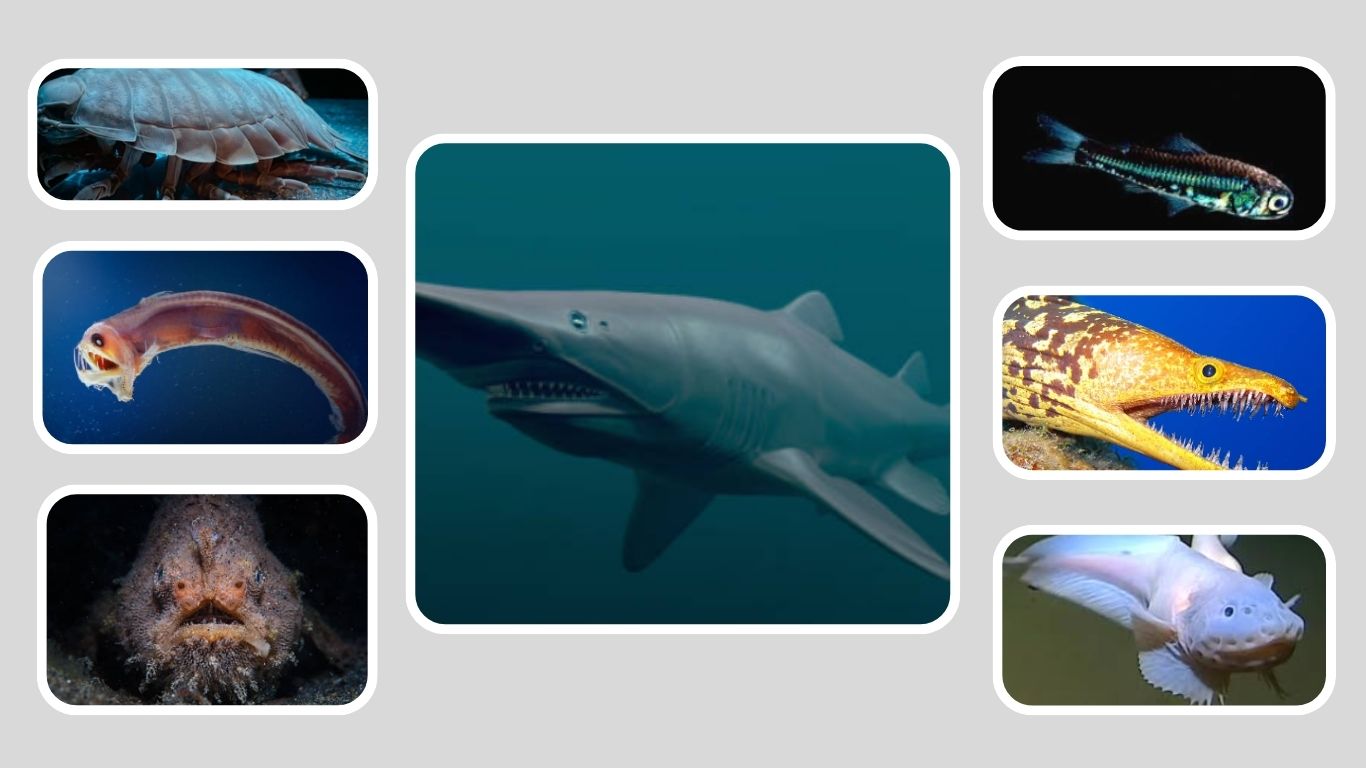
The deep sea is one of the most mysterious and extreme environments on Earth. It is a dark, cold, and high-pressure world where sunlight never reaches. Despite these harsh conditions, many fascinating creatures live there, especially unique fish adapted to survive in the deep ocean. From glowing lures to huge jaws and transparent heads, deep-sea fish have developed amazing features to hunt, hide, and survive in the darkness. This article explores 20 of the most interesting deep-sea fish, each with its special adaptations and behaviors that make the deep ocean a place full of wonders.
1. Anglerfish – The Glowing Trap
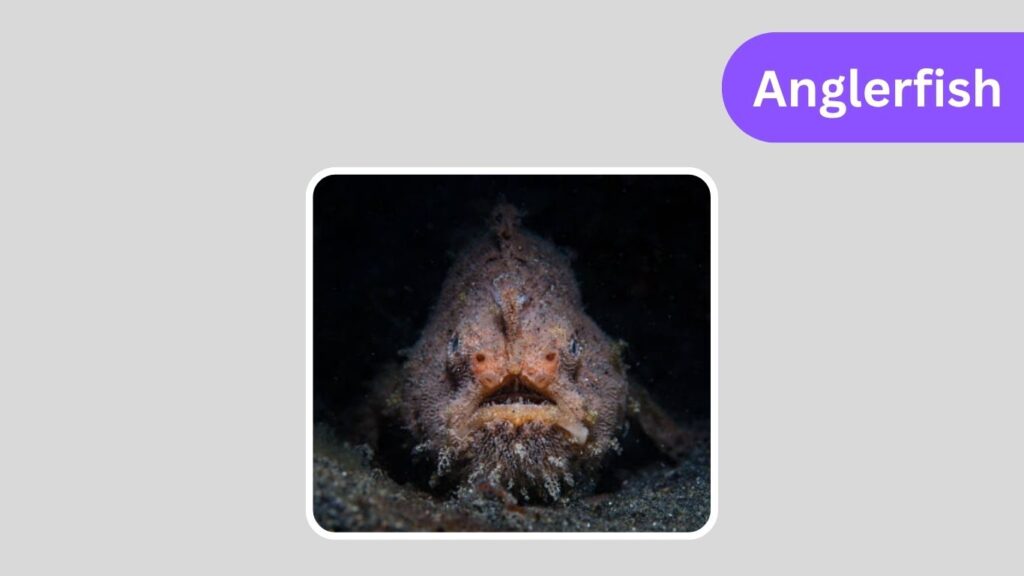
The anglerfish is one of the most iconic deep-sea creatures. With its sharp teeth, dark body, and strange glowing lure on its head, it looks like something from a nightmare. But this spooky fish has adapted perfectly to life in the dark ocean depths, using its glowing rod to attract prey right into its mouth.
Identification
- Body Shape: Round or oval body, often flattened
- Color: Dark brown or black
- Teeth: Long, sharp, and needle-like
- Mouth: Large and wide, able to swallow prey as big as itself
- Lure: A glowing “fishing rod” (called an illicium) grows from the top of the head
- Size: Most are small (under 1 foot), but some species can grow larger
How Deep Do Anglerfish Live?
Anglerfish usually live at extreme depths between 660 to 3,300 feet (200 to 1,000 meters), but some species are found even deeper. These depths are pitch dark, so the anglerfish’s glowing lure helps them find food.
Natural Habitat of the Anglerfish
They are found in all the world’s oceans, mostly in the bathypelagic zone, which is also called the “midnight zone.” This is a cold, dark part of the ocean where sunlight never reaches. They drift or swim slowly near the ocean floor or in open deep water.
Diet and Hunting Style
Anglerfish are ambush predators. They use their glowing lure to attract smaller fish, shrimp, or squid. When the prey comes close, the anglerfish snaps its jaws shut in a split second. Their stretchy stomach allows them to eat animals nearly as big as themselves.
2. Fangtooth – The Fierce Deep Hunter
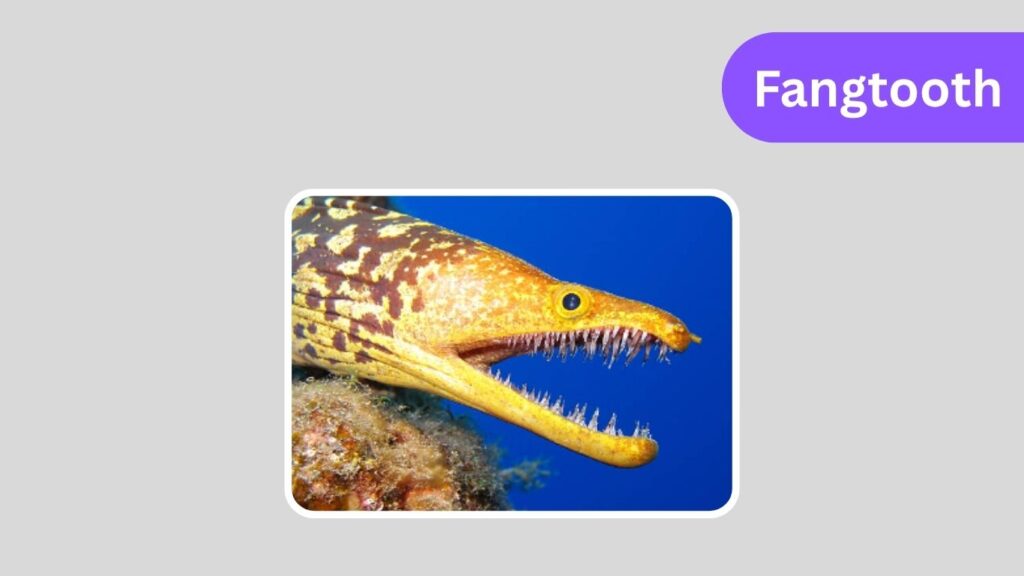
The fangtooth is one of the fiercest-looking fish in the deep sea. Despite its small size, it has some of the largest teeth compared to its body, which it uses to catch prey in the dark ocean.
Identification
- Body Shape: Stout and compact with a large head
- Color: Dark brown to black
- Teeth: Extremely long, sharp, and fang-like, especially the lower jaw teeth
- Mouth: Large and filled with sharp teeth that stick out even when closed
- Size: Small, usually around 6 inches (15 cm) long
How Deep Do Fangtooths Live?
Fangtooths live at depths ranging from 650 to 16,400 feet (200 to 5,000 meters). They are adapted to very high pressures and complete darkness.
Natural Habitat of the Fangtooth
They are found in deep, open ocean waters worldwide, usually near the continental slopes and abyssal plains. They tend to stay in the bathypelagic and abyssopelagic zones, where it is very cold and dark.
Diet and Hunting Style
Fangtooths feed on smaller fish and squid. They are active hunters that use their sharp teeth to grab and hold slippery prey. Their teeth are so large, they have special sockets in their heads to fit them when the mouth closes.
3. Goblin Shark – The Living Fossil
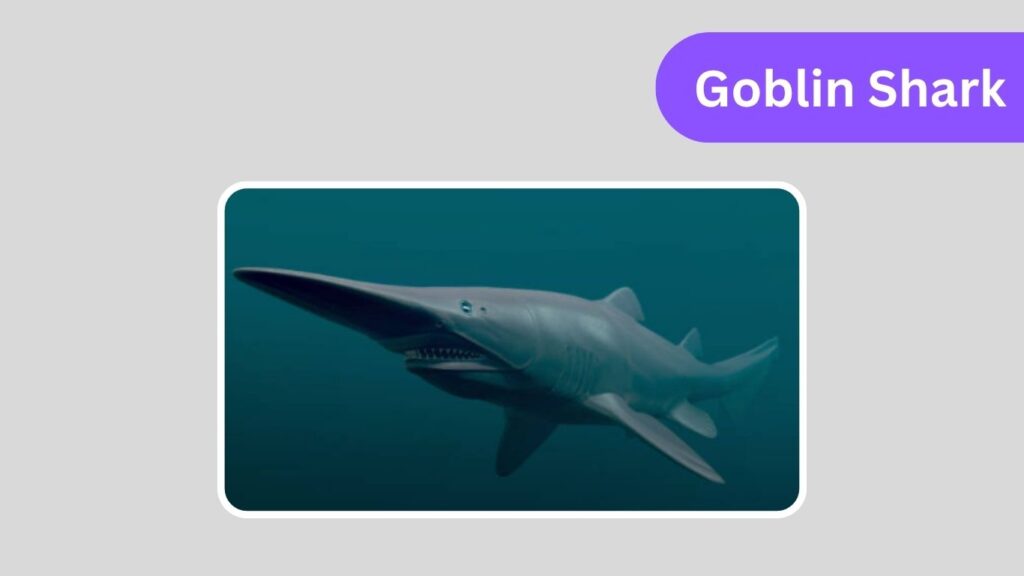
The goblin shark is a rare and unusual deep-sea shark known for its long, flattened snout and jaw that can shoot forward to catch prey. It’s often called a “living fossil” because it has changed very little over millions of years.
Identification
- Body Shape: Elongated with a soft, flabby body
- Color: Pale pink or gray due to blood vessels showing through the thin skin
- Snout: Long, flat, and blade-like
- Jaw: Can extend forward rapidly to snatch prey
- Size: Typically 10 to 13 feet (3 to 4 meters) long
How Deep Do Goblin Sharks Live?
Goblin sharks are found at depths between 330 and 4,300 feet (100 to 1,300 meters), mostly along continental slopes and submarine canyons.
Natural Habitat of the Goblin Shark
They live in deep waters worldwide but are rarely seen because they stay near the ocean floor in dark, cold environments. They prefer soft, muddy bottoms where they can quietly hunt.
Diet and Hunting Style
Goblin sharks eat fish, squid, and crustaceans. They use their extendable jaws to quickly snap up prey. Their slow swimming and camouflage help them sneak close before striking.
4. Barreleye Fish – The Transparent Head
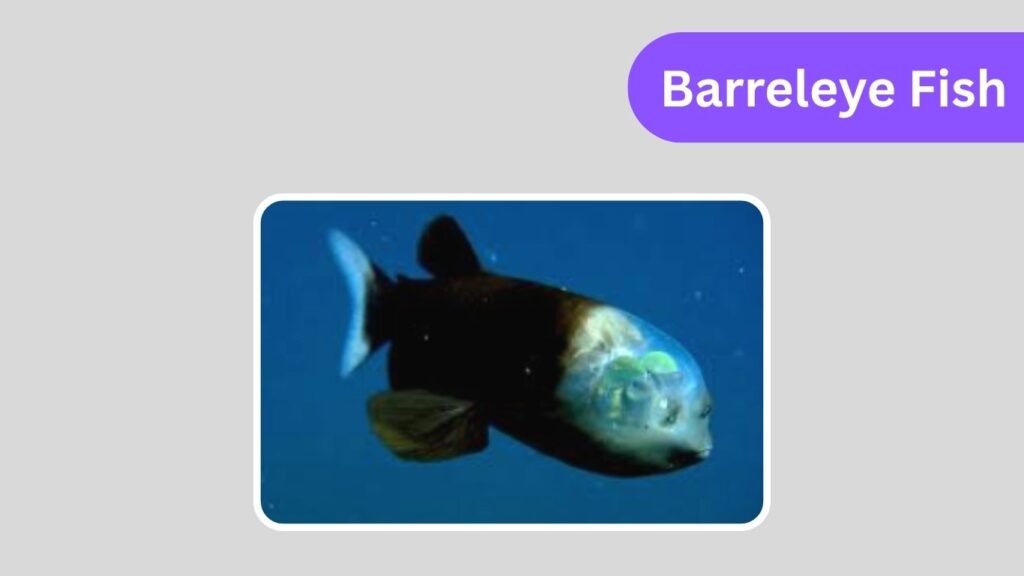
The barreleye fish is famous for its clear, transparent head that lets you see its eyes and brain inside. This unusual feature helps it spot prey in the dark depths.
Identification
- Body Shape: Small, cylindrical body
- Color: Usually greenish or pale
- Head: Transparent dome covering upward-pointing tubular eyes
- Eyes: Large, barrel-shaped, able to rotate inside the head
- Size: Around 6 inches (15 cm) long
How Deep Do Barreleye Fish Live?
They live at depths between 1,500 and 2,600 feet (450 to 800 meters), where very little light penetrates.
Natural Habitat of the Barreleye Fish
Barreleyes are found mostly in deep ocean waters near continental slopes. They drift quietly in the water column, often hovering upside down under large jellyfish or other floating animals.
Diet and Hunting Style
They mainly eat small crustaceans and jellyfish. Their special eyes help them spot prey silhouettes and detect faint light, even in darkness. The transparent head lets them look upwards while protecting their eyes from stings or damage.
5. Viperfish – The Fierce Night Hunter
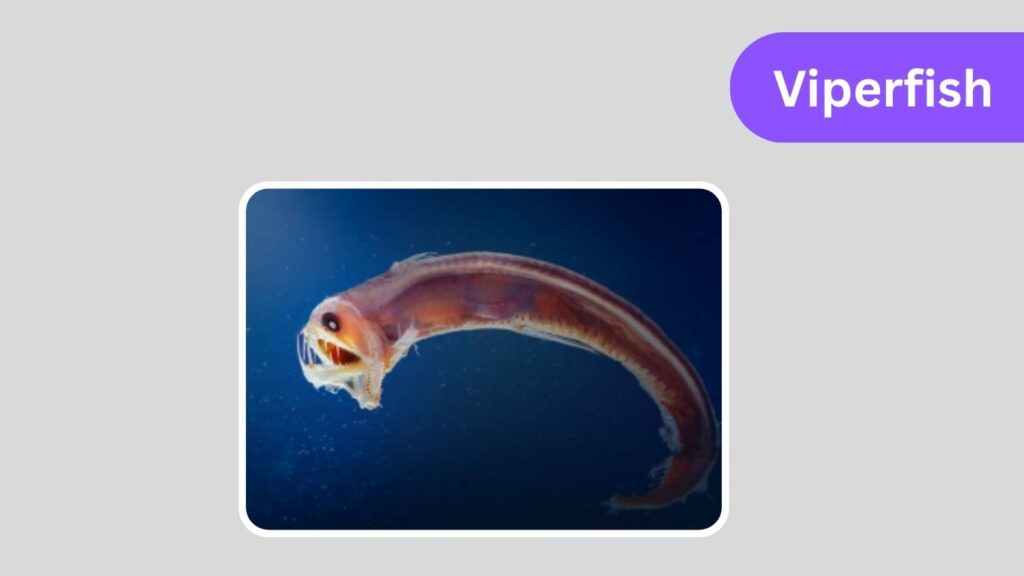
The viperfish is one of the fiercest predators in the deep sea. It has long, needle-like teeth that stick out even when its mouth is closed, giving it a terrifying look.
Identification
- Body Shape: Long and slender with a large head
- Color: Dark gray or black
- Teeth: Very long, sharp, and fang-like, visible even when the mouth is shut
- Mouth: Wide and able to open very wide to catch large prey
- Size: Typically about 12 to 24 inches (30 to 60 cm) long
How Deep Do Viperfish Live?
Viperfish are found at depths ranging from 650 to 16,400 feet (200 to 5,000 meters), mostly in the mesopelagic to bathypelagic zones.
Natural Habitat of the Viperfish
They live in deep, dark, open ocean waters worldwide. These fish spend most of their time in the midwater zone, where light is very faint or absent.
Diet and Hunting Style
Viperfish are active hunters, feeding on smaller fish and crustaceans. They use bioluminescent photophores (light-producing organs) along their bodies to lure prey close before attacking. Their large teeth help trap and hold slippery prey in the dark.
6. Giant Isopod – The Deep-Sea Roly-Poly
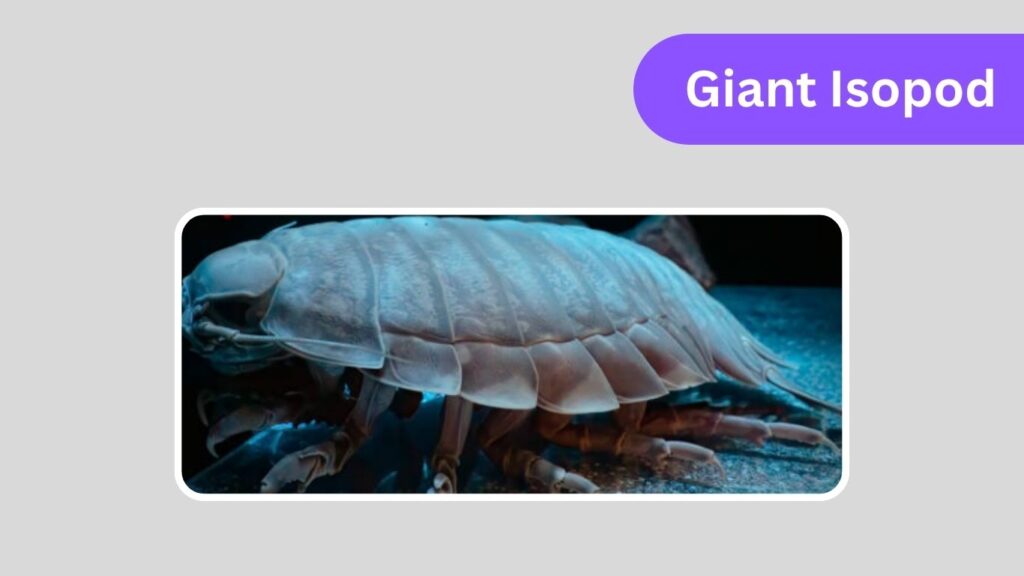
Giant isopods are large crustaceans that look like giant pill bugs or roly-poly. They live on the deep ocean floor and are known for their tough armor and slow movements.
Identification
- Body Shape: Oval and flattened with a segmented, hard exoskeleton
- Color: Pale pink, brown, or reddish
- Legs: Seven pairs of legs for crawling along the sea floor
- Size: Can grow up to 2.5 feet (76 cm) long
How Deep Do Giant Isopods Live?
They are usually found between 500 and 7,000 feet (150 to 2,150 meters) deep on the ocean floor.
Natural Habitat of the Giant Isopod
Giant isopods live on muddy or sandy bottoms in deep, cold waters across the Atlantic, Pacific, and Indian Oceans. They are scavengers, feeding on dead animals that sink to the sea floor.
Diet and Feeding Behavior
Giant isopods are slow-moving scavengers. They eat dead fish, squid, and whales that fall to the ocean bottom. They can survive long periods without food by slowing down their metabolism.
7. Gulper Eel – The Big-Mouthed Deep-Sea Swallower
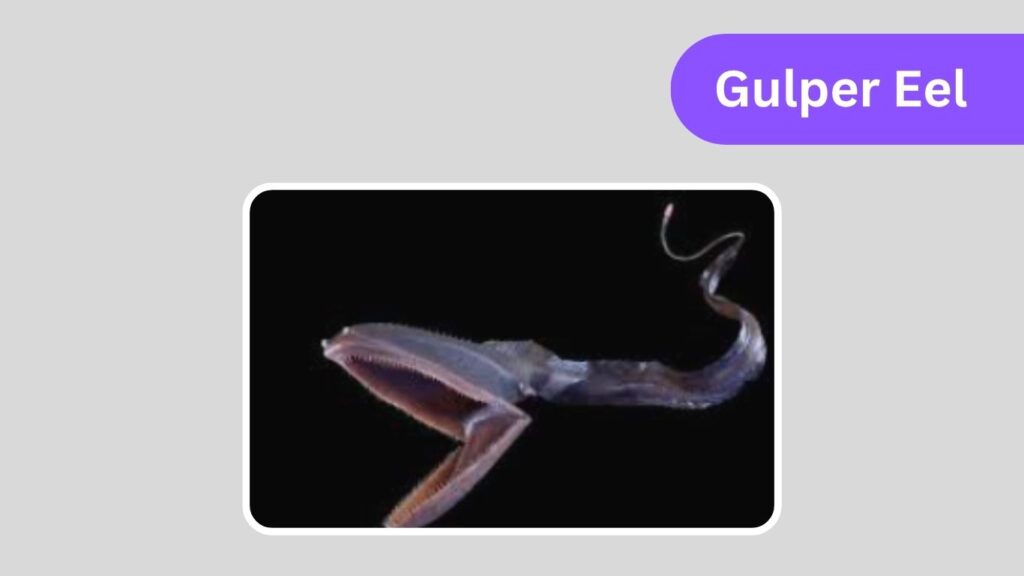
The gulper eel is known for its huge mouth that can open wide to swallow prey much larger than itself. It has a long, slender body and a tail that lights up to attract food.
Identification
- Body Shape: Long and thin, eel-like
- Color: Dark brown or black
- Mouth: A very large, expandable mouth that can open like a pouch
- Tail: Long with a bioluminescent tip that glows
- Size: Usually about 3 feet (1 meter) long
How Deep Do Gulper Eels Live?
They live at depths of about 500 to 9,800 feet (150 to 3,000 meters), mostly in the bathypelagic zone.
Natural Habitat of the Gulper Eel
Gulper eels are found in deep, open ocean waters worldwide. They swim slowly through dark waters, using their glowing tail tip to attract curious prey.
Diet and Hunting Style
Gulpers eat small fish and crustaceans. Their huge mouth helps them gulp prey whole, even if it is quite large compared to their body size. Their glowing tail acts as a lure in the darkness.
8. Dragonfish – The Fierce Deep-Sea Predator
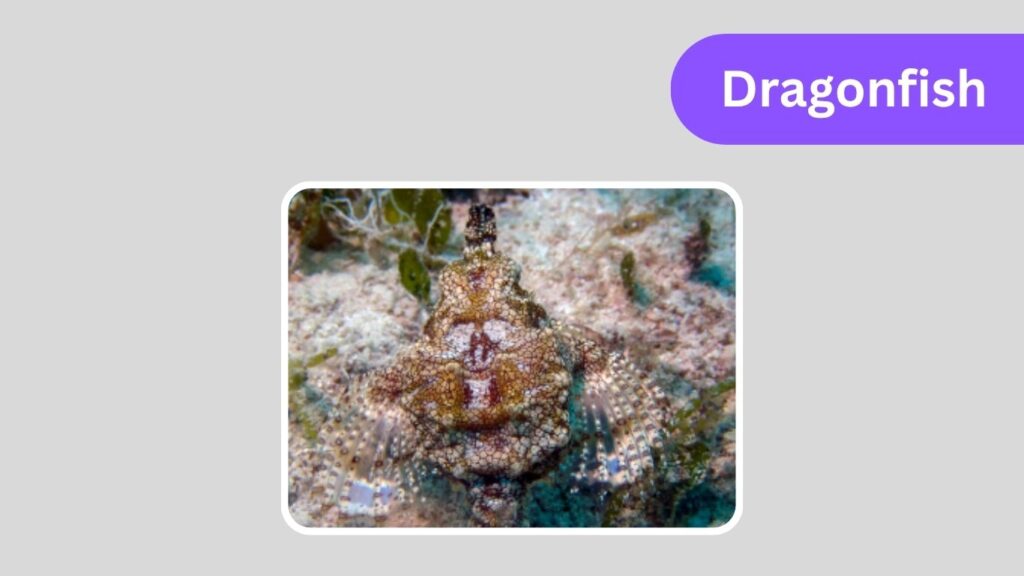
Dragonfish are known for their fierce appearance, with sharp teeth and bioluminescent light organs. They are among the most fearsome hunters in the deep ocean.
Identification
- Body Shape: Long, slender, and eel-like
- Color: Dark brown or black
- Teeth: Long, sharp, and fang-like
- Light Organs: Bioluminescent photophores along the body and on the chin
- Size: Typically 8 to 12 inches (20 to 30 cm) long
How Deep Do Dragonfish Live?
Dragonfish live at depths from 660 to 9,800 feet (200 to 3,000 meters), mostly in the mesopelagic and bathypelagic zones.
Natural Habitat of the Dragonfish
They inhabit deep, open ocean waters worldwide, often near the continental slopes and deep-sea trenches. They stay in dark waters where sunlight does not reach.
Diet and Hunting Style
Dragonfish are active predators feeding on smaller fish and crustaceans. They use their bioluminescent chin barbel as a lure to attract prey. Their sharp teeth help trap and hold onto slippery prey in the dark.
9. Frilled Shark – The Living Fossil Shark
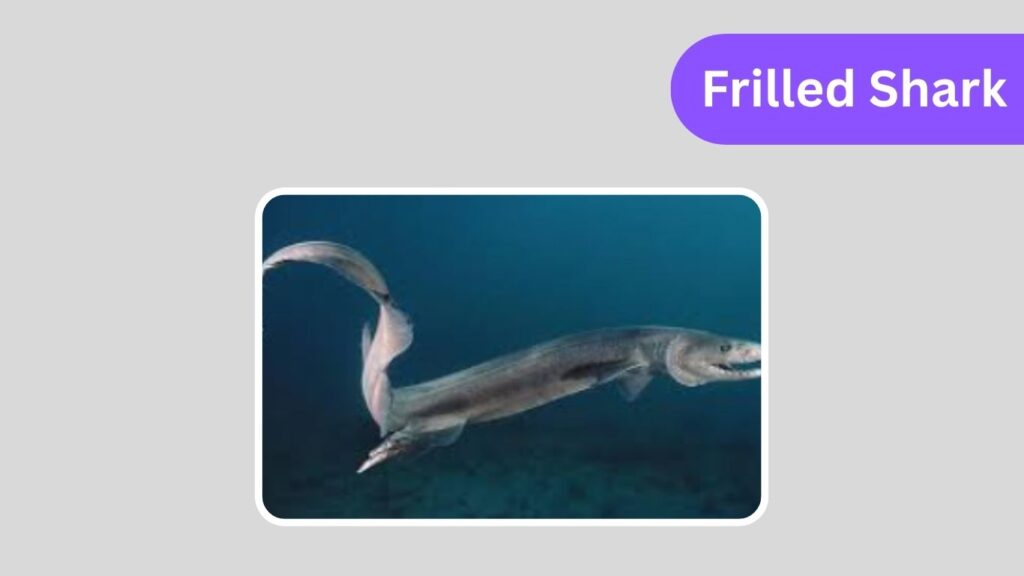
The frilled shark is an ancient species with a snake-like body and frilly gill slits, earning it the name “living fossil.” It has a unique appearance compared to most sharks.
Identification
- Body Shape: Long, eel-like, and flexible
- Color: Dark brown or gray
- Gill Slits: Six pairs of frilly, lace-like gills
- Teeth: Multiple rows of needle-sharp teeth
- Size: Can grow up to 6 feet (1.8 meters) long
How Deep Do Frilled Sharks Live?
They typically live at depths between 500 and 4,900 feet (150 to 1,500 meters), near the continental slope and deep ocean floors.
Natural Habitat of the Frilled Shark
Frilled sharks are found in deep waters off the coasts of Japan, New Zealand, and Australia. They prefer cold, dark habitats along the ocean floor.
Diet and Hunting Style
They feed mainly on squid, smaller sharks, and fish. Their flexible body and sharp teeth help them catch slippery prey. Frilled sharks use a sudden lunge to grab food.
10. Blobfish – The Gelatinous Deep-Sea Dweller
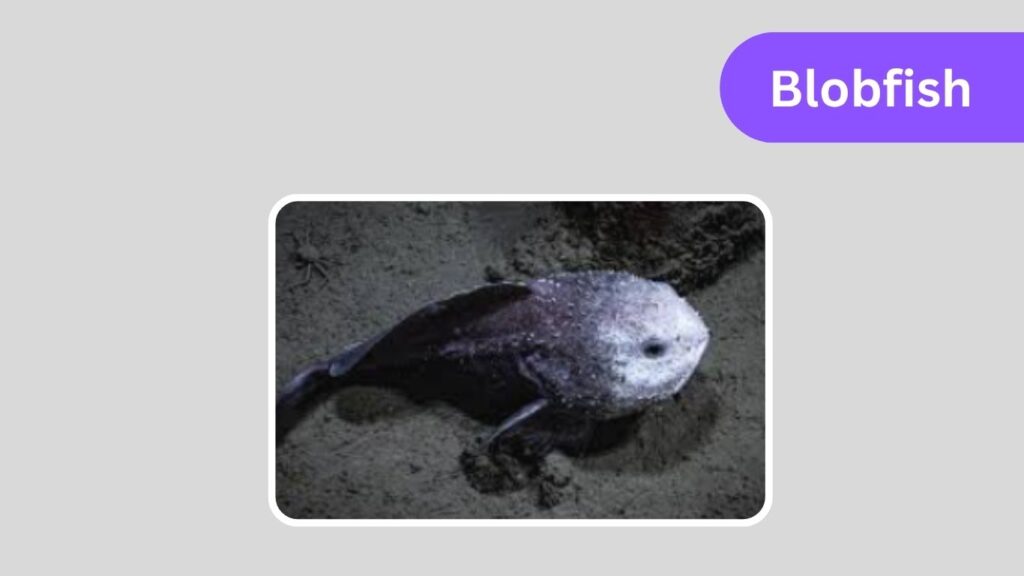
The blobfish is famous for its unusual, gelatinous appearance when brought to the surface. It lives deep in the ocean, where its soft body helps it survive high pressure.
Identification
- Body Shape: Soft, jelly-like, and saggy when out of water
- Color: Pale pink or grayish
- Skin: Gelatinous with no scales
- Size: About 12 to 24 inches (30 to 60 cm) long
How Deep Do Blobfish Live?
Blobfish live at depths of 2,000 to 3,900 feet (600 to 1,200 meters), where water pressure is very high.
Natural Habitat of the Blobfish
They are found off the coasts of Australia and New Zealand, living near the deep ocean floor on muddy slopes.
Diet and Feeding Style
Blobfish are scavengers that eat mostly dead animals and organic matter that falls from above. Their soft body helps them float just above the sea floor with minimal energy.
11. Telescopefish – The Deep-Sea Sniper
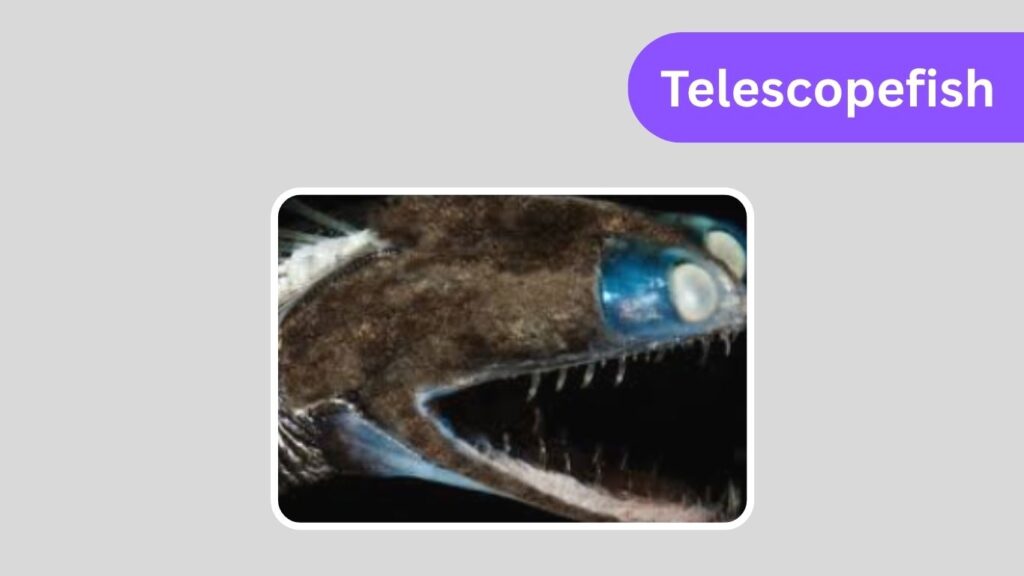
The telescopefish is named for its large, tubular eyes that help it see in the dark deep ocean. Its body is slender and covered with tiny scales.
Identification
- Body Shape: Long and slender
- Color: Silvery or transparent
- Eyes: Large, tubular, and upward-pointing
- Mouth: Large with sharp teeth
- Size: Usually about 10 to 12 inches (25 to 30 cm) long
How Deep Do Telescopefish Live?
They live at depths between 1,000 and 3,600 feet (300 to 1,100 meters) in the mesopelagic zone.
Natural Habitat of the Telescopefish
Found in deep ocean waters worldwide, telescopefish drift silently through midwater, hunting in near-total darkness.
Diet and Hunting Style
Telescopefish feed on smaller fish and crustaceans. Their large eyes are adapted to detect faint bioluminescent signals, helping them locate prey from far away.
12. Cookiecutter Shark – The Sneaky Biter
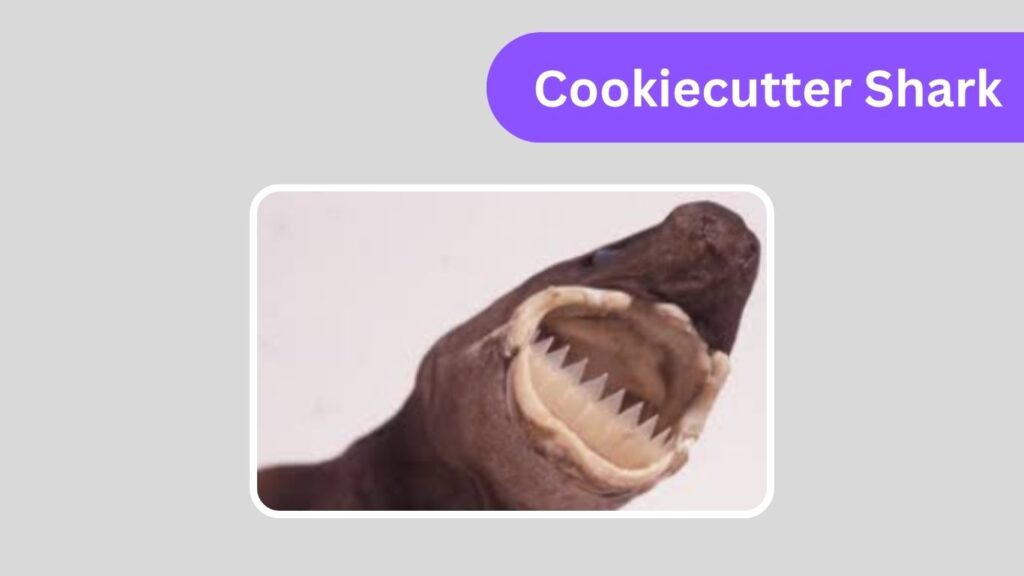
The cookiecutter shark is a small deep-sea shark known for its unique feeding method: it bites round chunks out of larger animals, leaving cookie-shaped wounds.
Identification
- Body Shape: Small and stout
- Color: Dark brown to black with a lighter belly
- Teeth: Sharp, shaped like small knives, arranged in a circle
- Size: About 16 to 22 inches (40 to 56 cm) long
How Deep Do Cookiecutter Sharks Live?
They live between 650 and 3,300 feet (200 to 1,000 meters), often migrating vertically in the ocean at night.
Natural Habitat of the Cookiecutter Shark
Found in tropical and subtropical oceans worldwide, they spend the day in deeper water and move closer to the surface at night.
Diet and Feeding Style
Cookiecutter sharks latch onto larger animals like whales, dolphins, and big fish, then twist to bite out a chunk of flesh. They also scavenge and eat small prey.
13. Black Swallower – The Deep-Sea Glutton
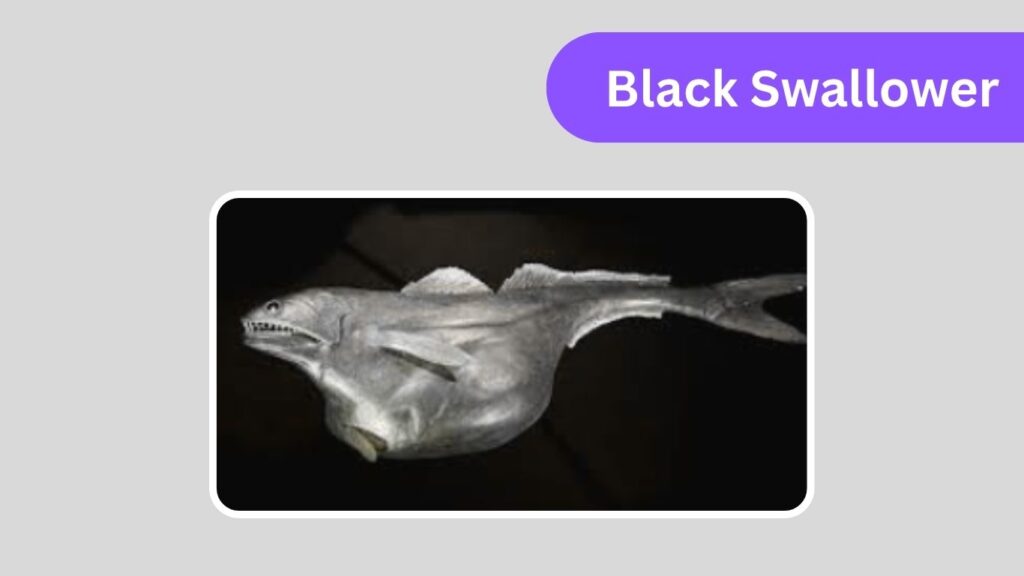
The black swallower is known for its ability to swallow prey much larger than itself, thanks to its stretchy stomach and flexible body.
Identification
- Body Shape: Small and slender
- Color: Deep black or dark brown
- Mouth: Large with sharp, curved teeth
- Size: Usually around 6 to 9 inches (15 to 23 cm) long
How Deep Do Black Swallowers Live?
They live at depths between 1,000 and 3,300 feet (300 to 1,000 meters), mostly in the mesopelagic zone.
Natural Habitat of the Black Swallower
Found worldwide in deep ocean waters, they drift silently through the midwater zone, hunting small fish.
Diet and Hunting Style
Black swallowers eat smaller fish and squid. They can swallow prey twice their own size by stretching their stomachs, making them extreme deep-sea gluttons.
14. Tripod Fish – The Deep-Sea Percher
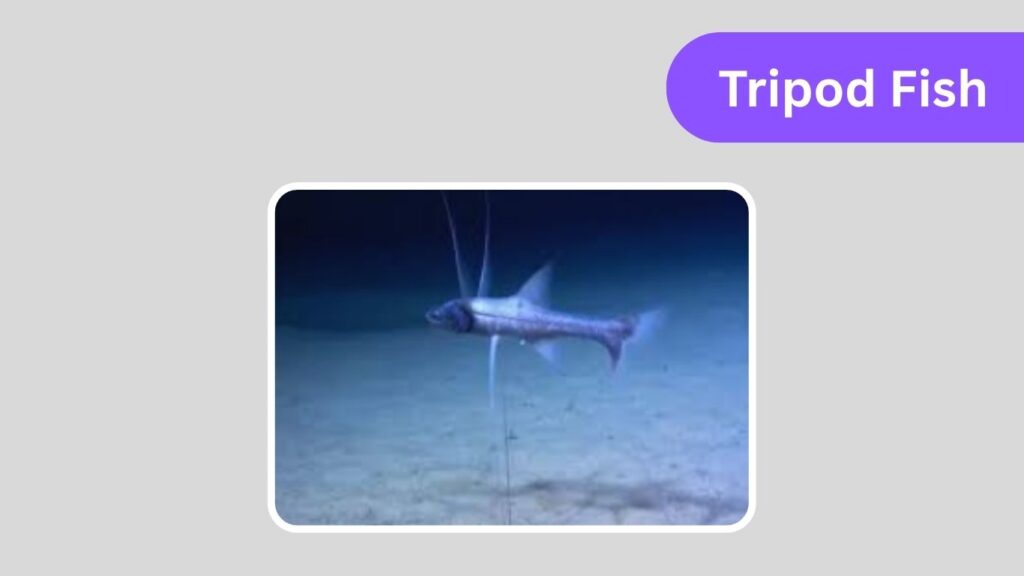
The tripod fish is unique because it uses its long, stiff fins to “stand” on the ocean floor like a tripod, waiting for food to pass by.
Identification
- Body Shape: Elongated with a small head
- Color: Pale or silvery
- Fins: Very long pelvic and caudal fins used for standing
- Size: About 12 to 15 inches (30 to 38 cm) long
How Deep Do Tripod Fish Live?
They live at depths of 4,000 to 9,800 feet (1,200 to 3,000 meters), mostly on soft muddy bottoms.
Natural Habitat of the Tripod Fish
Found mostly in the deep ocean basins of the Atlantic and Pacific Oceans, tripod fish perch on the seafloor using their fin rays.
Diet and Hunting Style
Tripod fish feed on small crustaceans and zooplankton. They stay motionless on their fins and catch prey that drifts nearby.
15. Deep-Sea Hatchetfish – The Silvery Lantern
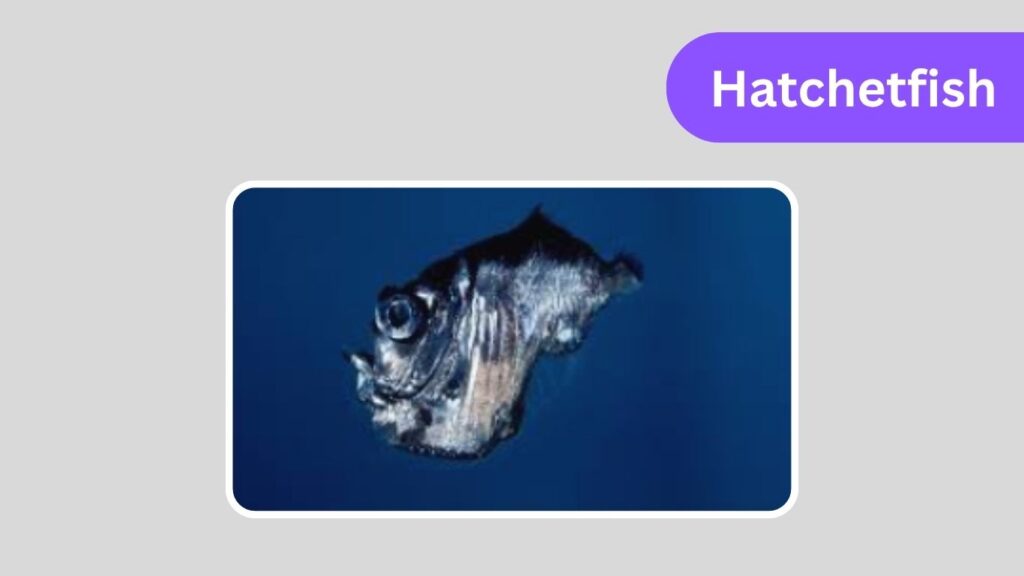
The deep-sea hatchetfish has a thin, flat body that shines with silvery light, helping it blend into faint light from above.
Identification
- Body Shape: Thin, flat, and hatchet-shaped
- Color: Silvery with photophores (light-producing organs)
- Eyes: Large, adapted for low light
- Size: Around 2 to 4 inches (5 to 10 cm) long
How Deep Do Deep-Sea Hatchetfish Live?
They live between 650 and 3,300 feet (200 to 1,000 meters), mainly in the mesopelagic zone.
Natural Habitat of the Deep-Sea Hatchetfish
Found in deep ocean waters worldwide, they swim in midwater and use their silvery bodies for camouflage.
Diet and Hunting Style
Hatchetfish feed on small crustaceans and plankton. Their bioluminescence helps them hide from predators below by matching downwelling light.
16. Snailfish – The Deep-Sea Soft Swimmer
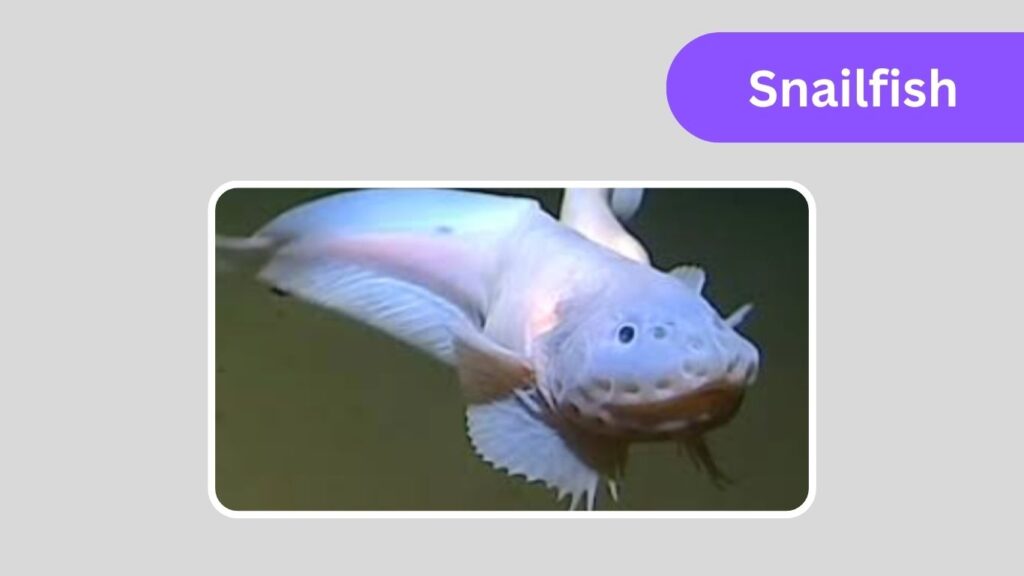
Snailfish are soft-bodied, flexible fish that live at some of the greatest depths on Earth. They have adapted to survive extreme pressure and cold.
Identification
- Body Shape: Soft, tadpole-like, with large heads
- Color: Pale or translucent
- Skin: Jelly-like and scaleless
- Size: Varies, often 6 to 12 inches (15 to 30 cm)
How Deep Do Snailfish Live?
Some snailfish species live deeper than 26,000 feet (8,000 meters), including the deepest parts of the ocean trenches.
Natural Habitat of the Snailfish
They inhabit the deepest ocean trenches, like the Mariana Trench, where almost no other fish can survive due to extreme pressure.
Diet and Hunting Style
Snailfish feed on small crustaceans and worms found on or near the ocean floor. Their soft bodies help them survive in crushing depths.
17. Pelican Eel – The Big-Bellied Hunter
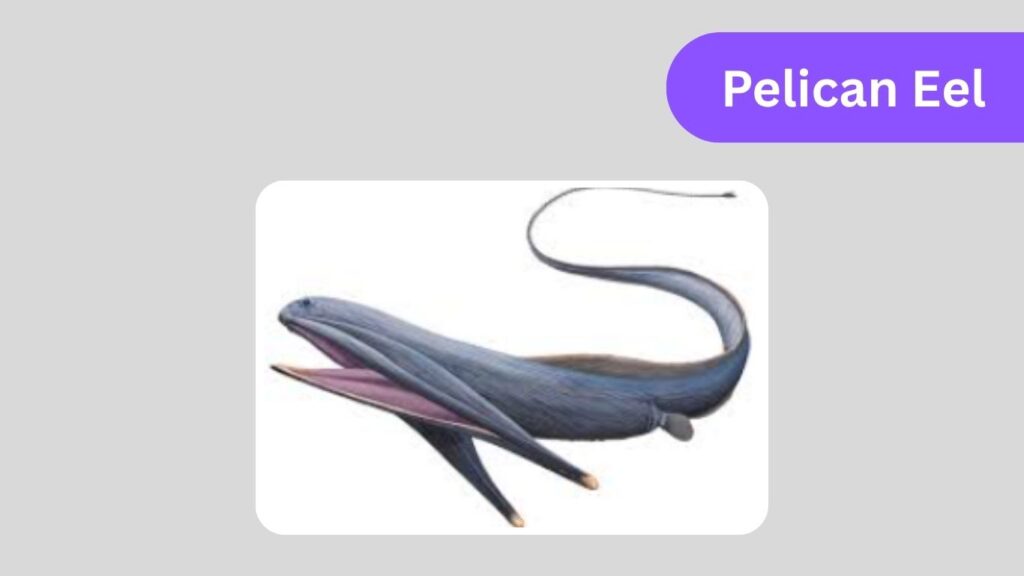
The pelican eel is known for its enormous, expandable mouth that looks like a pelican’s pouch. It uses this huge mouth to scoop up prey in the dark depths.
Identification
- Body Shape: Long and slender with a small tail fin
- Color: Dark brown or black
- Mouth: Very large, expandable like a pouch
- Size: About 3 feet (1 meter) long
How Deep Do Pelican Eels Live?
They live at depths ranging from 1,000 to 16,000 feet (300 to 5,000 meters), mostly in the bathypelagic zone.
Natural Habitat of the Pelican Eel
Found worldwide in deep ocean waters, pelican eels swim slowly in the open ocean’s dark zones.
Diet and Hunting Style
Pelican eels feed on small fish and crustaceans. Their large mouths allow them to swallow prey whole, even if it is bigger than their head.
18. Coffinfish – The Weird Deep-Sea Blob
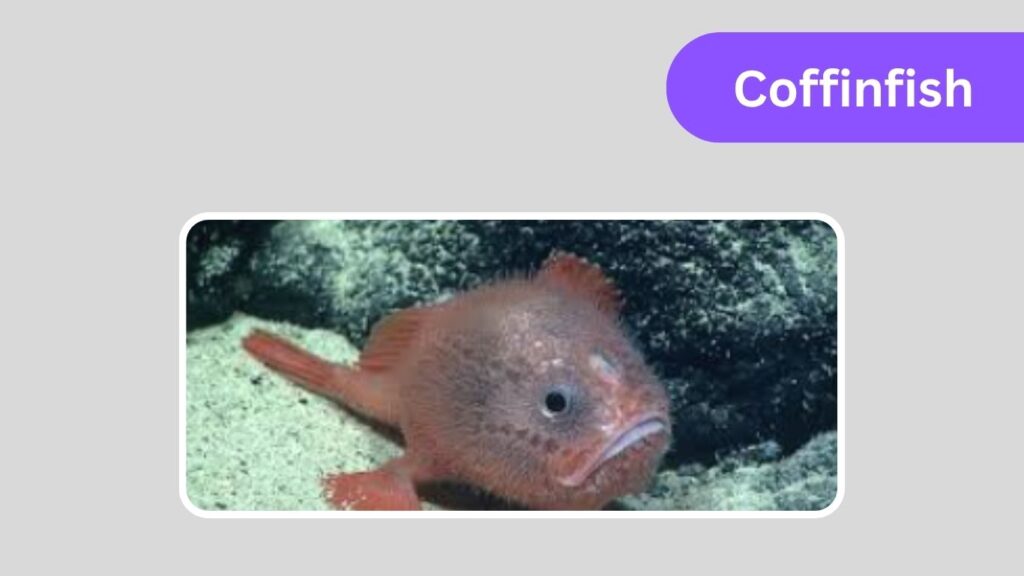
The coffinfish is a strange-looking deep-sea fish with a round, lumpy body and a unique way of floating using gas sacs inside its body.
Identification
- Body Shape: Round and lumpy with soft skin
- Color: Usually brown or reddish
- Fins: Small and rounded
- Size: About 8 to 12 inches (20 to 30 cm) long
How Deep Do Coffinfish Live?
They live at depths between 500 and 3,300 feet (150 to 1,000 meters), often near the ocean floor.
Natural Habitat of the Coffinfish
Found in the deep waters of the Indo-Pacific, coffinfish use a gas bladder inside their bodies to float just above the seafloor.
Diet and Hunting Style
They are ambush predators that feed on small fish and crustaceans, waiting motionless until prey comes near.
19. Sea Devil – The Fearsome Angler
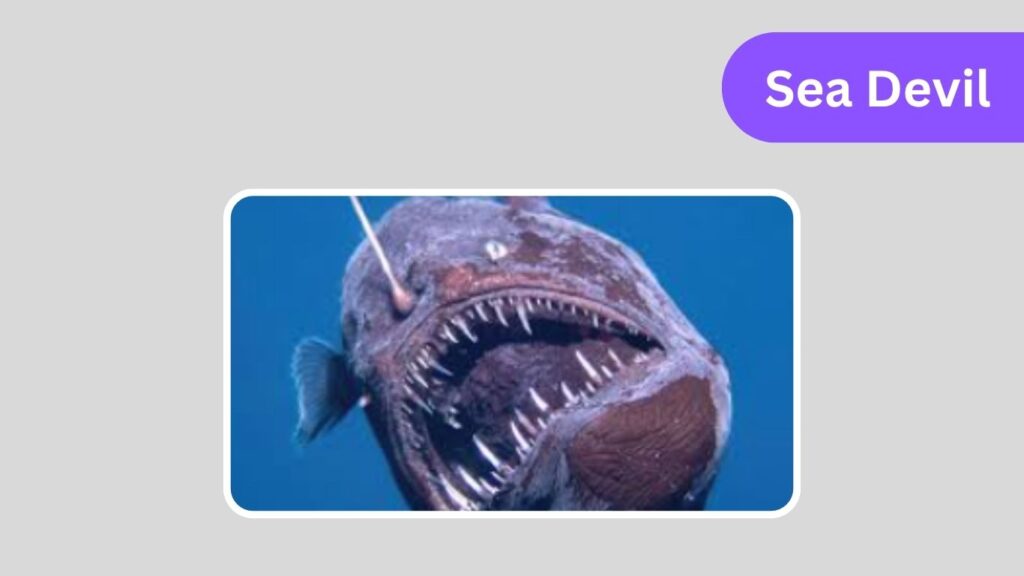
The sea devil is a type of deep-sea anglerfish known for its large size and glowing lure used to attract prey in total darkness.
Identification
- Body Shape: Large, round body with a huge head
- Color: Dark brown or black
- Lure: A Bioluminescent rod that extends from the head
- Teeth: Long and sharp
- Size: Can grow up to 3 feet (1 meter) or more
How Deep Do Sea Devils Live?
Sea devils live at depths ranging from 660 to 9,800 feet (200 to 3,000 meters), mostly in the bathypelagic zone.
Natural Habitat of the Sea Devil
They are found in deep ocean waters worldwide, often near the continental slope and abyssal plains.
Diet and Hunting Style
Sea devils use their glowing lure to attract smaller fish and squid. When prey comes close, they snap it up with their sharp teeth.
20. Lanternfish – The Deep-Sea Light Show
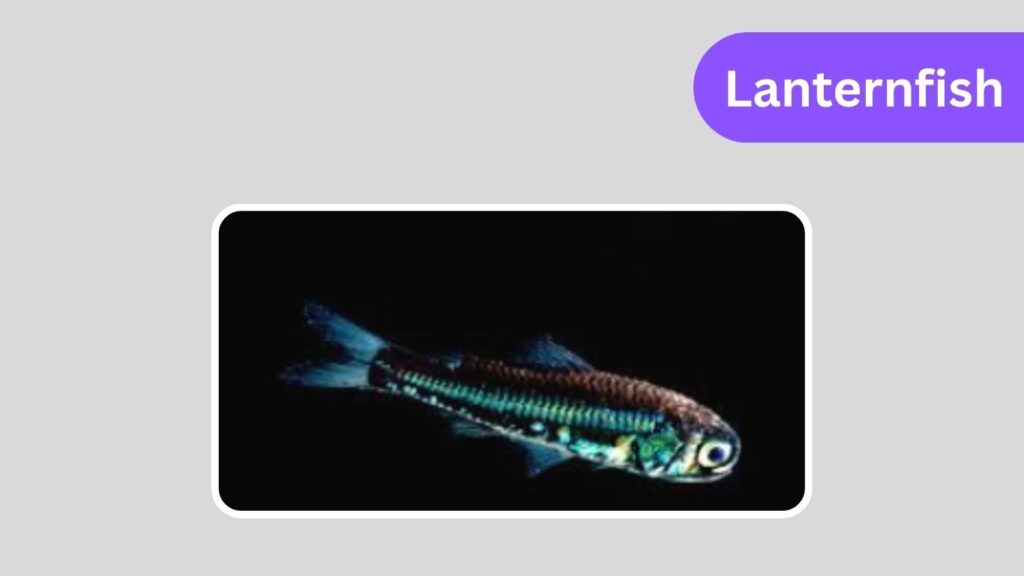
Lanternfish are small, glowing fish that make up a huge part of the deep-sea ecosystem. Their bioluminescent bodies help them communicate and hide in the dark ocean.
Identification
- Body Shape: Small and slender
- Color: Dark with glowing photophores (light organs)
- Eyes: Large and adapted to low light
- Size: Usually 2 to 6 inches (5 to 15 cm) long
How Deep Do Lanternfish Live?
They live at depths from 650 to 3,300 feet (200 to 1,000 meters) but migrate vertically daily closer to the surface.
Natural Habitat of the Lanternfish
Lanternfish are found worldwide in deep ocean waters. They form large schools and migrate up and down the water column each day.
Diet and Hunting Style
They feed on plankton and small crustaceans. Their glowing lights help them find mates and confuse predators.
Deep-sea fish are some of the most extraordinary animals in the ocean. Their strange shapes, glowing lights, and powerful hunting skills show how life can adapt to the toughest places on Earth. By studying these fish, scientists learn more about the deep ocean’s hidden world and the amazing ways creatures survive without sunlight. Whether it’s the anglerfish’s glowing lure or the giant isopod’s armor, these deep-sea dwellers remind us how diverse and surprising life beneath the waves can be.