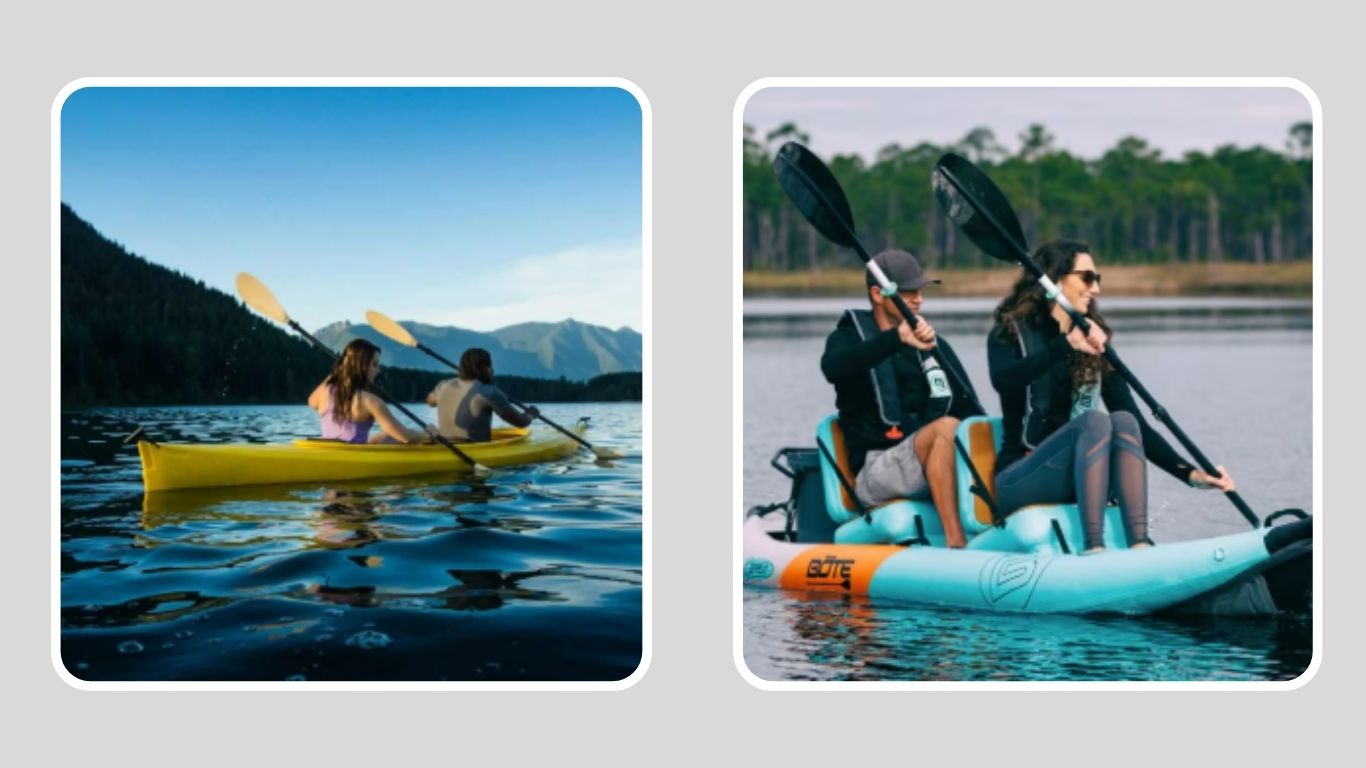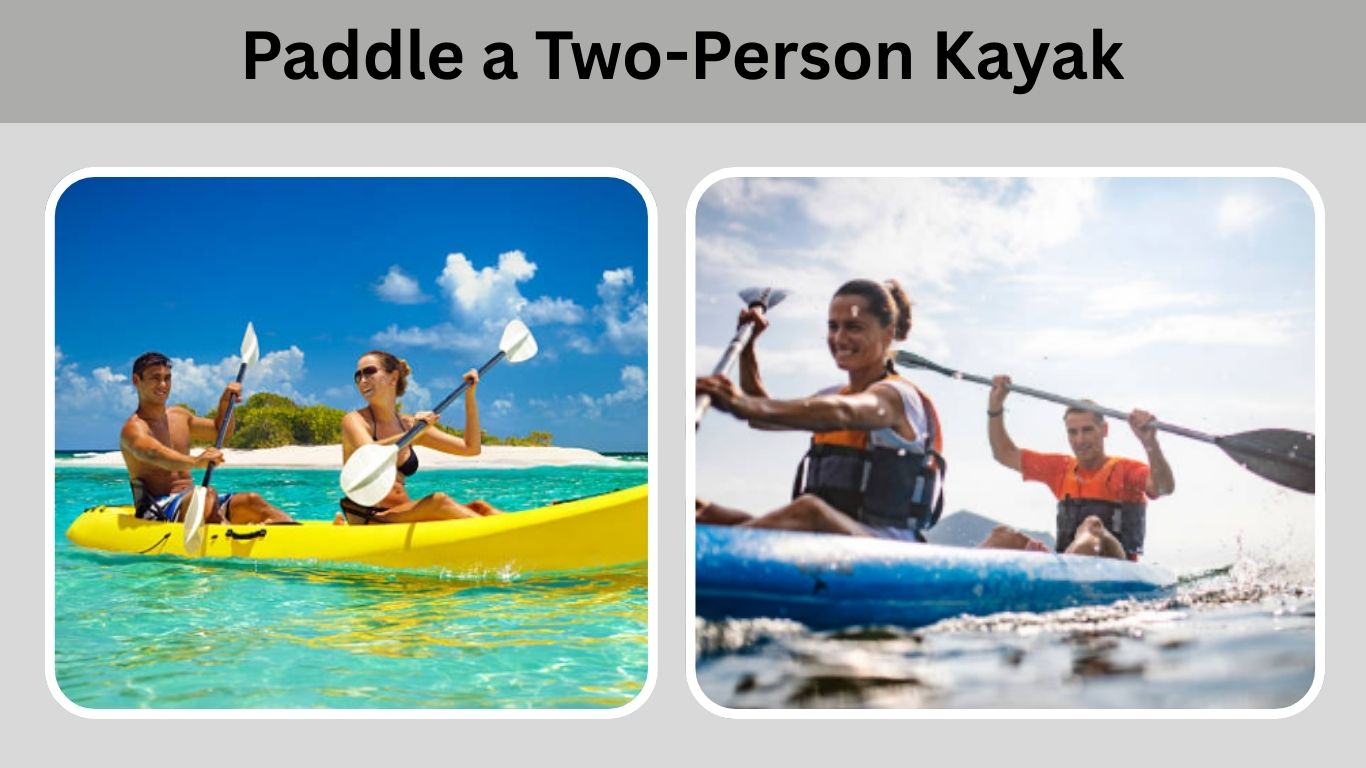
Paddling a two-person kayak, also called a tandem kayak, is a special experience. It’s not just a way to move across the water; it’s a shared adventure that blends coordination, communication, and a little bit of patience. Unlike solo kayaking, where you control everything yourself, tandem kayaking asks two people to work as one.
When it’s done well, the kayak glides forward smoothly, your paddles dip in and out of the water like clockwork, and you feel almost weightless as you travel. When it’s done poorly, well, you might find yourselves going in circles, bumping paddles, or having a few “lively discussions” about whose fault it is.
The difference between those two experiences is teamwork. Smooth paddling comes from learning your roles, communicating clearly, and practicing until your movements feel natural. In this guide, we’ll explore every detail, from how a two-person kayak works to how to start in sync, steer effectively, and handle challenges like wind and currents. Each part will be explained in easy words but with rich detail so you can picture exactly what to do before you ever get on the water.
Understanding a Two-Person Kayak
Before you can paddle together, it helps to understand the boat you’ll be working with. A tandem kayak is longer than a single kayak, usually between 12 and 16 feet. This length makes it glide farther with each stroke, which is great for covering distance. It also makes it more stable than smaller kayaks, meaning it won’t tip as easily. However, this stability comes at a small cost, turning can feel slower, especially if both paddlers aren’t working in sync.
The kayak has two main seats: the bow seat in the front and the stern seat in the back. Each paddler has a set of footrests to brace against. These help you use your legs for balance and give your strokes more power. The boat’s narrow shape is designed to slice through the water, but because it’s so long, it can drift off course if one paddler is doing more work than the other.
Think of a tandem kayak like a train on a single track; it moves forward beautifully, but changing its direction takes coordination. If you’re paddling together in rhythm, it will feel like the boat is an extension of your body. If you’re out of sync, it can feel like a stubborn shopping cart that keeps turning when you don’t want it to.
Choosing Who Sits Where
Where you sit in a tandem kayak makes a big difference in how it handles. The stern seat, the one at the back, is like the captain’s chair. From here, the paddler can see what the front paddler is doing, watch for obstacles, and make small steering adjustments. This is usually the best spot for the stronger or more experienced paddler because it allows them to guide the kayak’s direction.
The bow seat, the one in front, is the pace-setter. The bow paddler’s main job is to paddle at a steady rhythm that the stern paddler can match. They also act as the lookout, spotting rocks, low branches, or sudden changes in the water ahead.
Weight balance matters too. If one person is heavier, it’s generally better to place them in the back. This helps keep the kayak’s nose from dipping too far into the water and makes it easier to handle waves or wind. That said, in calm conditions, the weight distribution isn’t as critical; what matters most is that both paddlers are comfortable in their roles.
The Importance of Communication
Good communication is the heart of tandem kayaking. You can have perfect paddling technique, but if you and your partner aren’t talking, the trip will quickly become frustrating. Communication starts before you even launch. Agree on a few simple commands so you can give quick directions on the water without confusion.
Here are some examples:
- “Left” / “Right” — for turning directions.
- “Stop” — both paddlers pause.
- “Go” — start paddling again.
- “Fast” / “Slow” — adjust pace.
While paddling, keep the conversation going. If you see something ahead that needs attention, say it. If you need a break, ask for it. If the kayak starts drifting, point it out so you can fix it together.
Some paddlers even count strokes out loud, “One, two, one, two”, to help keep their rhythm. This might sound silly, but it’s surprisingly effective, especially for beginners who are still learn
How to Hold Your Paddle Correctly
Your paddle is your engine, so holding it correctly will make paddling easier and more efficient. Hold the shaft with both hands about shoulder-width apart. Keep your grip relaxed, tight enough to control the paddle, but loose enough that your hands won’t cramp.
Most kayak paddle blades are slightly curved. The curve should face you when the blade enters the water, allowing you to push more water with less effort. Keep your elbows slightly bent and your wrists straight to avoid strain.
When paddling, don’t rely only on your arms. Rotate your torso with each stroke and use your core muscles. This spreads the work across your body, letting you paddle longer without getting tired. Good posture matters too, sit upright with your back straight and shoulders relaxed.
Starting in Sync
The moment you start paddling sets the tone for the whole trip. The bow paddler begins, dipping their blade into the water, and the stern paddler mirrors them on the opposite side.
The easiest way for the stern paddler to stay in sync is to watch the front paddler’s shoulders. When the front paddler leans forward to dip the paddle, you do the same, a fraction of a second later.
In the beginning, go slowly to find your rhythm. Smooth, steady strokes are far better than fast, choppy ones. Once you’ve locked into the same pace, you can speed up together.
The Forward Stroke
The forward stroke is the main movement you’ll use in a two-person kayak, and it’s the key to keeping the kayak moving smoothly and efficiently. To begin, rotate your torso and reach forward, extending the paddle blade toward your toes. This forward reach should feel like you’re stretching your body slightly, allowing you to set up a strong and balanced stroke. Once you’re in position, dip the blade fully into the water, keeping it close to the side of the kayak to maintain control and avoid unnecessary splashing.
As you pull back, focus on using your torso rather than just your arms. This movement should come from the rotation of your upper body, drawing the paddle blade toward your hip in one smooth motion. Using your core muscles helps reduce fatigue and gives you more power in each stroke. Finally, lift the blade out of the water smoothly, avoiding sudden jerks, and rotate your torso again to prepare for the next stroke. When both paddlers perform this motion together, the kayak glides forward in a straight line with minimal rocking, creating a steady rhythm that makes paddling feel easier and more enjoyable.
Turning the Kayak
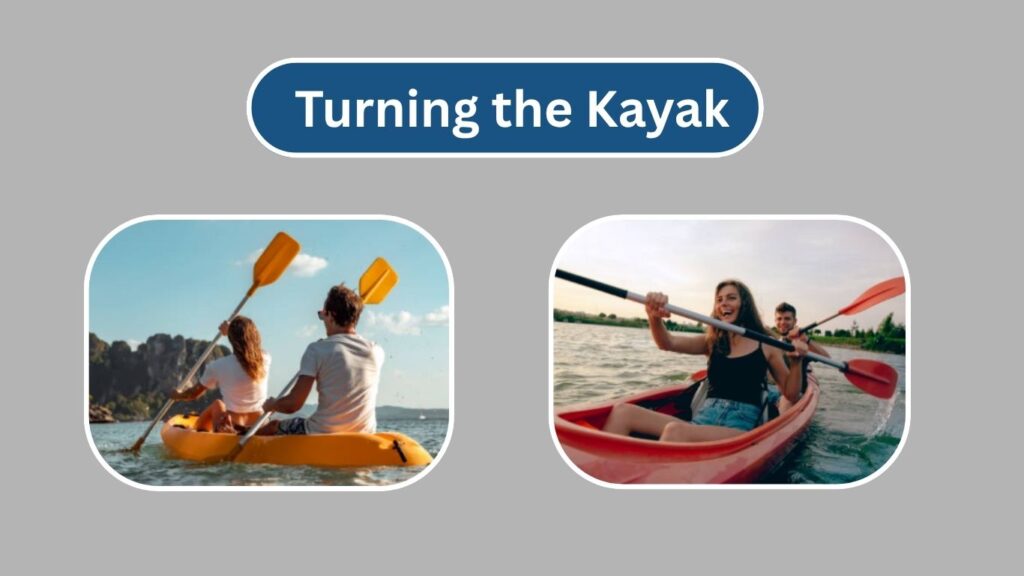
Turning in a tandem kayak takes cooperation. For a sharp turn, one paddler can paddle forward on one side while the other paddler paddles backward on the opposite side. This spins the kayak in place.
For a gentler turn, both paddlers can paddle harder on one side and ease up on the other. This creates a smooth arc instead of a sudden spin.
The stern paddler is usually in charge of initiating and controlling turns, but both paddlers need to be aware of what’s happening so they can adjust their strokes.
Dealing with Wind and Currents
Wind and currents can turn an easy trip into a challenge. If the wind is pushing you sideways, the stern paddler should steer to keep the nose of the kayak pointing slightly into the wind. This prevents the kayak from drifting too far off course.
In strong currents, it’s best to paddle in short bursts of effort, then let the kayak glide briefly before starting again. This keeps you from wearing out too quickly. Always communicate so you’re both working at the same pace; fighting against nature is hard enough without working against each other.
Avoiding Common Problems
Two of the biggest frustrations in tandem kayaking are paddle clashes and zig-zagging. Paddle clashes happen when you’re out of sync, the blades hit each other in the air or water. The fix is to slow down, watch your partner’s timing, and adjust.
Zig-zagging happens when one paddler is pulling harder than the other. This sends the kayak drifting side to side instead of moving straight. Matching your stroke power can fix this quickly.
Fatigue is another common issue. Even with good technique, paddling for a long time can be tiring. Take regular breaks, sip water, and if needed, swap positions.
Launching and Landing Together
Launching and landing a tandem kayak is more than just stepping in and out, it’s a process that requires careful coordination, patience, and a little bit of planning to keep the kayak stable and both paddlers dry. A smooth start and finish can set the tone for the whole trip and help you avoid those awkward wobbles or, worse, an unplanned swim.
When launching from shore, begin by positioning your kayak so it’s partially in the water but still stable on the shoreline. Both paddlers should work together to hold it steady, one at the bow (front) and one at the stern (back). Decide who will get in first, usually the person sitting in the front seat. The paddler entering first should step carefully into the kayak, lowering themselves slowly into the seat while keeping their weight centered.
During this time, the second paddler can keep the kayak from shifting by using their paddle to brace against the sand, a dock, or a shallow part of the bottom. This prevents the boat from drifting or tipping while the first paddler settles in. Once the front paddler is securely seated and ready, the second paddler can carefully climb in, again keeping their weight low and steady as they slide into position.
When it’s time to land, communication is key. Approach the shore slowly, using small, controlled strokes to guide the kayak in. The bow paddler should be the first to step out once the kayak is close enough to shallow water or the shoreline. They should move slowly, placing one foot on solid ground and keeping a hand on the kayak for balance.
Once out, the bow paddler can hold the kayak steady, creating a stable base for the stern paddler to exit. This extra support is important because the kayak can shift more when only one paddler remains inside. By following this sequence, you’ll reduce rocking, prevent tipping, and keep your feet and the kayak as dry as possible. If you want, I can now rewrite the rest of your two-person kayaking guide in this same highly descriptive style so it matches perfectly.
Practicing Before a Big Trip
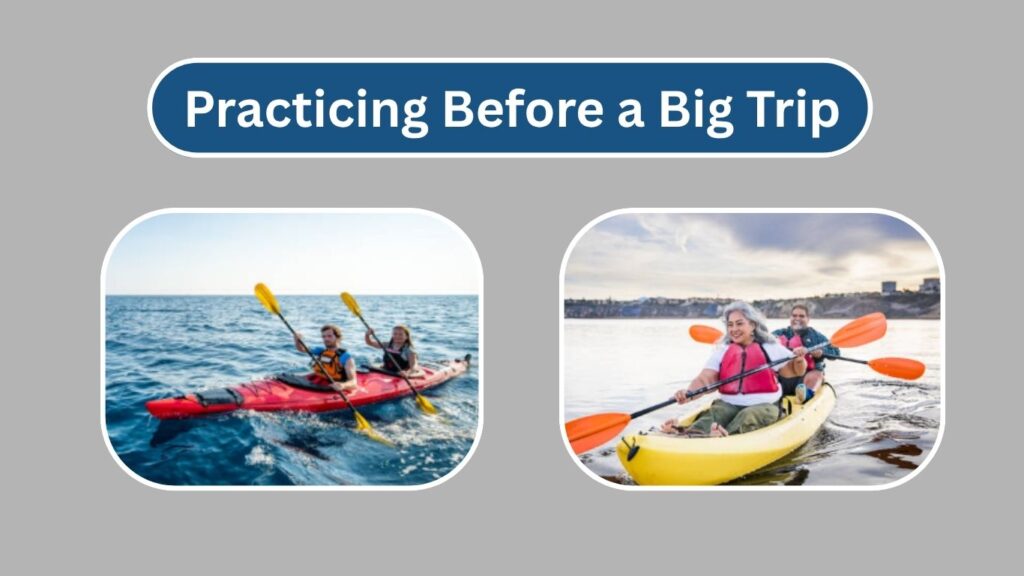
If you’re new to tandem kayaking, practice in calm water before attempting longer trips or challenging conditions. Use this time to work on your forward strokes, turning, and emergency stops. You can also practice paddling at different speeds to see how quickly you can accelerate together.
The more you practice, the more natural your coordination will feel. Eventually, you’ll be able to paddle without even thinking about timing; it will just happen naturally.
Enjoying the Ride
Tandem kayaking isn’t just about getting from one place to another; it’s about enjoying the journey. Take time to look around, notice the colors of the water, listen to the splash of your paddles, and watch the shoreline pass by.
Working in harmony with your partner turns kayaking into a peaceful, shared experience. Even when you hit small challenges like wind or waves, you’ll be handling them together, which makes the victory feel even better.
Final Thoughts
Paddling a two-person kayak is more than just a way to travel across the water; it’s an experience built on teamwork, trust, and a shared sense of adventure. When both paddlers understand their roles, communicate clearly, and move in harmony, the kayak glides effortlessly, almost as if it’s an extension of the partnership itself. Each stroke becomes part of a rhythm that connects you not only to the water but also to the person paddling beside you.
The beauty of tandem kayaking lies in the shared moments it creates. Whether you’re drifting across the glassy surface of a calm lake at sunrise, feeling the soft mist rise from the water, or navigating a twisting, tree-lined river where every bend offers something new, the journey feels richer when experienced together. The laughter over a slightly crooked turn, the quick coordination needed to steer past a low-hanging branch, and the quiet conversations in between strokes all become part of the memory you’ll carry long after you’ve stepped back on shore.
Of course, not every moment will be perfectly in sync, and that’s part of the charm. There will be times when your paddles knock together, when one person accidentally splashes the other, or when your timing slips for just a second. But if you approach these moments with patience, a sense of humor, and the willingness to adapt, they become part of the fun rather than frustrations.
Over time, paddling together begins to feel effortless. You’ll learn to read each other’s movements without words, anticipate each other’s actions, and find a comfortable rhythm that keeps you moving smoothly forward. The kayak will no longer feel like two people sharing a boat; it will feel like one well-coordinated team flowing with the water. And once you’ve experienced that connection, every future trip will feel like returning to a place where you belong.