Transporting a kayak in the back of a truck may seem simple, but without the right method, it can become unsafe and risky. A loose or poorly secured kayak can shift, get damaged, or even cause accidents on the road. That’s why learning how to properly secure your kayak in a truck bed is so important. In this guide, we’ll walk you through step-by-step methods, essential gear, safety tips, and common mistakes to avoid for stress-free transport.
Preparing Your Truck Bed for Kayak Transport
Before you start strapping down your kayak, the first step is making sure your truck bed is ready. A messy or cluttered truck bed can easily damage your kayak, so it’s best to clear out any tools, debris, or sharp objects that might scratch the hull during the ride. Even something as small as gravel or screws can leave marks when the kayak shifts. Giving the bed a quick sweep or wipe ensures you have a safe, smooth surface to work with.
Next, you’ll need to decide whether to keep the tailgate up or down. For shorter kayaks, usually under nine feet, the tailgate can stay up, allowing the kayak to rest neatly inside the bed. Longer kayaks, however, often require the tailgate to be lowered so the kayak can fit. While this provides more space, it also means the kayak will extend beyond the truck bed, requiring extra tie-downs and sometimes a safety flag to comply with local transport laws.
Adding a layer of protection inside the truck bed is also a smart step. A bed mat, foam blocks, or even pool noodles can provide cushioning that reduces scratches and prevents sliding. If you don’t have specialized gear, old blankets or towels can work as a quick DIY solution. This preparation not only keeps your kayak safe but also makes the entire loading and strapping process much easier.
Choosing the Right Gear and Equipment
1. Straps – The Most Important Tool
- Ratchet Straps – Very strong and hold tightly, but can be risky. If overtightened, they may squeeze the kayak’s hull and cause dents.
- Cam Buckle Straps – Easier to use and gentler on the kayak. They hold firmly without damaging the hull, making them a top choice for most kayakers.
2. Tie-Down Points in the Truck Bed
- Most trucks have factory-installed hooks, loops, or rails for strapping down.
- If your truck lacks enough tie-down points, you can add aftermarket D-rings or adjustable track systems.
- The more secure tie-down points you have, the better your kayak will stay in place.
3. Bed Extender for Longer Kayaks
- A bed extender attaches to the truck’s hitch.
- Provides extra support for the section of the kayak that sticks out past the tailgate.
- Helps balance the load and reduces pressure on the straps.
- Very useful when driving on highways or uneven roads.
4. Bow and Stern Tie-Downs
- Extra tie-downs that secure the front and back of the kayak.
- Prevent swaying side-to-side during transport.
- Especially important for long-distance trips or high-speed driving.
5. Optional Accessories for Extra Safety
- Foam Blocks or Kayak Cradles – Give the kayak a stable resting place and reduce shifting.
- Cargo Nets – Add another layer of security by holding the kayak from above.
- Locking Cables – Can be threaded through handles or scupper holes to prevent theft while parked.
Loading the Kayak into the Truck Bed

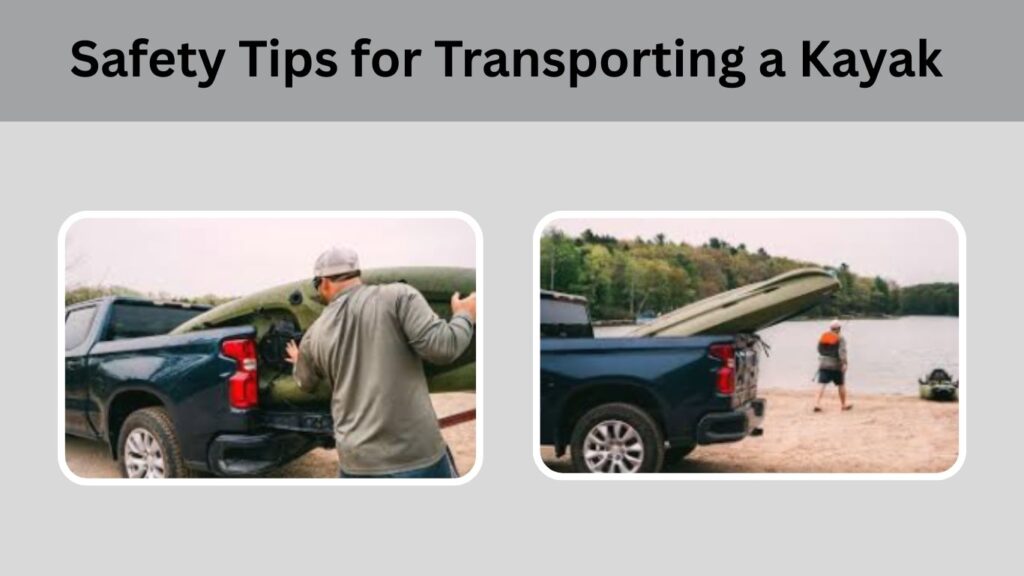
Once your truck bed is ready and your gear is in place, the next step is loading the kayak. This part may seem straightforward, but doing it carefully will prevent injuries and protect your kayak from damage. If you’re loading the kayak by yourself, always lift with your legs instead of your back to avoid strain. Tilt the kayak slightly and slide it in if possible, rather than trying to carry the full weight at once. If the kayak is heavy or extra long, it’s best to have a partner help you lift it into the bed to make the process safer and easier.
When positioning the kayak, always place it with the cockpit facing upward. This prevents water from collecting inside and keeps the kayak more stable. For shorter kayaks, you can usually set them straight in the center of the truck bed. Longer kayaks may need to be placed at a slight angle, with one end touching a corner of the bed near the cab and the other extending toward the opposite corner of the tailgate. This angled method provides better support and helps the kayak fit more securely.
Balance is another important factor. The kayak should be centered so the weight is evenly distributed. If it leans too much to one side, it may shift while driving, putting stress on the straps. If you’re transporting gear inside the kayak, make sure it’s distributed evenly as well so that one side doesn’t become heavier than the other. Taking a few extra minutes to load and position the kayak correctly will save you a lot of trouble once you start driving.
Securing the Kayak in the Truck Bed
1. Positioning and Strapping Down
- Place strong straps over the kayak and thread them through the tie-down points in the truck bed.
- Pull straps snug but not overly tight to avoid dents or warping the hull.
- Use an “X” pattern (crisscross) across the kayak for better stability and to prevent side-to-side shifting.
2. Securing the Bow and Stern
- If the kayak extends beyond the tailgate, secure the bow to the truck’s front tow hooks.
- Attach the stern to the hitch or bumper for added support.
- These tie-downs prevent swaying and bouncing at high speeds or on rough roads.
3. Double-Checking Strap Tension
- Perform a quick tension check after tightening straps.
- The kayak should stay firmly in place when pushed or pulled.
- Avoid overtightening, which can cause dents or deform the hull.
4. Shake Test for Security
- Gently push the kayak side to side.
- If it doesn’t shift, the kayak is properly secured.
- Add padding under straps where they press on the kayak to prevent pressure marks.
5. Managing Strap Ends
- Tie down or tuck away any loose strap ends.
- Prevents straps from flapping in the wind while driving.
- Reduces noise and prevents straps from fraying or loosening mid-trip.
Using a Truck Bed Extender
For many kayakers, a standard truck bed isn’t long enough to fully support their boat, especially if the kayak is over ten feet. This is where a truck bed extender comes in handy. A bed extender attaches to the hitch receiver at the back of your truck and adds extra length, allowing your kayak to rest securely instead of dangling too far past the tailgate. With this added support, you won’t have to worry about the kayak bending, bouncing, or putting too much strain on your straps during the ride.
There are a few types of extenders to choose from. The most common are horizontal extenders, which simply lengthen the bed and give more support for long kayaks. Some extenders can also be adjusted vertically, allowing you to transport your kayak standing upright if needed. Whichever type you choose, most extenders are designed to be lightweight, adjustable, and easy to install.
Setting one up is simple. You slide the extender into your truck’s hitch receiver, secure it with a pin, and then adjust the height or length to match your truck bed. Once in place, the kayak can rest on the extender just as it does inside the bed, and you can strap it down for extra stability. Using a bed extender not only makes transport safer, but it also reduces the wear on your kayak and straps, giving you peace of mind on longer trips.
Safety Tips for Transporting a Kayak in a Truck Bed
- Check Straps Regularly
- Road vibrations can loosen straps over time.
- Stop after the first 5–10 minutes of driving to recheck tightness.
- Reinspect straps during long or bumpy trips.
- Improve Visibility
- If the kayak extends past the truck bed, attach a red flag or reflector to the end.
- At night, use reflective tape or lights if required by local laws.
- Always check your state’s regulations for oversized loads.
- Prevent Theft
- Use a locking cable threaded through kayak handles, seat, or scupper holes.
- Locking up takes little time but deters thieves.
- Provides peace of mind during stops or when leaving the truck unattended.
- Adjust for Weather and Road Conditions
- Drive slower on windy days to reduce crosswind pressure.
- Use a fitted kayak cover in the rain to prevent water pooling.
- Avoid sudden braking, sharp turns, and high speeds to prevent strap failure.
Transporting Multiple Kayaks in a Truck Bed
If you plan to bring more than one kayak, you’ll need to be extra careful about how you load and secure them. The simplest way is to place the kayaks side by side in the truck bed. To prevent scratches or rubbing, add padding between them; foam blocks, pool noodles, or even folded towels can do the trick. When the kayaks sit flat and protected, they’re much less likely to shift or damage each other during the drive.
For very long or narrow kayaks, another option is to angle them slightly in opposite directions so they fit better across the width of the bed. In cases where space is limited, stacking may be necessary. If you stack, always place a thick layer of padding between the kayaks to avoid dents or pressure marks. It’s best to put the heavier kayak on the bottom and the lighter one on top to keep the load stable.
Strapping down multiple kayaks requires a bit more attention. Each kayak should ideally be strapped individually, with its own set of tie-downs. This way, if one strap loosens, the other kayak is still secured. You can also use the crisscross strapping method, placing straps diagonally across both kayaks to hold them together while still anchoring them to the truck bed. For longer trips or highway driving, adding bow and stern tie-downs to each kayak provides an extra layer of security.
If you transport multiple kayaks regularly, it may be worth investing in a specialized truck bed rack or extender designed for carrying more than one boat. These systems raise the kayaks slightly above the truck bed, giving you more space and making loading easier. With careful planning, the right equipment, and proper strapping, hauling two or even three kayaks in a truck bed can be safe, efficient, and stress-free.
Unloading the Kayak Safely
After a long drive, it can be tempting to quickly pull your kayak out of the truck bed and get on the water. However, unloading it carefully is just as important as loading it. Start by parking your truck on level ground so the kayak doesn’t slide or shift when you release the straps. Take your time loosening each strap slowly, making sure the kayak is stable before removing them completely. If you used bow and stern tie-downs, unclip those last so the kayak doesn’t move unexpectedly.
When lifting the kayak out, use the same safety techniques you did when loading. If you’re unloading alone, tilt the kayak and slide one end down first rather than trying to carry the full weight at once. For heavier kayaks, it’s always best to have a partner help. Working together prevents strain and makes the process smoother. Be careful not to drag the kayak across the ground, especially on concrete or asphalt, since this can scrape and wear down the hull. If you need to move it across rough surfaces, consider using a kayak cart or padding under the boat.
Once the kayak is out of the truck, give it a quick inspection. Look for scratches, dents, or dirt that may have collected during transport. Wiping it down with fresh water helps remove dust, salt, or road debris that could damage the kayak over time. Proper unloading and a little post-transport care keep your kayak in good condition and ready for your next adventure.
Common Mistakes to Avoid
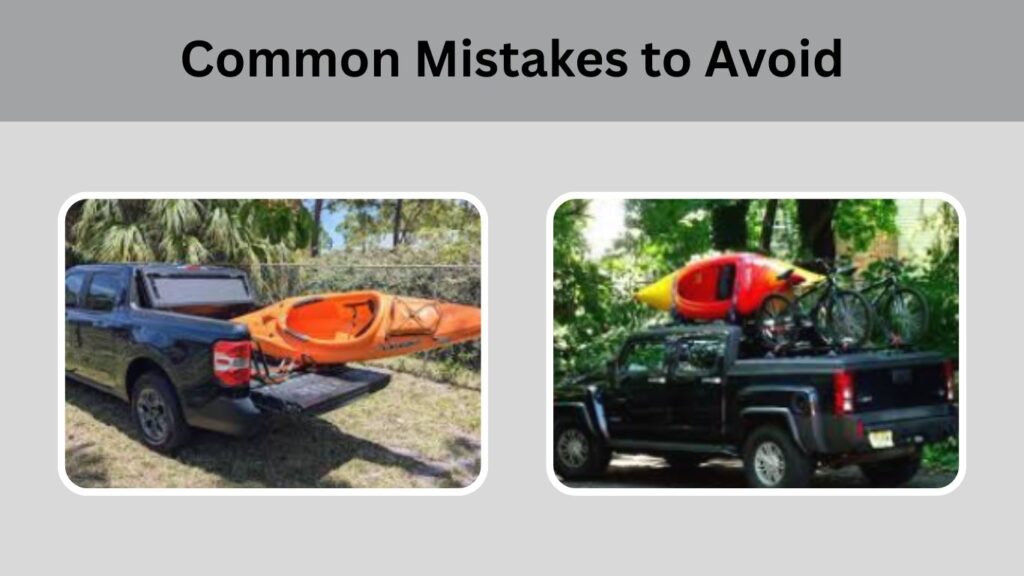
Even with the best intentions, many people make simple mistakes when transporting a kayak in a truck bed. One of the most common is relying on bungee cords instead of proper straps. While bungees may seem convenient, they don’t hold tightly enough and can stretch or snap during the drive, leaving your kayak unsecured. Always use quality ratchet straps or cam buckle straps designed for heavy loads.
Another frequent mistake is over-tightening the straps. It’s easy to assume tighter is always better, but pressing too hard against the kayak’s hull can cause dents, warping, or even cracks in some cases. Straps should be snug enough to prevent movement but not so tight that they deform the boat. Adding a layer of padding under the straps helps distribute the pressure evenly and protects the surface.
For longer kayaks, forgetting bow and stern tie-downs is a risky error. Without these extra connections, the kayak can sway side to side or bounce at the ends, especially at highway speeds. This not only puts stress on your straps but can also create dangerous conditions for other drivers.
Many drivers also overlook legal requirements for oversized loads. If your kayak sticks out more than four feet past the tailgate, most areas require a red flag or reflector at the end. Skipping this step can lead to fines or accidents, so always check the rules in your region. Lastly, don’t leave strap ends flapping in the wind. Loose straps can wear out quickly, create loud distractions, or even come undone mid-drive. Taking a few extra minutes to secure them properly can save a lot of trouble later.
Alternative Transport Options if a Truck Bed Isn’t Enough
- Roof Rack Systems
- Mounts on the cab of your truck.
- Keeps the kayak out of the truck bed, freeing space for gear.
- Works well with stackers or cradles to carry multiple kayaks.
- Ideal for camping, fishing, or hauling extra equipment.
- Kayak Trailers
- Great for hauling several kayaks at once.
- Reduces heavy lifting compared to truck beds or roof racks.
- Perfect for families or paddling groups.
- Lightweight, easy to tow, and often fits in a garage for storage.
- Great for hauling several kayaks at once.
- Inflatable Kayaks
- Deflates and packs into a bag for easy storage.
- Fits in the back seat of a truck, no racks needed.
- Convenient for travel and casual paddling.
- Not as durable or high-performing as rigid kayaks, but very practical.
- Key Takeaway
- You aren’t limited to just using the truck bed.
- Roof racks, trailers, and inflatables each offer safe and efficient alternatives depending on your needs.
Conclusion
Transporting a kayak in a truck bed can be safe and simple with proper preparation. Using the right straps, padding, and tie-downs, plus safety checks like red flags for overhang, reduces risks on the road. Avoid common mistakes like over-tightening or weak bungees. For longer trips or multiple kayaks, roof racks, trailers, or inflatable options offer alternatives. Proper setup ensures smoother, safer, and stress-free kayaking trips.