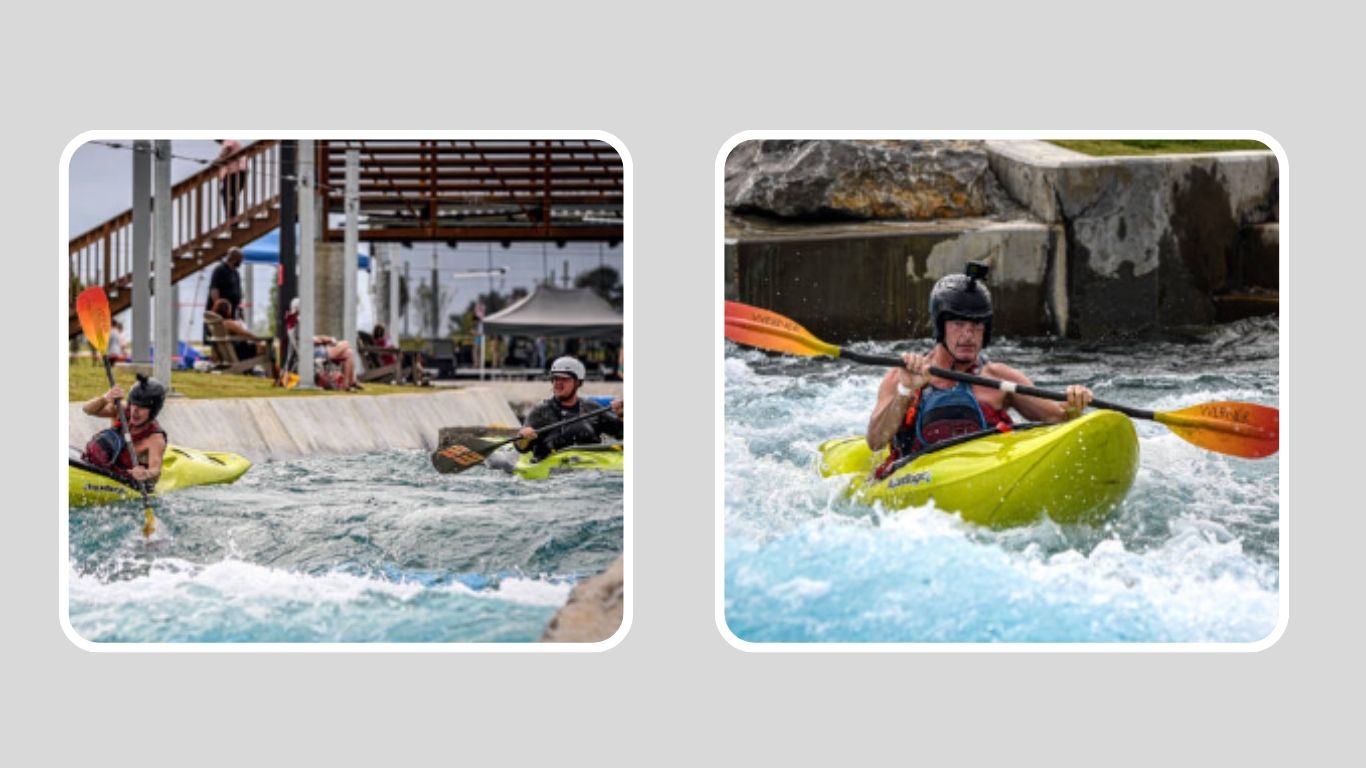
Kayak cross is one of the most exciting and fast-growing water sports, combining the speed of sprint racing with the skill of slalom kayaking. Unlike traditional races, athletes compete head-to-head on challenging courses filled with gates, rolls, and obstacles. This thrilling format has captured attention worldwide, even earning a place in the Olympic Games. In this guide, we’ll explore when kayak cross events take place, the rules that shape the sport, and what participants and spectators can expect.
What Is Kayak Cross?
Kayak cross, also known as extreme slalom, is a fast-paced and action-packed form of whitewater racing. Instead of racing alone against the clock like in traditional slalom kayaking, four athletes launch side by side and compete head-to-head on the same course. The track is designed with gates, obstacles, and sometimes even jumps, forcing paddlers to use both power and precision to stay ahead. In some events, competitors must complete an Eskimo roll during the race, adding an extra challenge.
What makes kayak cross so thrilling is the direct competition. Athletes don’t just fight the water; they also battle each other for position. Contact is allowed within limits, which means bumping, blocking, and tactical moves are part of the game. The combination of speed, skill, and strategy creates an unpredictable race where anything can happen, keeping both racers and spectators on edge until the finish line.
History of Kayak Cross
Kayak cross is a relatively new discipline in the world of paddling sports. It first appeared in the early 2000s as an experimental format created to make whitewater racing more exciting and accessible to a wider audience. Traditional slalom kayaking, while highly technical, was often seen as less thrilling for spectators because athletes raced one at a time. Kayak cross changed that by introducing a head-to-head format, turning the sport into a dramatic and action-filled event.
The International Canoe Federation (ICF) officially recognized kayak cross, originally called extreme slalom, and began including it in international competitions around 2015. Over the years, the sport grew in popularity, with athletes from slalom and freestyle backgrounds joining in. The combination of whitewater challenges and direct competition quickly made it a crowd favorite.
A major milestone came when the International Olympic Committee announced that kayak cross would be added to the Olympic program for Paris 2024. This marked a turning point, elevating the sport from a niche paddling discipline to a globally recognized competition. Today, kayak cross continues to evolve, attracting younger athletes and gaining momentum as one of the most dynamic water sports in the world.
Why It Stands Out
Kayak cross stands out because it blends the best elements of different kayaking disciplines into one adrenaline-filled race. From slalom, it borrows the precision of navigating gates and reading the water. From sprint kayaking, it takes the raw speed and explosive power needed to outpace opponents. And from freestyle, it adds creativity and adaptability as athletes deal with unpredictable moves, rolls, and collisions.
Unlike traditional slalom races, which can feel slow-paced for casual viewers, kayak cross delivers non-stop action. The head-to-head format means that athletes are never just racing against the clock; they’re racing against each other in real time. Contact between boats, strategic blocking, and sudden overtakes keep the outcome uncertain until the very end.
For spectators, this makes kayak cross much more engaging, like watching a mix between motorsport and extreme sports on water. For athletes, it’s a thrilling test of not only skill but also courage, endurance, and mental focus. These qualities are what make kayak cross one of the fastest-growing and most exciting water sports today.
When Does Kayak Cross Take Place?
Seasonal Timing
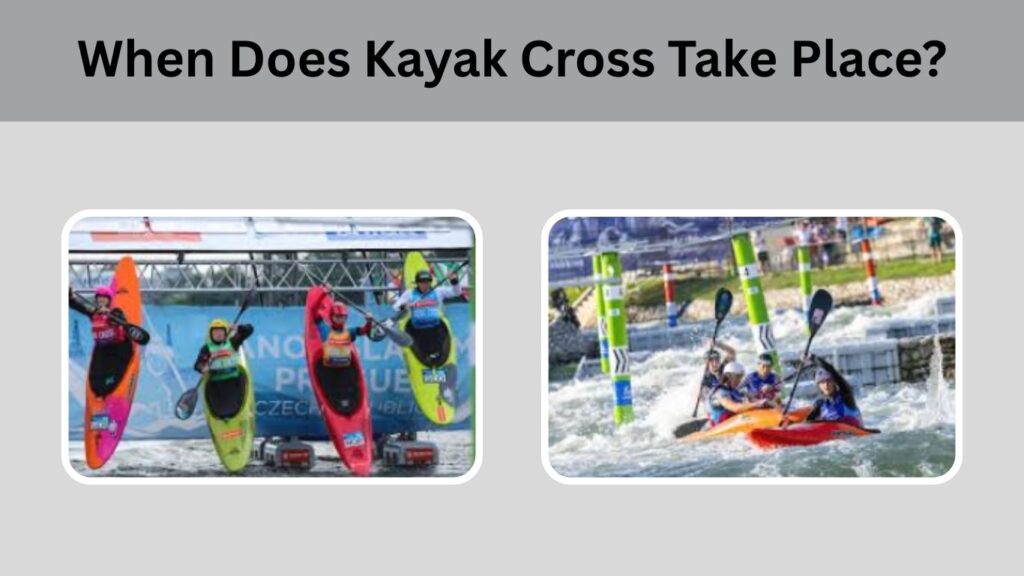
Most kayak cross events are held during spring and summer, when rivers and artificial whitewater courses have safer water levels and more predictable flows. Warmer months also make it easier for athletes and spectators to enjoy the sport without extreme cold conditions. In Europe and North America, competitions often start in late spring and run through early autumn, with the busiest months being June, July, and August. Some events in warmer climates, such as Australia or South America, may take place during their local summer season, ensuring year-round opportunities for the sport.
Major International Events
Kayak cross has become a staple in international whitewater competitions. The International Canoe Federation (ICF) organizes World Cup races that feature kayak cross alongside traditional slalom. These races typically happen in multiple countries each season, giving athletes chances to earn points and rankings. The ICF Canoe Slalom World Championships also include kayak cross as one of the headline events, attracting top paddlers from around the world.
A historic milestone is its inclusion in the Olympic Games, beginning with Paris 2024. The Olympic debut marks the biggest stage yet for kayak cross, guaranteeing that the sport will be seen by millions of viewers worldwide. This global exposure is expected to significantly increase its popularity and inspire more local events in the years to come.
National and Local Competitions
Beyond the international stage, many countries host their kayak cross races. In Europe, nations like France, Germany, and the Czech Republic have strong traditions of whitewater sports, making them frequent hosts of national-level competitions. In North America, both the United States and Canada are building momentum for the sport, often linking events to slalom venues. Even in countries with developing paddling scenes, local clubs and training centers are beginning to organize kayak cross races, giving newcomers a chance to experience the excitement.
These grassroots events are vital for the sport’s growth, as they provide opportunities for young athletes to practice and compete. They also create fun, community-driven atmospheres where spectators can enjoy the action up close.
When Does Kayak Cross Take Place?
Seasonal Timing
Most kayak cross events are held during spring and summer, when rivers and artificial whitewater courses have safer water levels and more predictable flows. Warmer months also make it easier for athletes and spectators to enjoy the sport without extreme cold conditions. In Europe and North America, competitions often start in late spring and run through early autumn, with the busiest months being June, July, and August. Some events in warmer climates, such as Australia or South America, may take place during their local summer season, ensuring year-round opportunities for the sport.
Major International Events
Kayak cross has become a staple in international whitewater competitions. The International Canoe Federation (ICF) organizes World Cup races that feature kayak cross alongside traditional slalom. These races typically happen in multiple countries each season, giving athletes chances to earn points and rankings. The ICF Canoe Slalom World Championships also include kayak cross as one of the headline events, attracting top paddlers from around the world.
A historic milestone is its inclusion in the Olympic Games, beginning with Paris 2024. The Olympic debut marks the biggest stage yet for kayak cross, guaranteeing that the sport will be seen by millions of viewers worldwide. This global exposure is expected to significantly increase its popularity and inspire more local events in the years to come.
National and Local Competitions
Beyond the international stage, many countries host their kayak cross races. In Europe, nations like France, Germany, and the Czech Republic have strong traditions of whitewater sports, making them frequent hosts of national-level competitions. In North America, both the United States and Canada are building momentum for the sport, often linking events to slalom venues. Even in countries with developing paddling scenes, local clubs and training centers are beginning to organize kayak cross races, giving newcomers a chance to experience the excitement.
These grassroots events are vital for the sport’s growth, as they provide opportunities for young athletes to practice and compete. They also create fun, community-driven atmospheres where spectators can enjoy the action up close.
The Rules of Kayak Cross
The Basics
In kayak cross, four athletes race at the same time on a whitewater course. The goal is simple: be among the first two to cross the finish line and advance to the next round. But the way to get there is filled with obstacles, rules, and challenges. Each course includes slalom-style gates, mandatory maneuvers, and sometimes a roll that must be completed mid-race. Courses are designed to be both physically demanding and exciting to watch.
Unlike traditional slalom, direct contact between kayaks is allowed, but within limits. Athletes can jostle for position, bump each other, or use tactical blocking moves, but dangerous actions such as ramming another competitor or forcing them into a wall are not permitted. Judges are positioned throughout the course to watch for infractions.
Start and Progression
Races begin with all competitors lined up behind a mechanical starting gate. Once it drops, the chaos begins. A fast start is often crucial, as getting ahead early can make it easier to control the race. Competitors must pass through all marked gates on the course in the correct order and direction.
Overtaking is allowed anywhere on the course, but it requires skill. Athletes must balance aggression with control, since missing a gate or flipping over can cost them the race. The head-to-head format ensures that no two races are ever the same, adding to the drama.
Penalties and Disqualifications
Rules are strict to keep the sport fair and safe. Penalties are given for missing gates, failing to complete required maneuvers, or making illegal contact with other competitors. For example:
Gate penalties – If a paddler misses or incorrectly passes a gate, they may be penalized or disqualified.
Roll penalties – If the course requires a mandatory Eskimo roll and an athlete skips it, they are immediately out.
Contact penalties – Dangerous or intentional collisions can lead to disqualification.
These rules ensure that while physical contact is part of the sport, safety and skill remain top priorities.
Advancement System
Kayak cross is typically structured as a knockout tournament. The first round features heats of four athletes. The top two finishers move forward, while the bottom two are eliminated. This continues through the quarterfinals, semifinals, and finals, until the last four racers compete for medals or rankings. This system adds intensity to every race, as even a single mistake can end an athlete’s run.
Equipment Rules
Athletes must compete with kayaks that meet official specifications. Kayaks are shorter and sturdier than traditional slalom boats, usually around 3.5 meters, built to handle collisions and rough maneuvers. Safety gear is mandatory and includes:
- Helmet – Protects against head injuries during collisions or flips.
- Buoyancy aid (life vest) – Keeps paddlers afloat if they capsize.
- Spray deck – Prevents water from flooding the kayak.
- Protective clothing – Such as wetsuits or drysuits, depending on the water temperature.
The strict equipment rules help level the playing field and protect competitors during the high-contact, high-speed races.
What to Expect as a Participant
Training Requirements
Competing in kayak cross demands a mix of strength, speed, and technical skill. Athletes must be comfortable handling powerful currents, navigating tight gates, and performing rolls under pressure. Training usually combines whitewater practice, sprint paddling for explosive starts, and endurance workouts to sustain energy through multiple heats. Many competitors also train in slalom or freestyle kayaking, which sharpens their balance, boat control, and reaction time. Mental preparation is equally important, as the sport requires focus and quick decision-making in unpredictable situations.
The Experience of Racing
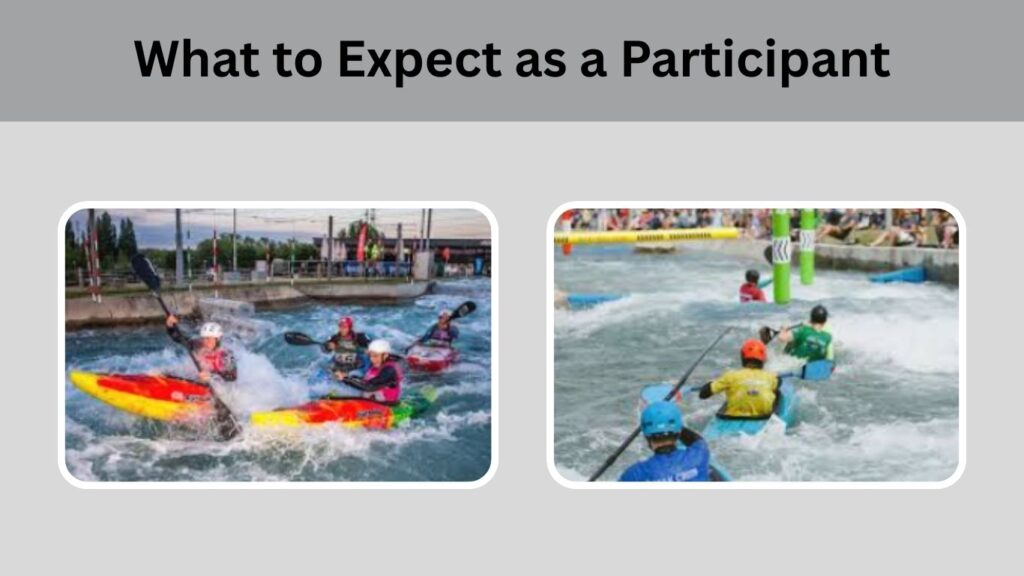
From the moment the start gate drops, adrenaline takes over. Racers sprint into the first rapid, fighting for position while trying to stay in control. Collisions are common, and paddlers must adapt instantly, choosing whether to push aggressively, block opponents, or wait for the right moment to overtake. The roar of the water, the cheers of the crowd, and the closeness of the competition make kayak cross unlike any other paddling event.
Mid-race, the pressure intensifies. Athletes must hit every gate correctly, execute rolls if required, and avoid penalties while fending off rivals. Even the smallest mistake—like flipping sideways or missing a gate- can mean elimination. For most athletes, the race feels like both a sprint and a battle, demanding not just strength but also strategy.
Challenges Athletes Face
Racing in kayak cross is not without its difficulties. The physical toll is high, as paddlers must push their muscles to the limit in short, explosive bursts while still maintaining technique. Capsizing is always a risk, especially with the added contact from other boats. Competitors also face the challenge of staying mentally sharp under pressure, and making split-second choices can determine victory or defeat.
Another challenge is consistency. Since the competition is structured in rounds, athletes must race multiple times in a single day. Winning one heat isn’t enough; they need the stamina and focus to perform at the same level in quarterfinals, semifinals, and finals. This combination of endurance, resilience, and tactical racing makes kayak cross one of the most demanding yet rewarding water sports to participate in.
What to Expect as a Spectator
The Thrill of Watching
For fans, kayak cross is a sport that delivers excitement from start to finish. Unlike traditional slalom races, where one athlete competes at a time, kayak cross puts four paddlers head-to-head. This means every second is packed with action—sprinting starts, bumping kayaks, daring overtakes, and unpredictable crashes. The outcome is never guaranteed, making each race a nail-biting experience. Even casual viewers who don’t know much about kayaking find it easy to follow and entertaining.
Atmosphere at Events
The atmosphere at kayak cross competitions is electric. Many events take place at artificial whitewater venues designed for spectators, with stadium-style seating, big screens, and live commentary. Fans can watch the entire course, cheer for their favorites, and feel close to the action as paddlers battle the rapids. At larger events, such as World Cups or World Championships, the excitement is boosted by music, festival-like activities, and interactive zones for families and newcomers.
Natural river venues bring a different charm. Watching athletes race through real rapids surrounded by scenic landscapes creates a raw, adventurous feeling. Crowds gather along the banks, shouting encouragement as competitors surge past. Whether in a stadium or on a wild river, the energy is contagious.
How to Follow the Sport
Not everyone can attend live events, but kayak cross is increasingly available to watch online. The International Canoe Federation (ICF) streams many of its World Cup and Championship races on platforms like YouTube and sports networks. Olympic coverage will also bring kayak cross to millions of homes worldwide. Fans can follow athletes and competitions through official websites, live results apps, and social media updates.
In addition, many paddlers share behind-the-scenes content, training clips, and race-day experiences on Instagram, TikTok, and YouTube, giving spectators a closer look into the sport. This makes it easy for fans to stay connected, even when they can’t be at the venue.
Future of Kayak Cross
Growth in Popularity
Kayak cross is still young compared to other water sports, but it is expanding quickly. Its thrilling format and easy-to-understand rules make it appealing not only to seasoned paddling fans but also to new audiences. More countries are investing in whitewater centers and hosting national competitions, giving athletes from different regions opportunities to train and compete. With each season, participation numbers rise, and media coverage becomes broader.
Olympic Recognition
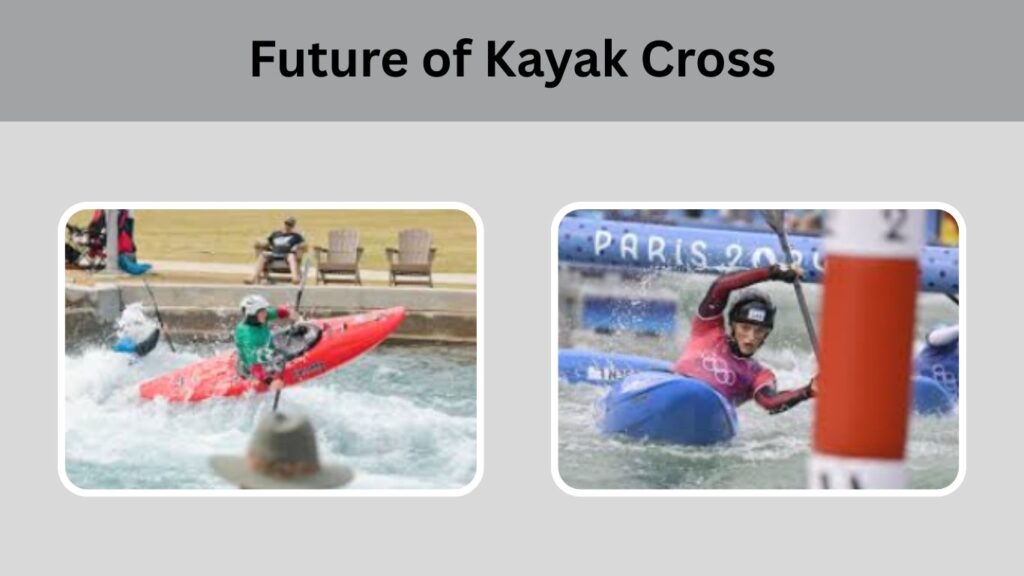
One of the biggest milestones for kayak cross is its inclusion in the Olympic Games starting with Paris 2024. This recognition has put the sport on the global stage, guaranteeing exposure to millions of viewers worldwide. Olympic status also means more funding, sponsorships, and development programs for athletes. Just as snowboarding and BMX grew after becoming Olympic sports, kayak cross is expected to see a surge in popularity, inspiring new generations to take up paddling.
Opportunities for Athletes and Fans
The future also holds exciting opportunities for both athletes and spectators. Training programs dedicated to kayak cross are emerging, helping young paddlers build the strength, skills, and confidence needed for high-level competition. For professionals, Olympic recognition opens doors to sponsorship deals and greater career stability.
Fans can expect more accessible coverage, including live streaming, behind-the-scenes content, and interactive event experiences. With a growing community, kayak cross could become not only a thrilling sport to watch but also an accessible adventure activity that attracts recreational paddlers looking for excitement.
Final Thoughts:
Kayak cross is one of the most thrilling water sports today, combining speed, skill, and head-to-head racing. Unlike traditional slalom, it’s unpredictable, action-packed, and full of direct competition that excites both athletes and fans. From local races to World Championships and the Olympics, knowing when events happen helps paddlers and spectators get involved.
With its official Olympic debut at Paris 2024, kayak cross is set to grow worldwide, offering athletes a true test of courage and spectators an unforgettable viewing experience.