Paddling into the evening or before sunrise can be an incredible experience—but only if you’re properly prepared. One of the most important safety tools you need on your kayak is proper lighting. Whether you’re fishing at dawn, touring at dusk, or navigating busy waters at night, the right kayak lights can make a huge difference in visibility, legal compliance, and overall safety.
In this guide, we’ll break down everything you need to know to choose the best kayak lights based on your paddling style, environment, and budget.
Why Kayak Lights Are Essential
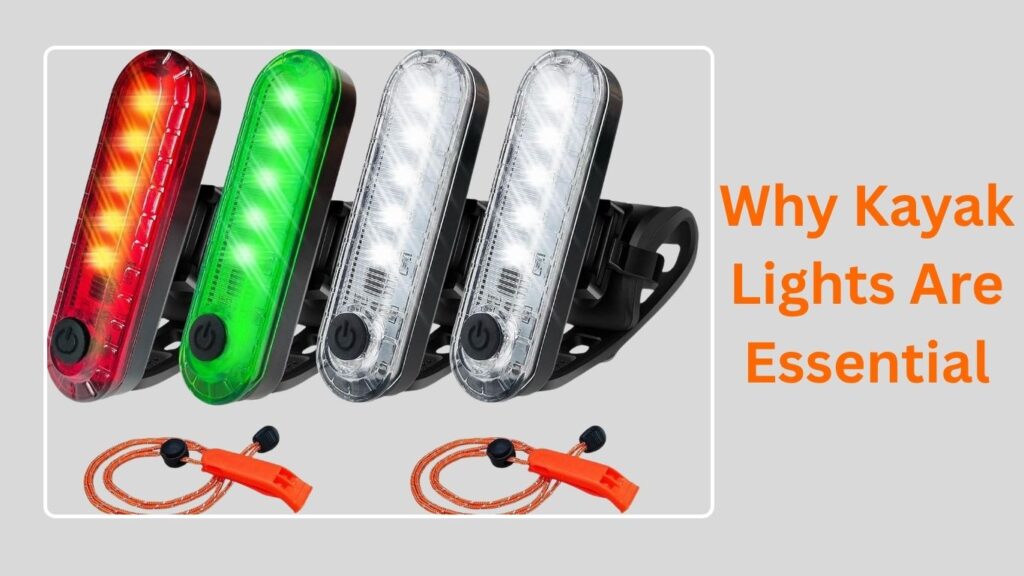
Kayak lights are more than just accessories—they’re a key part of staying safe on the water. In low-light conditions or at night, they help other boaters see you, reducing the risk of collisions. They’re also legally required in many areas, especially if you’re paddling after sunset or in fog. Even during early morning or overcast weather, lights can improve your visibility and awareness. For anglers, having proper lighting also means easier baiting, knot-tying, and gear management in the dark.
Types of Kayak Lights
Choosing the right type of light depends on how, where, and when you kayak. Here are the most common types:
Bow Lights (Front)
These are mounted at the front of your kayak and help you see ahead while also making your kayak more visible to others. They’re especially useful for navigating narrow waterways or spotting obstacles in low light.
Stern Lights (Rear or 360°)
Mounted at the back, stern lights are usually white and provide all-around visibility. Many paddlers opt for a 360-degree light, which can be seen from all directions and is often required by boating regulations.
Navigation Lights
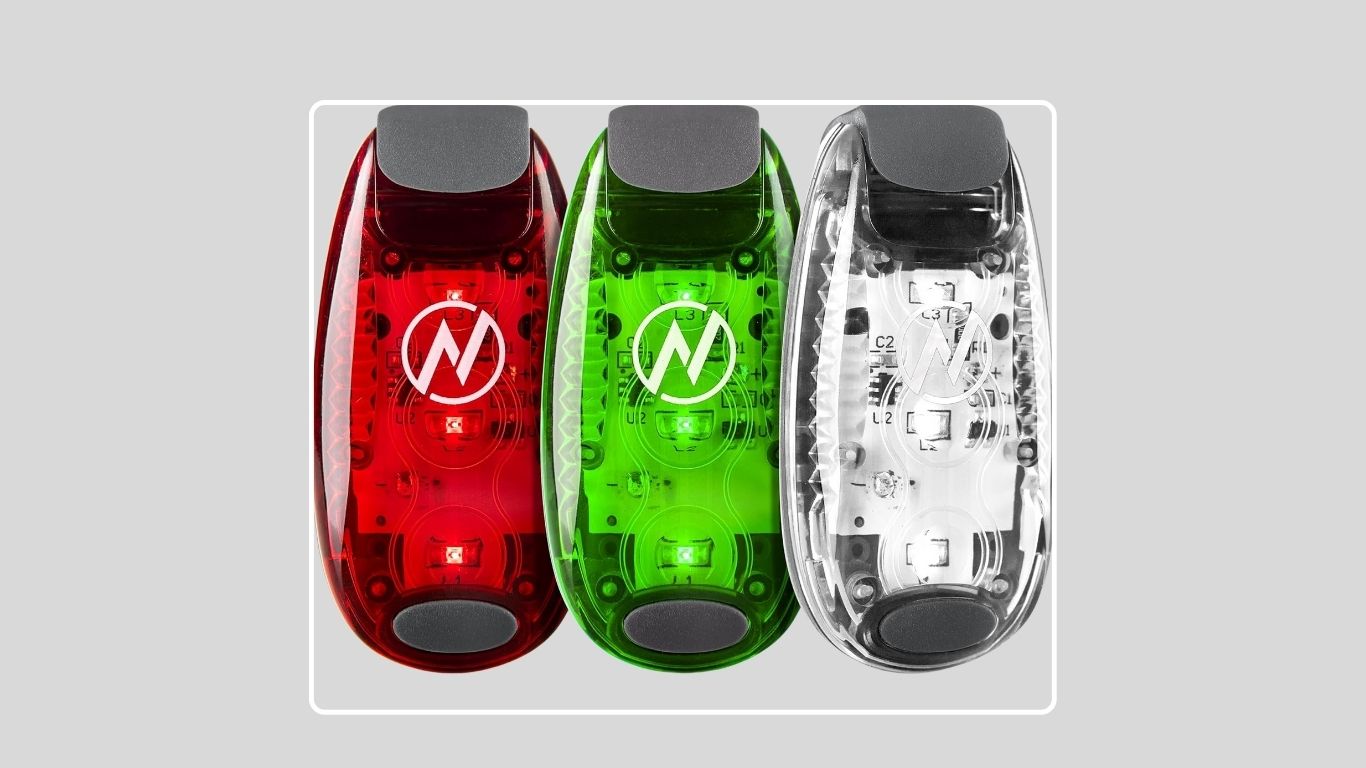
These red and green lights are often found on larger boats but can be useful on kayaks for added safety. Red indicates the port (left) side and green the starboard (right), helping others understand your direction of travel.
Deck or Interior Lights
These are low-power lights that illuminate the inside of your kayak or the deck area. They’re useful for organizing gear, handling fishing equipment, or reading maps without disturbing your night vision.
Headlamps and Wearable Lights
For extra flexibility, some paddlers wear headlamps or clip-on lights. These help you see where you’re looking and are great as backup lights or for on-foot tasks during stops.
Let me know when you’re ready for the next sections.
Key Features to Look For
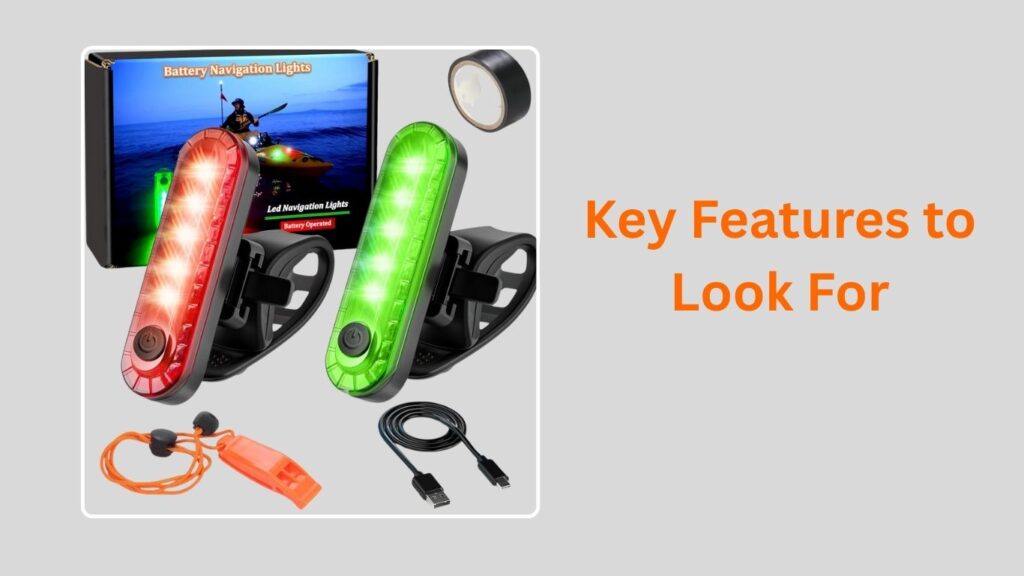
When selecting kayak lights, it’s important to focus on features that match your specific needs. Here’s what to consider:
Brightness (Lumens)
Brightness is measured in lumens, and higher lumens mean a brighter light. For general visibility, 100 to 250 lumens is usually enough. If you’re navigating or fishing in complete darkness, aim for 300+ lumens. Just be careful—too much brightness can reflect off water or your kayak’s surface and cause glare.
Battery Life and Power Source
Choose lights with long battery life, especially for overnight or long-distance trips. Rechargeable batteries are eco-friendly and cost-effective, while AA or AAA batteries are easier to replace on the go. Make sure you carry spares or a power bank if you’re using USB-rechargeable lights.
Waterproof Rating
Water and electronics don’t mix—unless your lights have proper waterproofing. Look for lights with an IPX6 rating or higher, which means they can withstand rain, splashes, and even short submersion.
Mounting Options
Kayak lights come with different mounting styles. Some use clamps, others use suction cups, adhesive pads, or tracks. Choose a mounting option that fits your kayak’s setup and won’t get in your way while paddling or casting.
Light Color
White lights are standard for visibility. Red and green are used for navigation purposes, especially when paddling in shared waterways. Red lights are also helpful for preserving night vision during fishing or map reading.
Durability and Build Quality
Look for tough materials like marine-grade plastic or anodized aluminum. Your lights should resist corrosion, UV rays, and impact from bumps or falls—especially in saltwater conditions.
When and Where to Use Kayak Lights
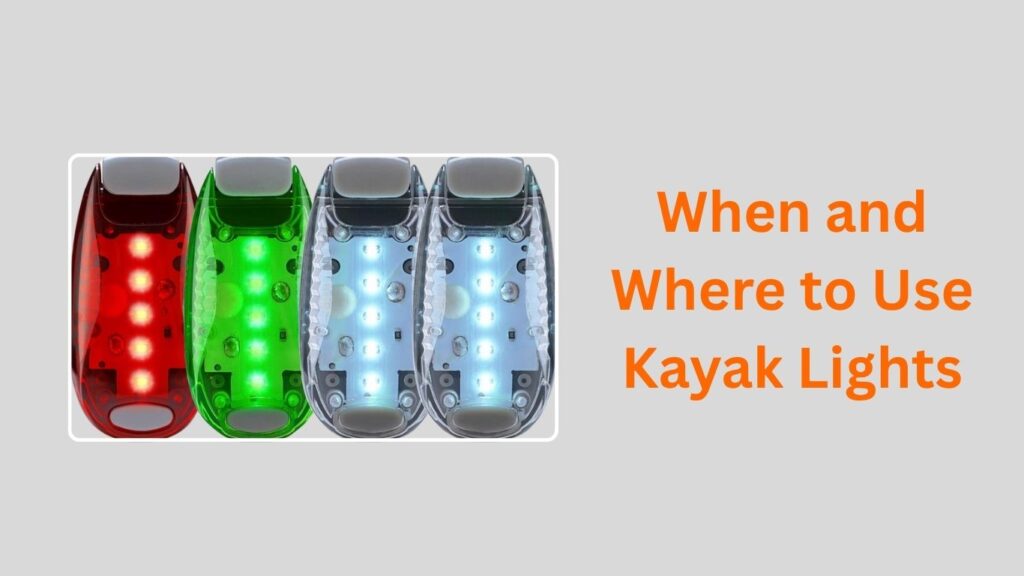
Different environments and times of day call for different lighting strategies. If you’re kayaking at night or in the early morning, use a stern light or 360° light to make yourself visible to all surrounding vessels. In fog or rain, brighter lights and navigation lights can improve safety.
For fishing trips, deck and interior lights help you manage gear quietly without alerting fish. In busy or shared waterways, having red and green navigation lights ensures that other boaters can determine your direction and avoid collisions. Even if you don’t plan to paddle in the dark, having a compact, emergency light is always a smart precaution.
Legal and Safety Considerations
Before heading out, it’s important to understand the lighting rules for kayaks in your area. In many countries, including the United States, the U.S. Coast Guard requires any non-motorized vessel operating between sunset and sunrise to display a white light visible in all directions. This is usually achieved with a 360-degree stern light.
Some regions also require navigation lights—red on the left (port) and green on the right (starboard)—if you’re moving through active boating zones. Always check local regulations, especially if you kayak in coastal, lake, or river environments with high traffic.
Beyond legal rules, consider your own safety. Using reflective tape on your paddle or kayak, wearing high-visibility clothing, and carrying backup lighting can add layers of protection, especially in fog or stormy weather.
Best Kayak Light Brands and Models (Optional)
If you’re ready to shop, here are a few reputable kayak light brands known for quality and reliability:
- YakAttack – Specializes in kayaking accessories, including the highly rated VISICarbon Pro light, known for its visibility and durability.
- Railblaza – Offers versatile mounting systems and waterproof lighting options that are easy to install.
- UST Gear – Great for compact, emergency-ready lights.
- Attwood – Known for marine-grade navigation and stern lights, widely used by anglers and tourers.
When choosing a model, compare brightness, battery type, waterproof rating, mounting method, and price. A simple comparison table can help:
| Brand | Model | Lumens | Power Source | Waterproof | Price Range |
| YakAttack | VISICarbon Pro | 45 | AA Batteries | IPX7 | $$ |
| Railblaza | Illuminate i360 | 25 | 3 AA Batteries | IP67 | $$ |
| UST Gear | See-Me 2.0 | 45 | AA Battery | IPX7 | $ |
| Attwood | 14192-7 Stern | 360° | Wired/12V DC | Waterproof | $$$ |
How to Install and Maintain Kayak Lights
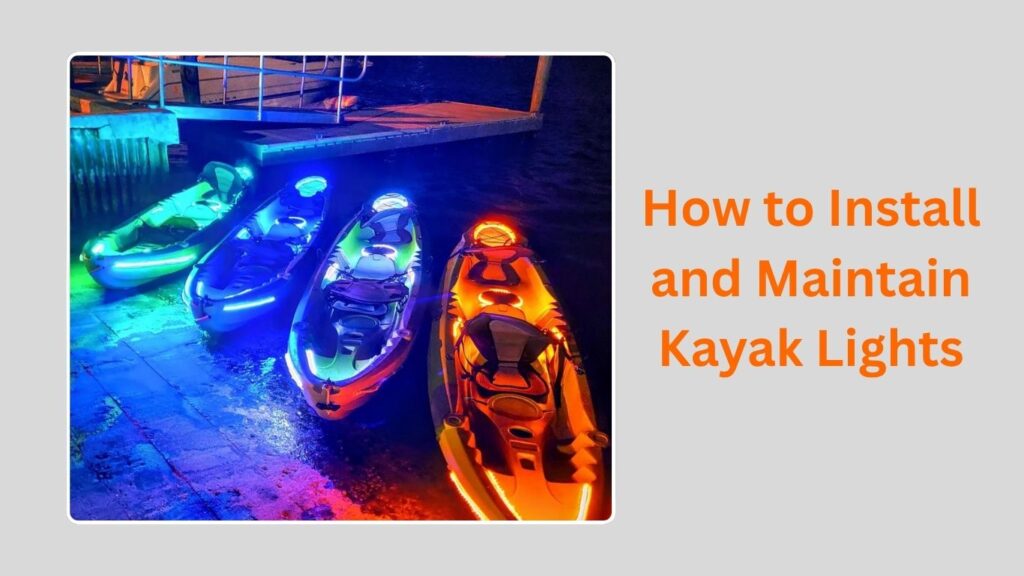
Installing kayak lights correctly ensures they stay secure and function properly throughout your trip. Here’s a simple breakdown:
Installation Tips:
- Stern lights should be mounted high enough to be visible from all angles—usually on a pole or raised bracket at the rear of your kayak.
- Bow or navigation lights should be positioned on either side of the kayak to indicate direction.
- Deck and interior lights can be attached using adhesive pads, track mounts, or clamps, depending on your kayak setup.
Always test your lights before each trip. Ensure they are fully charged or have fresh batteries, and double-check that the waterproof seals are intact.
Maintenance Tips:
- After every trip—especially in saltwater—rinse your lights with fresh water and dry them thoroughly.
- Store them in a dry, cool place.
- Periodically check for cracks, loose mounts, or corrosion around battery terminals.
- Recharge or replace batteries after extended storage.
Common Mistakes to Avoid
Even experienced paddlers sometimes overlook simple things when it comes to lighting. Here are some common mistakes to avoid:
- Using the wrong light color: Navigation lights should be red and green—not white. A white-only setup may confuse other boaters in shared waterways.
- Mounting lights too low: Low-positioned lights may be blocked by gear or your own body, reducing visibility.
- Over-lighting your kayak: Lights that are too bright can reflect off the water and impair your vision—or blind nearby boaters.
- Relying on headlamps alone: While useful, headlamps aren’t a substitute for stern or navigation lights.
- Not carrying spares: Always have backup lights or batteries in case your primary setup fails.
Avoiding these issues will ensure safer, more enjoyable night paddling experiences.
Choosing Lights Based on Kayak Use
Not every kayak lighting setup fits all paddling styles. Choosing lights based on how you use your kayak ensures you stay safe without overcomplicating your gear.
For Fishing
Fishing at night or in low light often requires subtle lighting. Red or green deck lights preserve your night vision while allowing you to bait hooks, untangle lines, or organize gear. Some anglers also use submersible or underwater lights to attract fish. A 360° white stern light is essential for safety and visibility to other boats.
For Recreational Use
If you’re kayaking for fun in calm waters or lakes, a simple and lightweight lighting setup will do. One all-around stern light and a backup flashlight or headlamp can provide enough visibility for casual trips. Look for compact, battery-efficient models that don’t get in your way during paddling.
For Emergency Use
If you don’t plan to paddle in the dark, you should still carry a compact, waterproof emergency light. Flashing or strobe-capable lights are ideal for signaling distress. Some models even combine light and sound, with built-in whistles or alarms. A backup headlamp or clip-on light is also useful in case of unexpected delays.
Final Tips for Selecting the Right Lights
To wrap up, here are some smart tips to help you choose the right kayak light setup:
- Match your lights to your kayaking conditions – Don’t overdo it. Simple trips need simple solutions.
- Always test your lights before each outing – This avoids surprises on the water.
- Check your local boating laws – Especially if you’re paddling in shared or motorized waterways.
- Choose durable, weatherproof gear – Look for strong waterproof ratings and tough casing.
- Keep backup options ready – A small flashlight or headlamp can be a lifesaver.
Investing in the right kayak lights helps you stay safe, meet regulations, and enjoy paddling with confidence, no matter the time of day.
FAQs
Do I need lights for daytime kayaking?
Generally, no—kayak lights are not required during daylight hours. However, if visibility is poor due to fog, heavy rain, or low light conditions, having a white light on hand is strongly recommended for safety.
Can I use bicycle lights on my kayak?
You can, but it’s not ideal. Bicycle lights aren’t designed for marine use and may not be waterproof or visible from 360 degrees. Always check the waterproof rating and beam angle before using them on water.
How long do kayak lights typically last?
Battery life depends on the type and brand. Rechargeable LED lights can last anywhere from 5 to 20 hours per charge. Disposable-battery lights may last even longer but require frequent battery replacement.
Are solar-powered kayak lights effective?
Solar kayak lights can work well if they receive full sunlight during the day. However, they may be unreliable in cloudy or rainy weather. They’re best used as backups rather than primary light sources.
What’s the safest light color to use on a kayak?
A white 360° light is the safest and most commonly required. Red and green are used for navigation and must be positioned correctly. Avoid using blue or flashing red unless in an emergency situation, as they may confuse other boaters or resemble law enforcement signals.