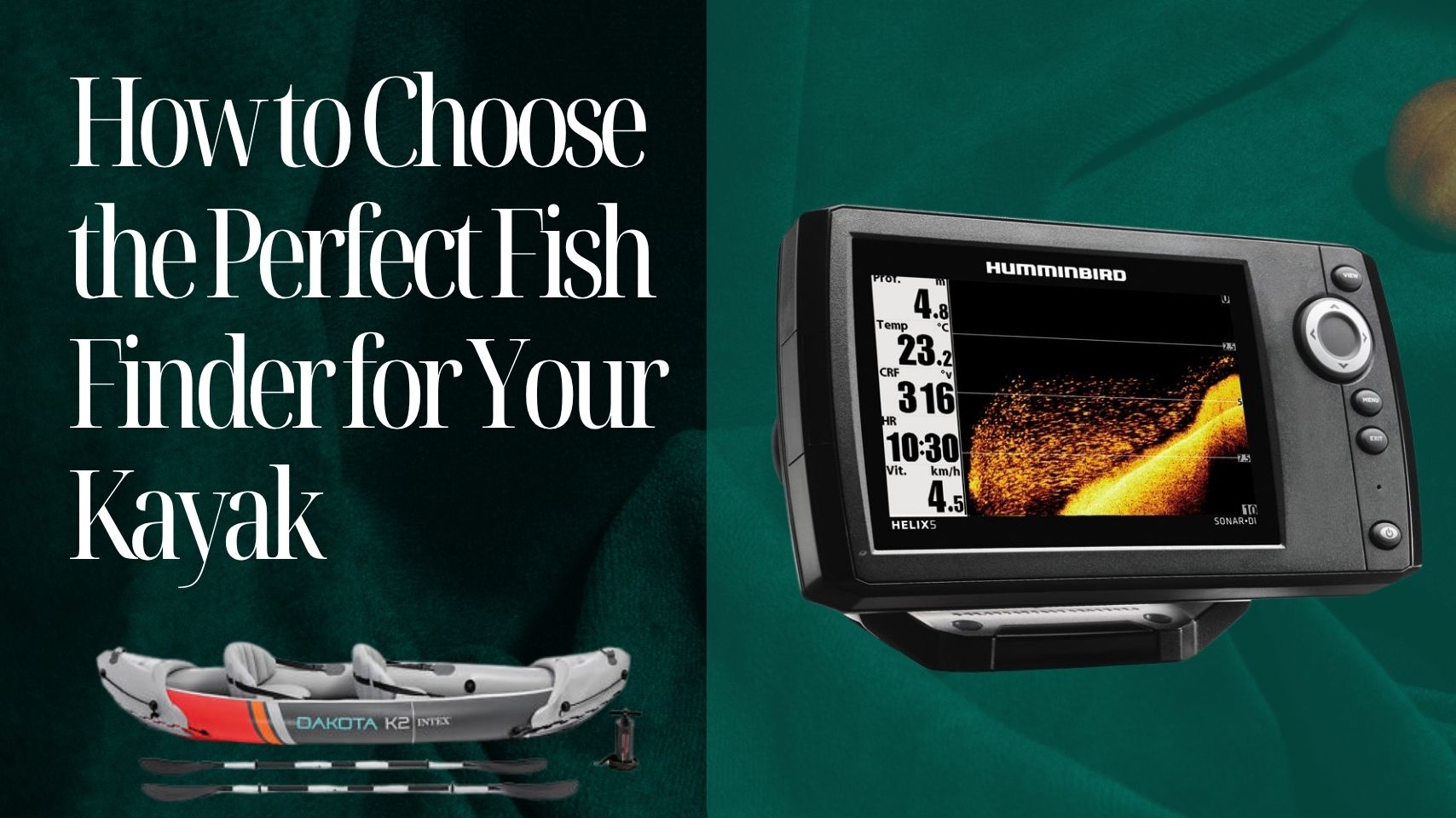
Whether you’re a weekend angler or a serious kayak fisherman, having the right fish finder can make a big difference in your results. Kayaks offer mobility and access to tight fishing spots, but choosing a fish finder for such a compact setup comes with unique challenges. From portability and battery life to transducer compatibility and screen clarity, several factors determine which model is right for you.
In this guide, I’ll walk you through everything you need to know to confidently pick the perfect fish finder for your kayak.
Understand Your Kayak Fishing Style
Before choosing a fish finder, it’s important to think about how and where you fish. Your fishing environment and habits will directly influence the features you need.
Freshwater vs. Saltwater Use
Saltwater fishing usually requires more rugged, corrosion-resistant gear. If you often fish in the ocean or brackish water, choose a unit that’s sealed properly and can handle saltwater conditions.
Shallow vs. Deep Water Fishing
Shallow water anglers may only need basic sonar capabilities, while deeper lakes and offshore areas require stronger sonar like CHIRP or dual-frequency systems for better depth and detail.
Casual Weekend Trips vs. Long Expeditions
If you fish occasionally, a simple, easy-to-install unit might be enough. But if you’re out on long trips, look for advanced features like GPS mapping, long battery life, and durability.
Key Features to Look For
When comparing fish finders for kayaks, understanding the key features can help you avoid unnecessary upgrades or underperforming gear.
Screen Size and Resolution
Larger screens (5″ or more) are easier to read, especially in sunlight, but may take up more space. A sharp, high-resolution display helps you spot fish, structure, and depth changes clearly—even on smaller screens.
Transducer Type and Mounting Options
The transducer is what sends and receives sonar signals. Make sure the unit includes a kayak-compatible transducer and offers flexible mounting options like scupper hole, arm, or in-hull mounts.
GPS and Mapping Capabilities
Built-in GPS lets you mark waypoints, track routes, and return to your favorite fishing spots. Some models also come with preloaded maps or allow upgrades to detailed charts.
CHIRP, Dual Beam, and Side Imaging
Advanced sonar types like CHIRP provide clearer images and better depth separation. Dual-beam helps cover more area under the kayak, while side imaging gives a wide view of what’s to the sides of your boat.
Battery Life and Power Source
Most kayak fish finders are powered by 12V rechargeable batteries or lithium packs. Consider how long you fish per outing and ensure your battery setup can support it.
Portability and Ease of Installation
Look for units that are lightweight, compact, and easy to install or remove. Some systems are designed specifically for kayaks and come with portable carry cases or quick-release mounts.
Waterproof and Durable Build
Choose a fish finder rated for water resistance (IPX7 or higher) and built to withstand rough conditions, splashes, and possible submersion.
Types of Fish Finders for Kayaks
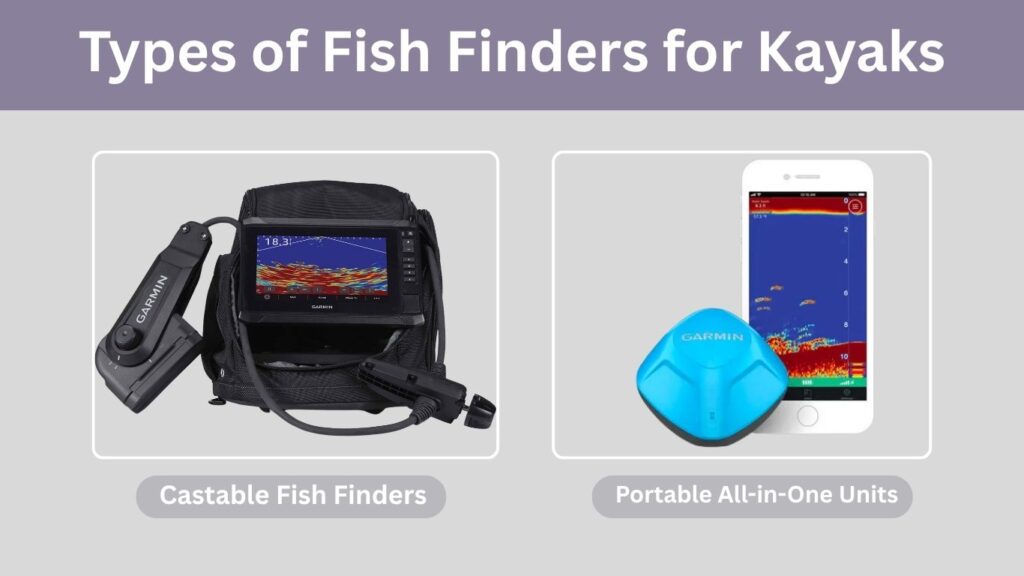
Not all fish finders are built the same. Depending on your kayak setup, storage space, and fishing needs, you can choose from three main types. Each comes with its own pros and cons.
Castable Fish Finders
- Pros: Lightweight, no permanent mount needed, ideal for casual anglers.
- Cons: Limited features compared to mounted units, short battery life, relies on phone battery.
These are small, portable devices that you cast into the water like a lure. They sync with your smartphone via Bluetooth or Wi-Fi and display sonar data on your phone screen. They’re ideal for ultralight setups, bank fishing, or when you want something extremely compact.
Portable All-in-One Units
These fish finders include a screen, transducer, and battery in a single portable case. They’re designed for kayaks and small boats, and they’re easy to set up and remove.
- Pros: Compact, simple to use, doesn’t require drilling or permanent mounting.
- Cons: Smaller screens, usually less powerful than fixed units.
Fixed-Mount Kayak Units
These are traditional fish finders that mount directly to your kayak. They usually offer the best performance, bigger screens, and more advanced features like GPS, CHIRP, and mapping.
- Pros: Advanced features, high performance, better screen visibility.
- Cons: Requires permanent or semi-permanent installation, more wiring, heavier.
Each type serves a different purpose. If you’re a casual fisherman, a castable or portable unit might be perfect. If you’re more serious or fish frequently in new locations, a fixed mount with GPS and side imaging could be worth the investment.
Transducer Mounting Options for Kayaks
How you mount the transducer is just as important as the fish finder itself. A poor installation can lead to inaccurate readings or even damage. Here are the most common transducer mounting methods for kayaks:
Scupper Hole Mount
Some fishing kayaks have built-in scupper holes designed for transducers. These allow the transducer to sit flush with the hull, giving you accurate readings without extra rigging.
- Pros: Clean install, protected location, often no drilling required.
- Cons: Only works if your kayak has scupper holes in the right position and size.
Arm Mount
An arm mount extends over the side of the kayak and holds the transducer underwater. It’s adjustable and removable, making it ideal for those who don’t want to modify their kayak.
- Pros: Easy to install and remove, no drilling.
- Cons: Can create drag in the water, might snag weeds or obstacles.
In-Hull Mount
This method places the transducer inside the kayak’s hull, using adhesive or a foam block. It shoots sonar through the hull, which works fine with certain kayak materials like fiberglass or polyethylene.
- Pros: Fully protected, no external parts, no drag.
- Cons: Slightly weaker signal, won’t work through all materials (like air gaps or thick insulation).
Choosing the right mounting method depends on your kayak model and how much you’re willing to modify it. Always check compatibility before purchasing a transducer or mount.
Budget Considerations
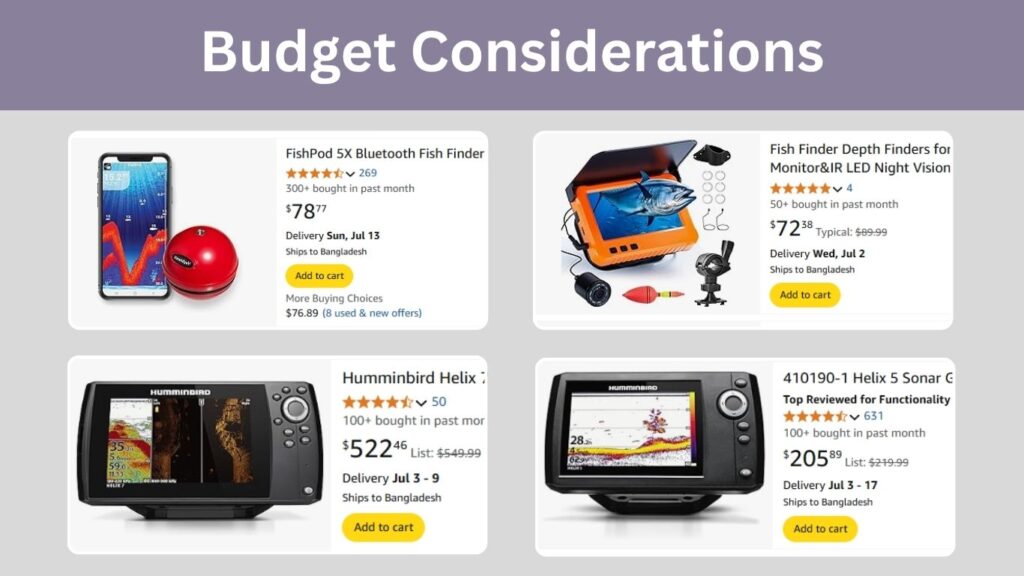
Fish finders for kayaks come in a wide range of prices, and while expensive models offer more features, you don’t always need the most advanced unit to catch fish. Your budget should reflect your fishing frequency, environment, and personal goals.
Entry-Level ($50–$150)
These basic models usually offer simple sonar, compact screens, and minimal features. Castable units and small portable fish finders fall into this range.
- Best for: Beginners, casual weekend anglers, or tight budget.
- Common brands: Deeper Start, Lucky, low-cost Garmin models.
Mid-Range ($150–$400)
In this range, you’ll find portable or fixed-mount units with clearer sonar, GPS, and better displays. These are a solid choice for regular anglers who want reliable performance without breaking the bank.
- Best for: Intermediate users, serious hobbyists, and kayak tournament anglers.
- Popular picks: Garmin Striker 4, Humminbird PiranhaMAX, Lowrance Hook Reveal 5.
High-End ($400+)
High-end fish finders offer CHIRP sonar, side/down imaging, high-res color displays, and advanced GPS/charting options. They’re often used on larger kayaks with room for more complex setups.
- Best for: Advanced anglers, deep water fishing, mapping new spots.
- Examples: Humminbird Helix 7, Lowrance Elite FS, Garmin ECHOMAP UHD.
Even at the lower price points, some models still deliver strong performance for kayak fishing—so don’t overspend unless you really need the added features. Always weigh features against your actual fishing needs.
Popular Brands and Recommended Models
Choosing a reliable brand can save you time, frustration, and money in the long run. Here are some of the most trusted brands in the kayak fish finder market, along with top-rated models known for their performance, ease of use, and value.
Garmin
Garmin is known for intuitive interfaces and reliable GPS systems. Their fish finders often combine sonar with powerful navigation features.
- Recommended Model:Garmin Striker 4
- Compact and affordable
- CHIRP sonar
- Built-in GPS
- Ideal for small kayaks
- Compact and affordable
Humminbird
Humminbird leads in sonar innovation, offering high-end features like Down Imaging and Side Imaging even in mid-range models.
- Recommended Model:Humminbird Helix 5 CHIRP DI GPS G3
- Crisp 5″ color display
- Down Imaging for structure viewing
- Advanced GPS with mapping options
- Great for detailed bottom scans
- Crisp 5″ color display
Lowrance
Lowrance fish finders offer a balance of performance and value. Their Hook series is especially popular among kayak anglers.
- Recommended Model:Lowrance Hook Reveal 5 SplitShot
- Autotuning sonar
- FishReveal technology
- Easy-to-read screen
- Suitable for intermediate users
- Autotuning sonar
Deeper
Best known for castable, app-connected fish finders, Deeper products are ideal for ultra-portable setups or minimalist anglers.
- Recommended Model:Deeper PRO+ 2
- Castable and wireless
- Connects to smartphone
- Built-in GPS
- Perfect for travel and shore fishing
- Castable and wireless
Each brand has strengths tailored to different fishing styles. Garmin is best for simplicity and GPS, Humminbird for sonar quality, Lowrance for versatility, and Deeper for portability. Choose the one that fits your gear setup and fishing needs.
Final Tips Before Buying
With so many options on the market, it’s easy to get overwhelmed. Before making your final decision, consider these key points to ensure the fish finder you choose truly fits your kayak and fishing style.
Check Compatibility with Your Kayak
Not all kayaks are designed with electronics in mind. Make sure your kayak has space for a display unit and mounting points for a transducer. If not, opt for a portable or castable model instead.
Read Verified Reviews
Real-world user reviews often reveal issues you won’t see in product descriptions—such as poor battery life, hard-to-read screens in sunlight, or complicated menus. Look for feedback from other kayak anglers specifically.
Test the Interface If Possible
Some fish finders are more user-friendly than others. If you have a chance, try navigating the interface before buying. A confusing menu system can waste time on the water.
Ensure It Comes with Mounting Hardware
Some models require you to buy mounting brackets, battery packs, or transducer arms separately. Double-check what’s included in the box so you’re not caught off guard after purchase.
A little preparation goes a long way. The right fish finder should enhance your kayak fishing—not complicate it. Prioritize ease of use, compatibility, and core features over unnecessary bells and whistles.
FAQs
Do all fish finders work on kayaks?
No, not all fish finders are kayak-friendly. Many are designed for larger boats and require complex setups. For kayaks, look for compact, lightweight models that offer easy installation and are water-resistant.
Can I use a boat fish finder on a kayak?
Yes, you can—if it’s a compact unit and the power draw isn’t too high. However, you’ll need to adapt the transducer mount and power supply for a smaller setup.
How do I power a fish finder on a kayak?
Most kayak anglers use a small 12V rechargeable lithium or sealed lead-acid battery. These are compact and can run a fish finder for hours. Some castable units are powered by USB-rechargeable internal batteries.
What’s the best screen size for kayak fish finders?
Screens between 4″ and 5″ offer a good balance of visibility and space efficiency. Larger screens are easier to read but may be bulky for small kayaks.
Are castable fish finders worth it?
Yes, for casual or minimalist anglers. They’re portable, easy to use, and don’t require permanent installation. But they lack the advanced features and detail of fixed-mount systems.