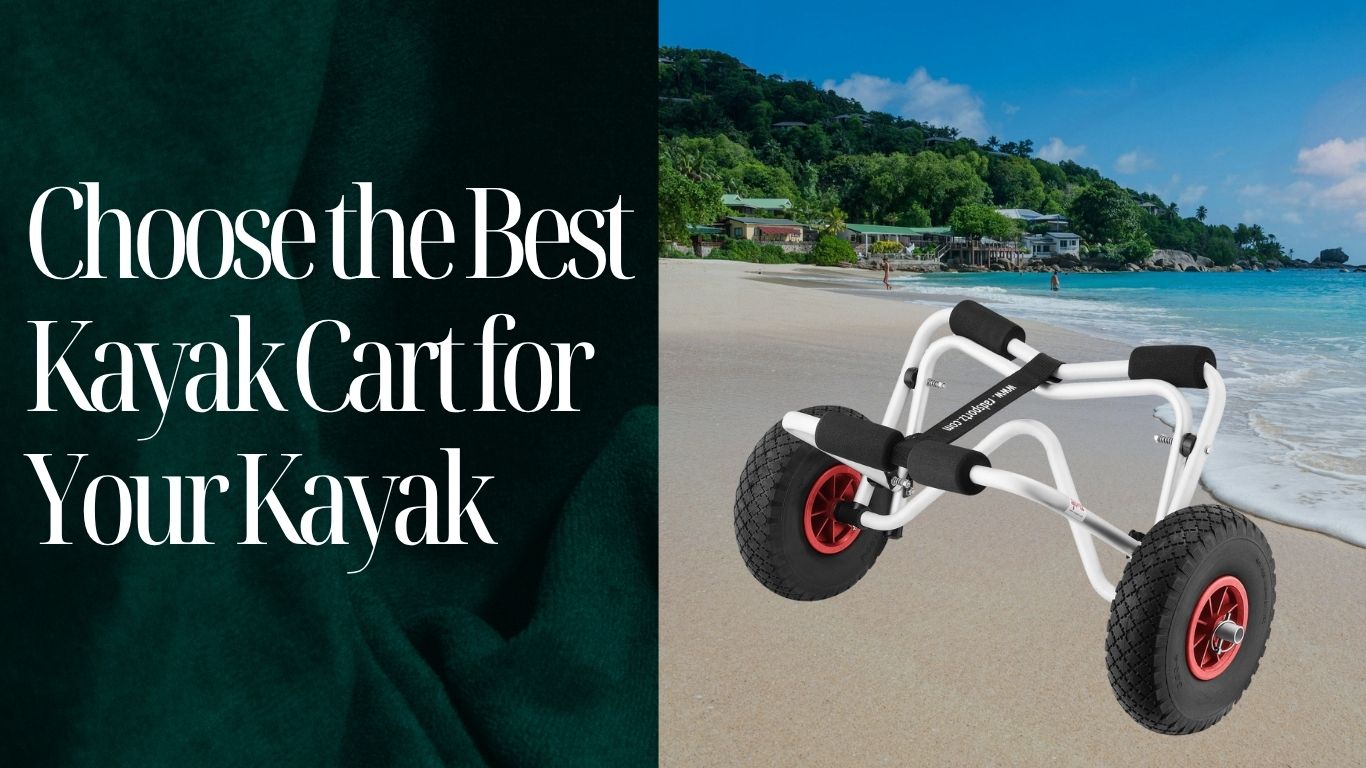
Dragging your kayak across gravel, sand, or pavement isn’t just tiring—it can also damage the hull over time. A good kayak cart takes the load off your shoulders and helps you transport your boat safely and easily, especially if you’re launching solo or carrying extra gear. But not every cart fits every kayak. The right choice depends on your kayak’s design, weight, and the terrain you’ll be crossing. In this guide, I’ll help you figure out exactly what to look for so you can pick the best kayak cart for your setup.
Why You Need a Kayak Cart
A kayak cart may seem like an optional accessory at first, but once you use one, it quickly becomes essential, especially for solo paddlers or anyone carrying a fully loaded kayak to the water.
Makes Transport Easier
Whether you’re walking from the parking lot to the shoreline or navigating a winding trail to a launch spot, a kayak cart saves energy and time. It allows you to roll your kayak smoothly without needing a second person.
Reduces Damage to the Hull
Dragging your kayak across rough surfaces can cause scratches, dents, or even long-term structural damage. A cart protects the hull and helps preserve your kayak’s lifespan.
Useful for Solo Trips or Long Walks to the Water
If you often paddle alone, a cart eliminates the need to lift and carry your kayak. It also makes it possible to launch in areas where vehicles can’t reach—like remote beaches, riverbanks, or forest trails.
Know Your Kayak Type and Weight
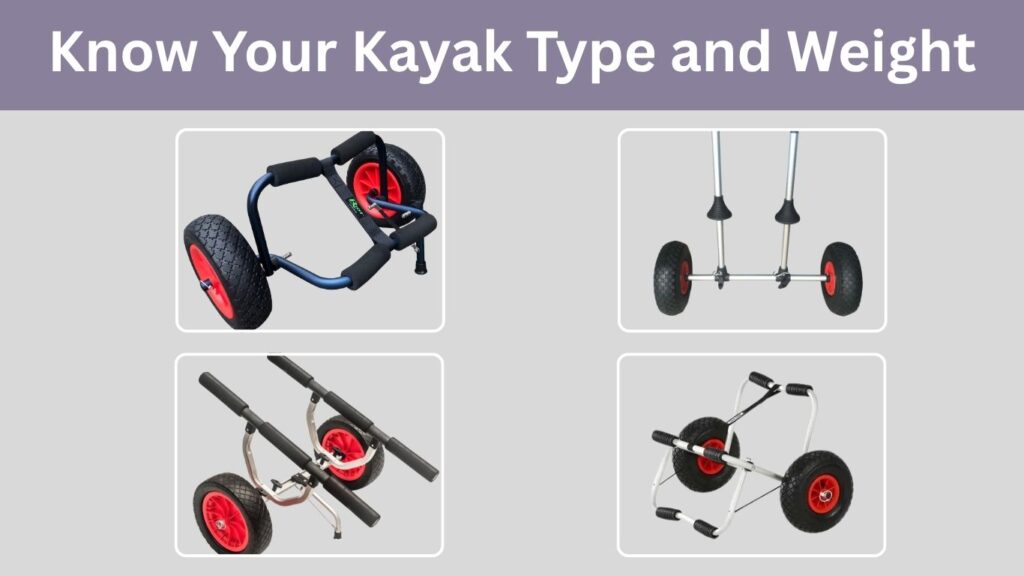
Before choosing a kayak cart, you need to understand the size, shape, and weight of your kayak—especially when it’s fully loaded with gear. Not all carts are designed to handle every kayak style.
Sit-on-Top vs. Sit-Inside Kayaks
Sit-on-top kayaks often have scupper holes that allow for plug-in carts, while sit-inside models typically require strap-on frame carts. Make sure the cart design is compatible with your kayak’s structure.
Tandem, Fishing, and Heavy Kayaks
Larger kayaks, especially tandem or fishing models with built-in storage, coolers, or tackle boxes, can be much heavier. You’ll need a cart with a strong frame and high weight capacity—often 150 lbs or more.
Consider Loaded Weight (Gear + Accessories)
Don’t just go by the kayak’s empty weight. Factor in your paddle, fishing equipment, dry bags, cooler, and any extras. A lightweight cart may collapse or wear down if overloaded—even if it fits the kayak itself.
Choosing a cart that matches your kayak’s full weight and design is critical for safety, durability, and ease of use.
Types of Kayak Carts
There are several types of kayak carts available, each designed to suit different kayak styles and user preferences. Understanding these types will help you pick one that fits your needs and kayak setup.
Plug-In (Scupper Hole) Carts
These carts have posts that slide into the scupper holes found on most sit-on-top kayaks. They keep the kayak stable and balanced during transport without requiring straps.
- Best for: Sit-on-top kayaks with compatible scupper hole spacing
- Consider: Not adjustable for different kayak widths and may damage scupper holes if overloaded
Strap-On Frame Carts
These versatile carts support the kayak’s hull from underneath and use straps to secure it. They work with almost any kayak design, including sit-inside and oddly shaped hulls.
- Best for: Universal compatibility
- Consider: Takes slightly more time to secure with straps
End/Center Load Carts
Some carts are designed to support one end of the kayak (end-loading), while others are positioned near the center for better weight distribution (center-loading). Center carts are more stable but require lifting more weight initially.
- Best for: Long-distance hauls with even weight
- Consider: Placement matters for balance and ease of use
Foldable and Compact Carts
These carts are built for convenience, often collapsible for easy storage inside your kayak hatch or vehicle.
- Best for: Kayakers with limited space or those who travel
- Consider: May sacrifice some durability or capacity
Each cart type offers different advantages. Choose based on your kayak’s design, your storage needs, and how often you plan to transport it solo.
Key Features to Look For
Not all kayak carts are created equal. Some are built for rugged terrain, others for easy transport and storage. Knowing which features matter most can help you find a cart that performs well in real-world use.
Frame Material and Build Quality
Look for corrosion-resistant materials like aluminum or stainless steel, especially if you paddle in saltwater. A strong frame not only supports heavier kayaks but also holds up better over time.
Wheel Type (Pneumatic, Solid, Balloon)
- Pneumatic (air-filled): Great for absorbing shock on rough paths but may require inflating or occasional maintenance.
- Solid plastic/rubber: Low-maintenance and reliable on pavement or firm ground, but can be bumpy on uneven trails.
- Balloon-style tires: Ideal for sandy beaches—float over soft surfaces without sinking.
Weight Capacity
Choose a cart that can support your kayak when fully loaded with gear. Many standard carts hold 100–150 lbs, while heavy-duty models can carry 200+ lbs.
Foldability and Storage
If you’re short on space or need to store the cart inside your kayak while paddling, go for a foldable design with quick-release wheels or collapsible frames.
Kickstand for Loading Stability
Some carts come with a kickstand that keeps them upright while loading the kayak. This small feature can make setup faster and reduce the chance of tipping.
Choosing a cart with the right mix of these features ensures smoother transport, longer product life, and a better overall paddling experience.
Compatibility and Fit
A kayak cart is only useful if it fits your kayak properly. Poor fit can lead to tipping, instability, or even damage to your boat. Here’s what to check before buying:
Width Adjustability
Some carts have fixed-width frames, while others are adjustable. If your kayak is wider or has an unusual hull shape, an adjustable cart gives you more flexibility and ensures a secure fit.
- Tip: Measure the hull width where the cart will sit before buying.
Scupper Hole Size for Plug-In Carts
For plug-in (scupper) carts, the post diameter and spacing must match your kayak’s scupper holes. Not all kayaks use the same size or distance between holes, so double-check your specs.
- Warning: Forcing the wrong fit can crack or stress your scupper holes.
Strap System for Universal Fit
If your kayak doesn’t have scupper holes or has a complex shape, choose a strap-on cart. Look for wide, padded straps with cam buckles that hold the kayak firmly without shifting during transport.
- Tip: Anti-slip padding or rubberized contact points add extra grip and protect the hull.
Always test or simulate the cart fit (if possible) before heading out. A snug, balanced fit makes transport easier and safer, especially on rough paths or long distances.
Budget and Value
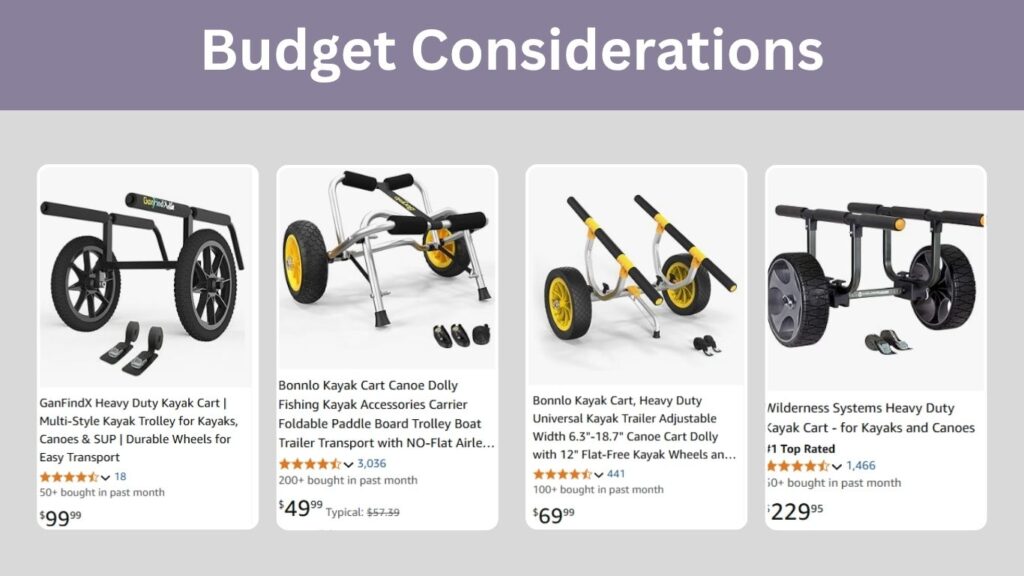
Kayak carts come in a wide range of prices, and the best choice depends on how often you paddle, the type of terrain you face, and your kayak’s weight. Here’s a breakdown of what to expect at different price levels:
Entry-Level Carts ($50–$80)
These basic carts are great for light to moderate use. They typically feature aluminum or steel frames with solid rubber wheels and simple strap systems.
- Best for: Recreational kayakers, smooth terrain, occasional use
- Limitations: May not support heavy kayaks or perform well on rough ground
Mid-Range Carts ($80–$150)
In this range, you’ll find better build quality, improved tires (like pneumatic or beach wheels), and folding frames for easier storage. Many are adjustable and better suited for regular use.
- Best for: Frequent paddlers, mixed terrain, sit-on-top or sit-inside kayaks
- Value: Often offers the best balance of price, performance, and durability
High-End or Heavy-Duty Carts ($150+)
These are built for maximum strength, longevity, and terrain versatility. Expect corrosion-resistant frames, wide balloon wheels, and high weight capacity—often up to 250 lbs or more.
- Best for: Fishing kayaks, tandem boats, rough terrain, saltwater environments
- Bonus: Many fold flat or disassemble quickly for storage on the water
Spending more usually means better reliability, but make sure the extra features match your real-world needs. A cart that lasts for years is often worth the investment.
FAQs
Can I use the same kayak cart for all my kayaks?
Not always. While some strap-on carts are designed for universal use, plug-in carts only work with kayaks that have compatible scupper holes. If you own multiple kayaks, choose a versatile cart with adjustable width and strap support.
Do I need a special cart for sand?
Yes. Sand requires wide, balloon-style tires that won’t sink. Standard narrow or hard wheels struggle on soft surfaces and can make transport exhausting.
How do I strap my kayak securely on the cart?
Use cam buckle or ratchet straps to secure the kayak tightly over the frame. Position the cart just behind the kayak’s center point and fasten straps snugly to prevent shifting while moving.
Will a cart damage my scupper holes?
It can—if it doesn’t fit properly or if you overload it. Only use scupper carts designed specifically for your kayak’s hole size and spacing. Don’t exceed the weight rating, and lift from both ends when possible.
Is it worth spending more on a heavy-duty kayak cart?
Yes, if you have a heavy kayak, fish often, or cross tough terrain. A stronger frame, larger wheels, and better materials offer smoother transport and longer-lasting performance—especially with repeated use.