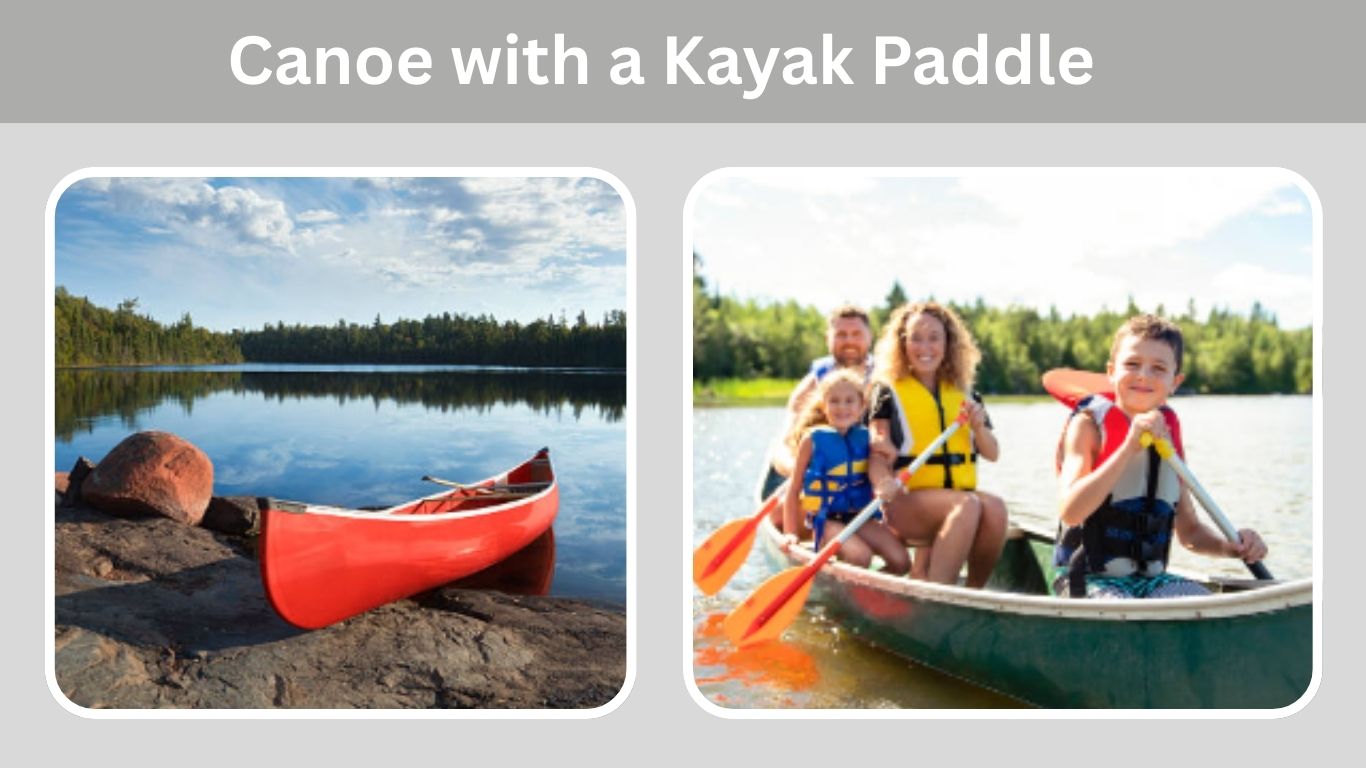
If you spend time around lakes, rivers, or coastal waters, you’ve probably noticed that people use different kinds of paddles for different boats. Kayakers use long paddles with blades on both ends, while canoeists use single-blade paddles with a top handle. Each type of paddle is designed for a specific boat style, and years, paddlers have stuck to these traditional pairings. But what if you find yourself in a canoe with only a kayak paddle available? Or maybe you’re a kayaker who just bought a canoe and you’re wondering if you can use the same paddle for both?
This is a question that comes up more often than you might think. Some people ask because they don’t want to buy two paddles. Others ask because they’re more comfortable with the way a kayak paddle feels in their hands. And then some are simply curious, would it even work? The short answer is yes, you can paddle a canoe with a kayak paddle. But like most things, it’s not as simple as “yes” or “no.” There are advantages, disadvantages, and some important details that make a big difference in how well it works.
By the end of this guide, you’ll understand not just whether you can use a kayak paddle in a canoe, but also when it makes sense, what paddle length you’ll need, and how to use it effectively without making your canoe trip uncomfortable.
Understanding the Difference Between Canoe and Kayak Paddles
At first glance, both canoe and kayak paddles do the same basic job: they push against the water to move your boat forward. But the way they are built and the way you use them are quite different.
A canoe paddle typically has one flat or slightly curved blade at one end and a handle at the other. The handle is often a T-shape or a rounded “palm grip” that fits nicely in your hand. You hold the paddle with one hand on the grip and the other hand lower down on the shaft, near the blade. You dip the blade into the water, pull it back, and then either switch the paddle to the other side or use a corrective stroke like the J-stroke to keep your canoe moving straight. Canoe paddles are generally shorter than kayak paddles because you only need to reach one side at a time.
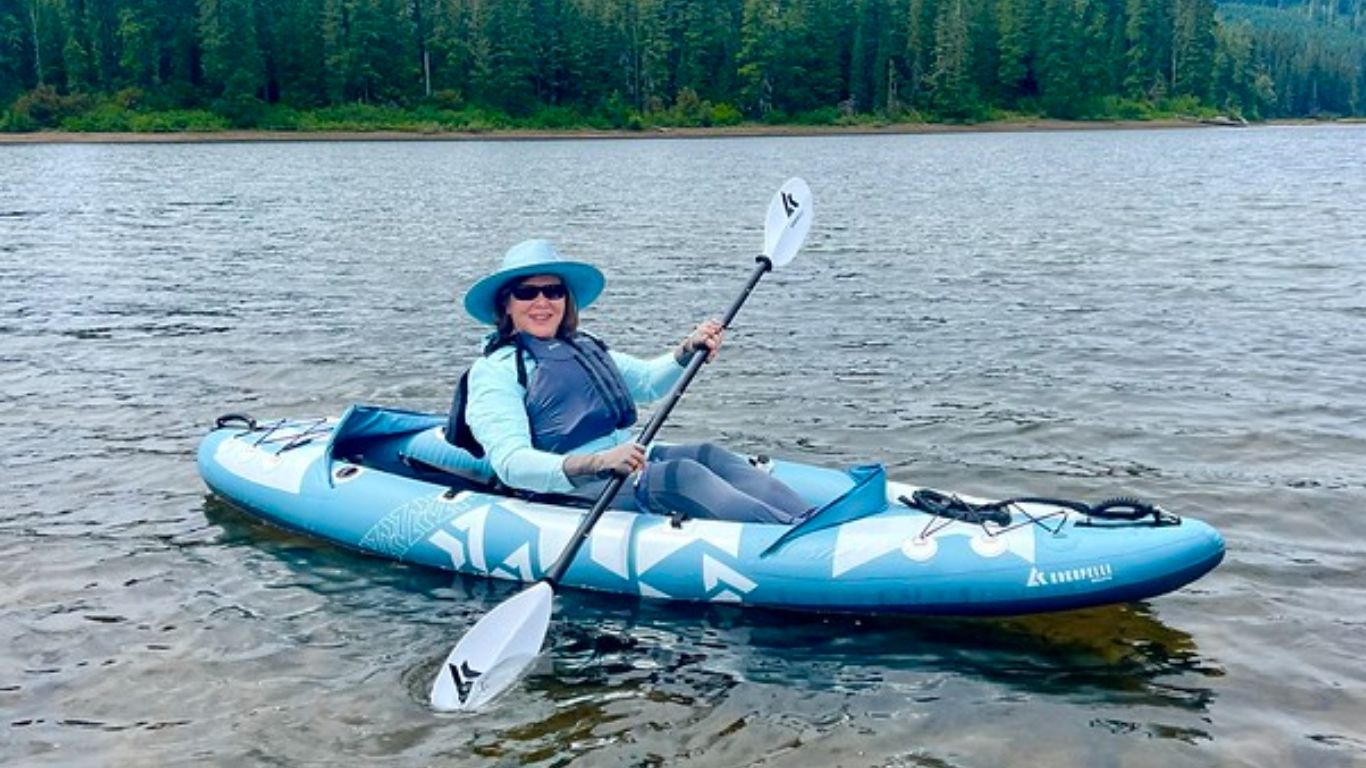
A kayak paddle has a blade on each end and no grip at the ends. Instead, you hold it in the middle with both hands spaced about shoulder-width apart. You paddle by dipping one blade into the water, pulling it back, then dipping the other blade on the opposite side without having to change your grip. This makes for a smooth, continuous motion. Kayak paddles are longer to allow the paddler to reach both sides of the boat from a seated position in the center.
The key difference is in how the paddle interacts with the boat and water. In a canoe, you are often sitting higher (or kneeling), and the sides of the boat are taller. In a kayak, you sit lower and closer to the waterline. That difference in seating position changes the paddle design and the way you use it.
Why You Might Want to Use a Kayak Paddle in a Canoe
There are a few common reasons people try a kayak paddle in a canoe, and they mostly come down to convenience, comfort, and control.
One big reason is solo paddling. When you’re the only person in a canoe, keeping the boat straight can take extra effort. With a single-blade canoe paddle, you often have to use steering strokes or switch sides frequently to maintain a straight line. This can be tiring on long trips. A kayak paddle lets you alternate strokes on each side without switching hands or adjusting your position, which makes solo paddling smoother and less tiring.
Another reason is familiarity. If you’ve spent most of your time in kayaks, the double-bladed paddle might feel natural. Your muscle memory is already trained for that motion, so using a kayak paddle in a canoe can make the transition easier.
Finally, efficiency plays a role. A kayak paddle keeps you in constant motion, with one blade in the water at almost all times. This steady rhythm can help you travel longer distances with fewer breaks. In windy conditions, this can also help maintain forward momentum more easily than a single-blade paddle.
The Benefits of Paddling a Canoe with a Kayak Paddle
The main advantage is continuous propulsion. Because a kayak paddle has two blades, you’re always ready to take the next stroke without repositioning your paddle. This can save energy over time and allow you to maintain a higher average speed.
Better tracking (keeping the canoe moving straight) is another plus. With single-blade canoe paddles, each stroke pushes the boat slightly to the opposite side, so you need corrective strokes to counteract this. With a kayak paddle, alternating sides with each stroke naturally balances the force, making it easier to go straight without extra moves.
There’s also less twisting and turning involved compared to advanced canoe strokes. This can be a relief for your back, shoulders, and wrists, especially if you’re paddling for hours.
And let’s not forget adaptability. A kayak paddle can be handy if you’re switching between a kayak and a canoe on the same trip, or if you have mixed boats in a group. You won’t need to carry two separate paddles, which saves space and weight.
The Drawbacks of Using a Kayak Paddle in a Canoe
While there are benefits, there are also trade-offs. First, there’s the water drip problem. With every stroke, the raised blade drips water into the canoe. Drip rings on the paddle can help, but they won’t stop it entirely. On a warm summer day, this might not matter, but in cold weather or with sensitive gear on board, it can be uncomfortable or even risky.
Second, paddle length matters a lot. Canoes are generally wider than kayaks, especially if you’re sitting in the middle. A typical kayak paddle might be too short to reach the water comfortably without leaning awkwardly. This can cause fatigue and make your strokes less effective.
Third, the space inside the canoe can be a challenge. Kayak paddles are long, and in a loaded canoe, especially with a second paddler or camping gear, it can be hard to swing the paddle without bumping something.
Lastly, you lose some traditional canoe skills. Maneuvers like prying, sculling, or draw strokes are harder with a double-bladed paddle, so your fine control in tight spaces might suffer.
Choosing the Right Kayak Paddle for a Canoe

If you decide to go this route, getting the right paddle size is critical. For canoe use, a kayak paddle in the range of 250 to 280 cm is usually best. Shorter than that, and you’ll be leaning over uncomfortably. Longer paddles reach the water easily without straining your back.
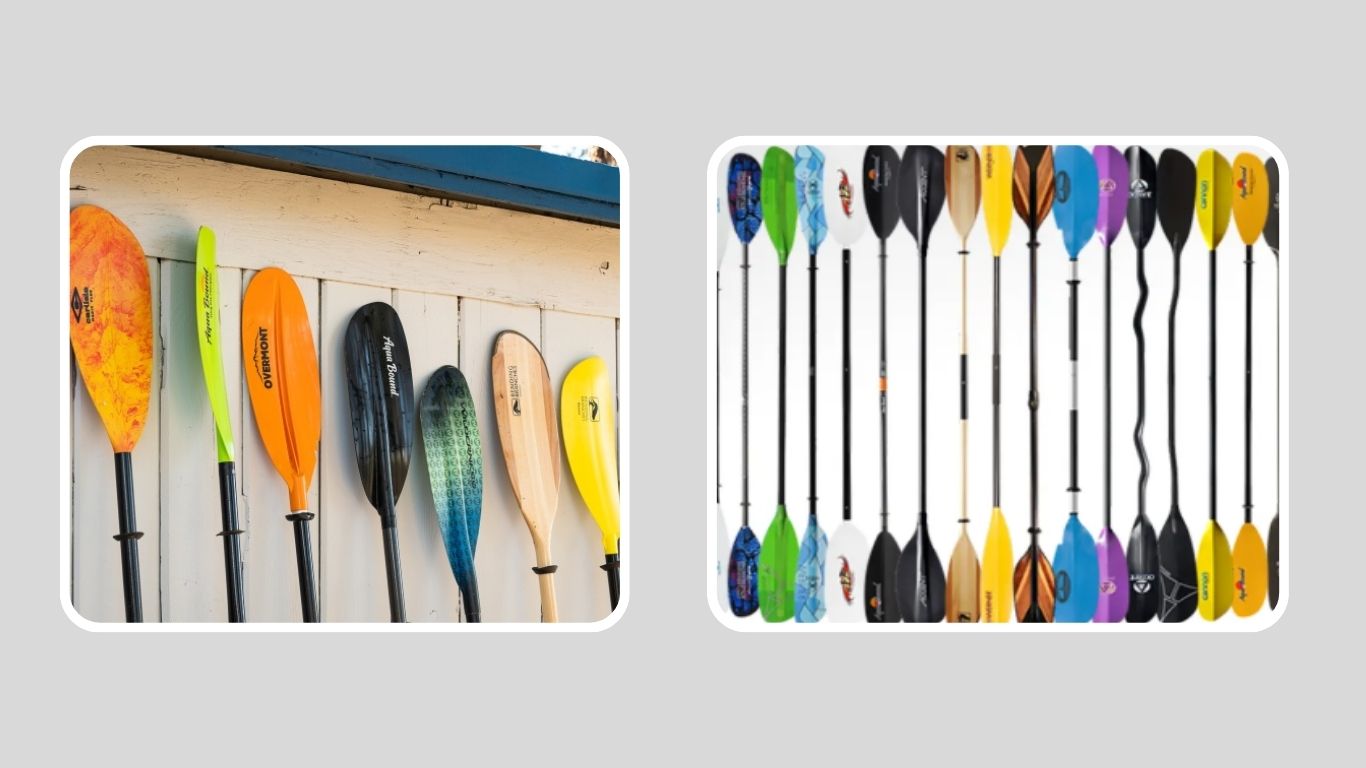
Materials matter too. Aluminum shafts are durable but heavier; fiberglass and carbon fiber are lighter and more comfortable for long trips. Blade shape also matters: wider blades offer more power per stroke, while narrower blades are easier to use for hours without tiring out.
And don’t forget drip rings. They’re small rubber pieces near each blade that slow down the water running toward your hands and into the boat.
How to Paddle a Canoe with a Kayak Paddle
Start by sitting in a position that balances the canoe well, often slightly behind center if you’re solo, so the bow sits a little higher. Hold the kayak paddle with both hands about shoulder-width apart. Keep your strokes smooth and even. Dip the blade into the water near your toes, pull it straight back alongside the canoe, and lift it out just past your hip.
As you pull with one side, the other blade comes forward in the air. Rotate your torso slightly for more power and less strain on your arms. Alternate sides in a steady rhythm to maintain balance and direction.
When you need to turn, do more strokes on one side, or use a wide sweeping stroke on the opposite side of the turn. For sharper turns, you can combine sweep strokes with a quick backstroke on one side.
Tips for Staying Dry and Comfortable
One of the main challenges when using a kayak paddle in a canoe is dealing with the water that drips from the raised blade. While it’s impossible to eliminate this, there are several ways to stay as dry and comfortable as possible. Start by angling your strokes lower so the blades remain closer to the water surface; this helps reduce the distance water travels before dripping, which means less ends up inside your canoe.
Adjusting the drip rings is another small but effective change. Place them a few inches from the blades so they can catch water before it reaches your hands or the center of the paddle shaft. Clothing also plays a role in comfort, so wear quick-dry materials that won’t stay wet for long and won’t cause chafing.
For longer trips, it’s smart to keep a sponge or a small bilge pump within reach to remove any water that does get inside. If you’re paddling on a cold day, consider using waterproof spray skirts or covers for the canoe’s open areas; this extra layer will help keep your gear dry and prevent cold water from splashing onto you during the trip.
When It’s Best to Use a Kayak Paddle in a Canoe
A kayak paddle can be a great choice in certain paddling situations, especially when you’re looking for efficiency and ease of control. It works particularly well when you’re paddling solo and need better tracking without constantly switching sides or doing corrective strokes. Calm, open waters such as lakes or wide rivers are ideal settings for a kayak paddle, as you can maintain a steady rhythm without worrying about tight turns or sudden obstacles.
It’s also a good option when you want to cover long distances more quickly and with less fatigue, thanks to the continuous motion of double-blade paddling. If you’re someone who is transitioning from kayaking to canoeing, using a kayak paddle can feel familiar and help you get comfortable in your canoe before learning more traditional single-blade techniques.
When to Stick with a Canoe Paddle

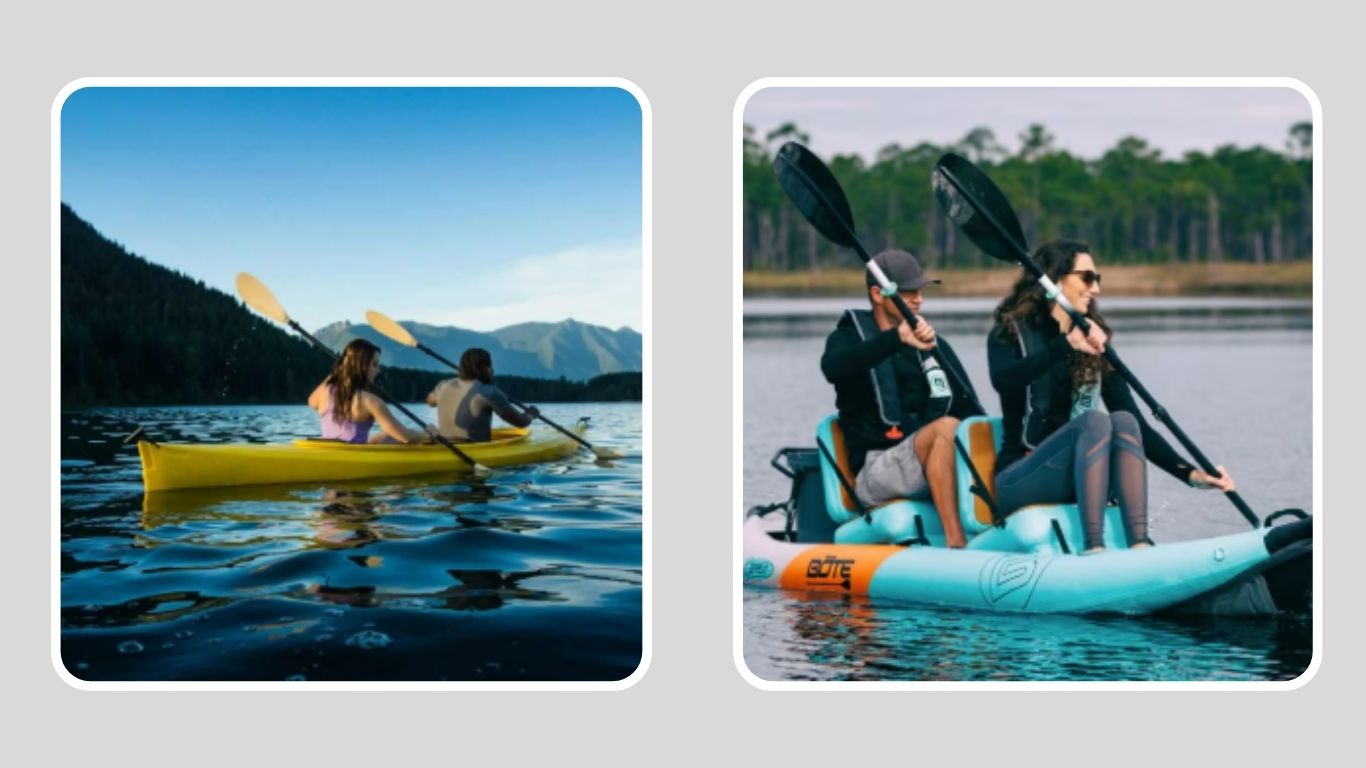
While a kayak paddle has its advantages, there are situations where a traditional canoe paddle is the better choice. If you’re paddling with a partner, using a single-blade paddle makes it easier to synchronize strokes and work together without the long shaft of a kayak paddle getting in the way. Canoe paddles also shine in narrow, winding rivers where precise control is needed to navigate turns, avoid rocks, or maneuver around fallen branches.
Sticking with a canoe paddle is also ideal if you want to practice or maintain traditional canoeing skills, such as the J-stroke, draw stroke, or pry stroke, which are harder to execute with a double-bladed paddle. Finally, a canoe paddle is a smart choice when you need to minimize water dripping into the canoe, especially in cold conditions or when carrying sensitive gear, since single-blade paddles naturally produce less splash and drip compared to kayak paddles.
Hybrid Paddles: A Middle Ground
Some paddles are designed with removable blades, letting you switch between single and double configurations. These are great for canoeists who sometimes paddle solo, with a partner, or switch between boats often. They save space and give you flexibility on the water.
Final Thoughts
Yes, you can paddle a canoe with a kayak paddle, and in many cases, it works surprisingly well. You’ll enjoy smoother tracking, steady rhythm, and efficient movement. But it comes with trade-offs like water drip, space challenges, and less fine control in tight spots. The key is choosing the right paddle length, adjusting your technique, and knowing when a kayak paddle will help you most. In the end, it’s not about following strict rules; it’s about enjoying your time on the water with the tools that make you feel comfortable and in control.