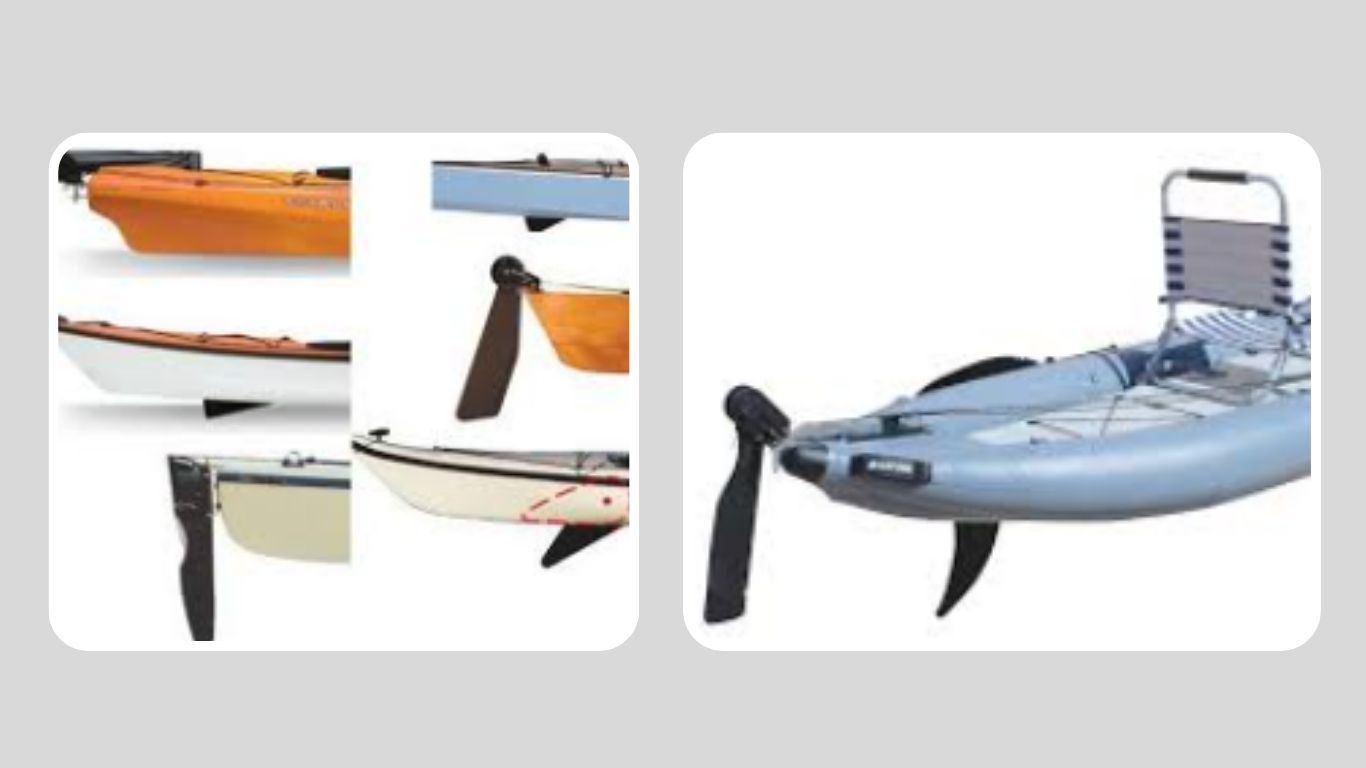
Kayaking is a fun and adventurous way to explore rivers, lakes, and the open sea, but controlling your direction can sometimes be challenging, especially in wind or strong currents. That’s where a rudder comes in. A kayak rudder is a small blade at the back of the boat that helps you steer more easily and stay on course. Understanding how a rudder works can make paddling smoother, less tiring, and more enjoyable, especially for longer trips or in tricky water conditions.
What Is a Rudder on a Kayak?
A rudder on a kayak is a mechanical device that helps the paddler control the boat’s direction and stability, especially in tough conditions like wind, waves, or strong currents. It’s usually a flat blade made of plastic, aluminum, or fiberglass, mounted at the stern (the back of the kayak). Unlike a canoe paddle stroke or kayak sweep stroke, which requires constant adjustments from the paddler, a rudder works as a steering aid, making the kayak easier to handle.
The rudder is connected to a set of foot pedals inside the kayak. When the paddler presses down on the right pedal, the rudder blade shifts to the right, causing the kayak’s nose to turn right. Pressing the left pedal has the opposite effect. This system gives paddlers steering control without needing to stop or adjust their paddling strokes, which can be especially useful on long trips.
Rudders are not a new invention. Early versions were used in traditional kayaks designed by Inuit and Aleut peoples for hunting in rough Arctic waters. Modern kayaks have improved on this idea, using lightweight materials, cables, and adjustable systems that can be raised when not in use. Unlike large boat rudders, which are always submerged, kayak rudders can be deployed (lowered into the water) or retracted (pulled up onto the deck) depending on conditions.
In short, a kayak rudder is like a steering assistant. It doesn’t paddle for you, but it makes handling the kayak more efficient, particularly when nature is working against you. For touring, sea, and fishing kayaks, a rudder can make the difference between an exhausting struggle and an enjoyable, controlled ride.
How Does a Kayak Rudder Work?
A kayak rudder works by redirecting the flow of water at the stern (back) of the boat. When you’re paddling, water naturally flows along both sides of the kayak in a straight line. By turning the rudder blade slightly left or right, you change how that water moves, which causes the kayak’s bow (front) to turn in the opposite direction. This simple principle of water resistance and redirection is what makes the rudder such an effective steering tool.
The rudder system is usually connected to foot pedals or foot braces inside the kayak. Each pedal is linked to the rudder with cables or cords. When you push the right pedal forward, the rudder swings to the right. This shift creates drag on one side of the kayak, turning the nose of the kayak to the right as well. Pressing the left pedal has the same effect in the opposite direction. The more pressure you apply, the sharper the rudder angle and the quicker the turn.
One of the biggest advantages of a rudder is how it helps with tracking, keeping the kayak moving in a straight line. For example, if you’re paddling across a windy lake, the wind might keep pushing the nose of your kayak off course. Without a rudder, you’d have to constantly adjust with sweep strokes, which wastes energy and slows you down. With a rudder, a small foot adjustment can counteract the wind, letting you keep paddling normally while the kayak stays straight.
Rudders also shine in open water or tidal areas where currents are strong. Instead of fighting against nature, you can use the rudder to make smooth course corrections. And because the rudder allows you to steer with your feet, your hands remain free to focus on paddling, fishing, or even photography.
In calm conditions, many paddlers keep the rudder lifted out of the water. But when things get tough, like in crosswinds, surf, or while carrying heavy gear, the rudder becomes an essential tool to maintain control and reduce fatigue.
Parts of a Kayak Rudder System
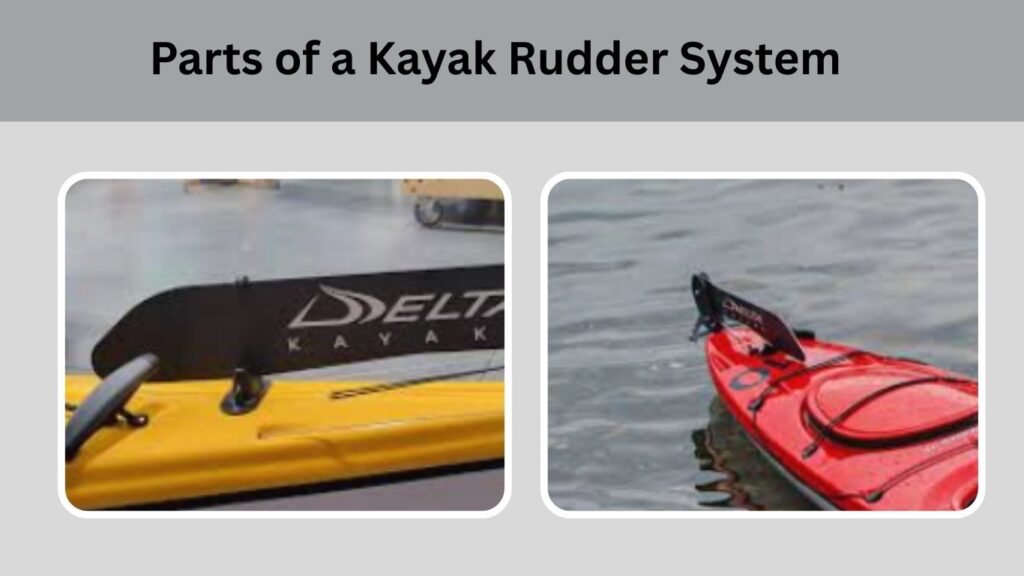
A kayak rudder may look like a simple blade at the back of the boat, but it’s part of a small mechanical system made up of several components that work together. Understanding each part helps paddlers see how the system functions and what to check when maintaining or upgrading a rudder.
1. Rudder Blade
The rudder blade is the most visible part, usually mounted at the stern of the kayak. It’s a flat, vertical piece often made from durable materials like reinforced plastic, fiberglass, or aluminum. The blade pivots left or right when the paddler presses the foot pedals, changing the kayak’s direction. Some blades are designed with a hydrodynamic shape for smoother movement in the water, reducing drag while still offering control.
2. Foot Pedals or Foot Braces
Inside the kayak, near where the paddler’s feet rest, are foot pedals or sliding foot braces. These are connected to the rudder with control cables. By pushing one pedal forward, you pull on a cable that shifts the rudder blade in that direction. The pedals serve two purposes: they provide support for your feet while paddling and allow you to steer the kayak hands-free.
3. Control Cables and Deployment Lines
Cables (usually made of stainless steel or strong cord) connect the pedals to the rudder. They transmit your foot movements directly to the blade. In addition to these, most rudder systems also have deployment lines or cords that let you lower the rudder into the water or pull it back up onto the deck. This is handy because you don’t always want the rudder in the water—for example, when launching from shore or paddling in shallow rivers.
4. Mounting Bracket
The mounting bracket attaches the rudder assembly to the kayak. It is fixed at the stern, usually designed specifically for that kayak model or added as part of a rudder kit. A good bracket keeps the rudder stable while still allowing it to pivot smoothly up and down or side to side.
5. Storage Position (Up or Down)
Most kayak rudders can be “parked” in an upright position on the deck when not in use. A pull cord or bungee system helps lift the rudder blade out of the water and secure it against the kayak. This keeps the blade safe from damage when paddling in shallow water, beaching the kayak, or during transport.
6. Optional Accessories
Some paddlers upgrade their rudder systems with accessories like stronger cables, foot-controlled toe pedals, or larger blades for better performance in open water. Aftermarket rudder kits are available for kayaks that don’t come with one pre-installed, offering flexibility for paddlers who want to add this feature later.
A rudder system might look simple, but each part plays a crucial role in keeping the kayak responsive and easy to control. Together, these components allow paddlers to handle changing conditions without constantly adjusting their paddle strokes.
Benefits of Having a Rudder on a Kayak
Adding a rudder to a kayak can make a huge difference in how enjoyable and efficient your paddling experience is. While it’s possible to paddle without one, a rudder provides several practical advantages that become especially noticeable in windy, wavy, or long-distance conditions. Here are the main benefits:
1. Improved Tracking
One of the most common frustrations in kayaking is “weathervaning”—when the wind pushes the front of your kayak off course. A rudder helps counteract this by keeping the kayak moving straight. With a quick foot adjustment, you can correct your direction without constantly changing your paddle strokes. This means less zigzagging and more efficient forward movement.
2. Easier Turning
Turning a kayak normally requires sweep strokes or corrective strokes, which take energy and can interrupt your paddling rhythm. With a rudder, turning is as simple as pressing one foot pedal. This makes navigation smoother and less tiring, especially when you need to make frequent course corrections.
3. Reduced Fatigue on Long Trips
On multi-hour or multi-day paddling trips, small adjustments add up. Without a rudder, you might spend extra energy correcting your course with every stroke. Over time, this can wear you out. A rudder takes on much of that work, allowing you to focus on steady paddling instead of constant steering.
4. Better Control in Wind and Current
Rudders shine in tough conditions. When paddling in strong winds, waves, or tidal currents, staying on course can feel like a battle. With a rudder, you can use your feet to make subtle course corrections while keeping your hands free for powerful forward strokes. This is especially useful in open water or coastal kayaking.
5. Hands-Free Advantage for Fishing
For anglers, a rudder can be a game-changer. Fishing kayaks often carry extra gear, and paddlers may want to keep their hands free for casting or reeling in fish. A rudder makes it possible to control direction with just your feet, keeping the kayak steady while you focus on fishing.
6. Helpful for Tandem Kayaks
In tandem (two-person) kayaks, coordinating strokes with a partner can sometimes be challenging. A rudder gives the rear paddler more control, making it easier to keep the kayak straight and reducing the need for constant verbal coordination.
Real-Life Example
Imagine paddling across a large lake on a windy day. Without a rudder, you’d have to keep making wide sweep strokes on one side just to stay straight, which slows you down and tires out your arms. With a rudder, a light touch of your foot keeps the kayak on course, saving your energy for the fun part of the trip.
Downsides of Kayak Rudders
While rudders bring many benefits, they’re not perfect for every situation. Some paddlers prefer a clean, simple kayak without extra parts to worry about. Like any piece of gear, rudders have trade-offs that are worth considering before deciding if you need one.
1. Added Cost
Rudders don’t come cheap. Many kayaks are sold without them, and buying a rudder kit can cost anywhere from $100 to $300 or more, depending on quality and brand. If you pay for professional installation, the cost goes up further. For casual paddlers who only kayak occasionally on calm water, this investment might not feel worthwhile.
2. Extra Weight and Bulk
Even though rudders aren’t heavy, they still add extra parts to your kayak. The blade, cables, pedals, and mounting hardware contribute to the overall weight. On lightweight kayaks, like those made for quick day trips, this extra bulk can feel unnecessary. A rudder also changes how the kayak looks and can get in the way during storage or transport.
3. Maintenance and Repairs
A rudder is a mechanical system, which means it can break, jam, or wear out over time. Sand, saltwater, or debris can clog the cables or joints. If the foot pedals or cables loosen, steering may become difficult. Regular cleaning and occasional repairs are needed to keep it working smoothly, something minimalist paddlers might see as an inconvenience.
4. Possible Mechanical Failure
If a rudder breaks while you’re in the middle of a long trip, it can create problems. A jammed rudder stuck in one position can make steering harder than not having one at all. While experienced paddlers can always fall back on paddle strokes to correct course, beginners might find themselves struggling if they’ve been relying too heavily on the rudder.
5. Not Always Necessary
For short paddles, calm lakes, or sheltered rivers, a rudder might be overkill. Skilled paddlers often prefer to rely on technique, using sweep strokes or edging the kayak to turn and track efficiently. In these situations, a rudder could feel like an unnecessary complication.
6. Can Encourage Bad Habits
Some argue that rudders make beginners too dependent on them, preventing new paddlers from developing strong paddle strokes and proper steering technique. While a rudder makes things easier, it’s still important to learn how to control a kayak without one in case of mechanical failure.
Example Situation
Imagine a beginner buys a rudder-equipped kayak and always uses it to steer. One day, the rudder cable snaps during a trip. If the paddler hasn’t practiced sweep strokes or corrective strokes, they might struggle to get back safely. This shows why a rudder is best used as a tool, not a crutch.
Rudder vs. Skeg: What’s the Difference?
When talking about kayak steering systems, the terms rudder and skeg often come up. Both are designed to help improve control and tracking, but they work in very different ways. Understanding the difference helps paddlers choose the system that fits their kayaking style and environment.
1. What Is a Skeg?
A skeg is a fixed or retractable fin that drops down from the bottom of a kayak, usually from a slot near the stern. Unlike a rudder, a skeg does not move side to side. Its purpose is not to steer but to improve tracking, helping the kayak go straight, especially in crosswinds. The skeg can be raised, lowered, or adjusted to different depths depending on conditions, but it won’t turn the kayak.
2. Main Differences Between Rudders and Skegs
- Function:
- Rudder = Steering + Tracking.
- Skeg = Tracking only.
- Movement:
- Rudder pivots left and right, controlled by foot pedals.
- Skeg drops straight down, controlled by a slider or rope system.
- Complexity:
- Rudders are more complex, with pedals, cables, and moving parts.
- Skegs are simpler, with fewer parts to maintain.
- User Control:
- Rudder = adjustable direction while paddling.
- Skeg = adjustable depth but not direction.
3. When a Rudder Is Better
- Long-distance touring or expeditions where fatigue is a concern.
- Paddling in open water with strong crosswinds and currents.
- Fishing kayaks, where hands-free steering is helpful.
- Tandem kayaks, where coordinating strokes can be difficult.
4. When a Skeg Is Better
- Sea kayaks are designed for efficiency and minimal drag.
- Paddlers who prefer simplicity with less maintenance.
- Environments where straight tracking is more important than quick turns.
- Those who want to reduce weathercocking (when the kayak turns into the wind).
5. Pros and Cons of Each
Rudder
Pros
- Can steer and correct course easily.
- Great for beginners or long trips.
- Adjustable while paddling.
Cons
- More expensive.
- Requires maintenance.
- Adds moving parts that may break.
Skeg
Pros
- Simple design, low maintenance.
- Improves straight-line tracking.
- Usually lighter than rudders.
Cons
- Cannot steer, only stabilizes.
- Limited use in very strong crosswinds compared to a rudder.
- The skeg box takes up storage space inside the kayak.
6. Common Misconceptions
- “Rudders are only for beginners” – Not true. Even experienced paddlers use them in challenging conditions.
- “Skegs and rudders do the same thing.” – While both improve tracking, only the rudder offers steering control.
- “All sea kayaks have skegs.” – Many touring and sea kayaks come with rudders instead, depending on design and paddler preference.
Example
Picture two paddlers crossing a windy bay. One has a rudder, the other a skeg.
- The paddler with the rudder uses foot pedals to steer slightly left, keeping a straight course without much effort.
- The paddler with the skeg lowers it halfway to balance wind pressure, but still relies on occasional paddle strokes to correct direction.
Both systems work, but each has strengths in different conditions.
Types of Kayaks That Commonly Use Rudders
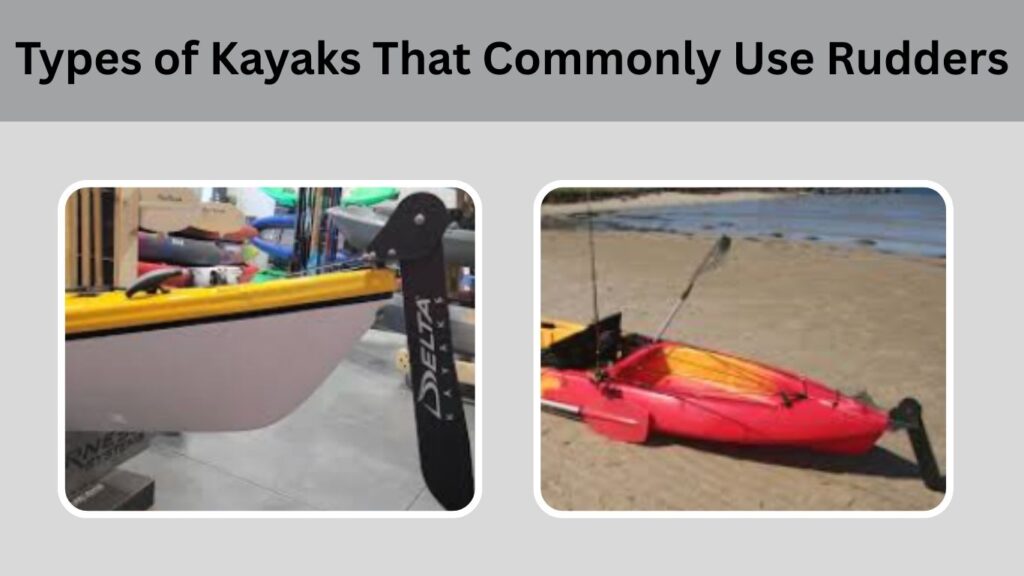
Not every kayak comes with a rudder, and not every paddler needs one. Rudders are more common on certain types of kayaks where control, tracking, and efficiency are more important than simplicity. Here are the main categories of kayaks that often feature rudders:
1. Sea Kayaks
Sea kayaks are designed for long-distance paddling in open water, where winds, waves, and currents can make steering challenging. A rudder helps sea kayakers:
- Stay on course during long crossings.
- Conserve energy on multi-day expeditions.
- Handle strong side winds that would otherwise push them off track.
Because sea kayaking often involves unpredictable weather and water conditions, rudders are considered almost essential for many paddlers in this category.
2. Touring Kayaks
Touring kayaks are similar to sea kayaks but are often used for lakes, rivers, and inland waterways. They’re built for distance and speed, and a rudder enhances their ability to travel straight without constant paddle corrections. On a windy day or a multi-hour trip, the rudder makes touring far less tiring.
3. Fishing Kayaks
Fishing kayaks, especially pedal-drive models, often include rudders. For anglers, a rudder provides hands-free steering, allowing them to focus on casting, trolling, or reeling in fish. Rudders also help stabilize the kayak when carrying heavy gear, which can make the boat harder to control without extra steering support.
4. Tandem Kayaks
Steering a tandem kayak can be tricky since two paddlers need to coordinate their strokes. Adding a rudder makes this much easier by giving the rear paddler control of direction. This helps reduce arguments, keeps the kayak straight, and makes teamwork more enjoyable.
5. Heavy-Load or Expedition Kayaks
When kayaks are packed with camping gear, food, or fishing equipment, they sit lower in the water and respond differently to wind and waves. A rudder makes handling these loaded kayaks much easier, keeping them stable and predictable.
6. Recreational Kayaks (Rare)
Recreational kayaks used for short paddles on calm lakes or ponds rarely need rudders. These kayaks are typically wide, stable, and easy to handle without extra equipment. However, some high-end recreational models may include optional rudder kits for paddlers who want extra control.
Example
Imagine two paddlers: one in a recreational kayak on a calm pond, the other in a sea kayak crossing a windy bay. The recreational paddler doesn’t need a rudder because conditions are mild and easy to manage. The sea kayaker, however, relies on the rudder to fight crosswinds and maintain a steady heading across several miles of open water.
When Do You Actually Need a Rudder?
Not every paddler needs a rudder, but in certain situations, it can make a huge difference in comfort, efficiency, and safety. Whether you’re planning long expeditions or just occasional day trips, knowing when a rudder is most useful can help you decide if it’s worth adding to your kayak.
1. Long-Distance Paddling Trips
If you’re covering several miles in a single outing, small course corrections add up quickly. Without a rudder, you’ll need frequent sweep strokes to stay straight, which burns extra energy. Over hours of paddling, this becomes exhausting. A rudder lets you keep a steady forward stroke while steering with your feet, saving energy and making long journeys more manageable.
2. Ocean Kayaking and Strong Wind Conditions
In open water, wind and waves often push kayaks off course. This effect, known as weathercocking, happens when the bow of the kayak keeps turning into the wind. With a rudder, you can counteract this force easily and maintain a straight path. This is especially important during ocean crossings or when navigating coastal areas with changing wind directions.
3. Kayak Fishing for Better Control
Fishing kayaks often carry extra gear, which makes them sit lower and handle sluggishly. A rudder helps stabilize the boat, keeping it on course while you’re busy casting or reeling in fish. It’s particularly useful when trolling, since you can adjust direction with your feet while keeping both hands on your rod.
4. Heavy-Loaded Kayaks (Expedition Gear)
When kayaks are loaded with camping supplies, food, or equipment for multi-day trips, they behave differently in the water. Extra weight can make them harder to steer and more prone to drifting. A rudder helps manage the load, keeping the kayak more responsive and easier to control.
5. Paddling in Rivers with Current or Crosswind
Even in rivers, currents can push your kayak sideways or force you off your intended line. While paddle strokes can correct this, a rudder makes it easier to keep your kayak aligned without constant adjustments. This means smoother paddling and better focus on the scenery or navigation.
6. Tandem Kayaking with a Partner
Coordinating strokes in a tandem kayak can be tricky, especially if the paddlers have different skill levels. A rudder gives the rear paddler control of steering, making the trip smoother and reducing the need for constant coordination or correction.
Example
Picture yourself on a 10-mile coastal paddle. Midway through, strong winds pick up and start pushing your kayak sideways. Without a rudder, you’d need to keep making wide sweep strokes on one side, wearing yourself out. With a rudder, a light press of your foot keeps the kayak straight, conserving your energy for the rest of the journey.
In short, you actually need a rudder when facing long distances, heavy loads, strong winds, or when fishing hands-free. For short trips on calm lakes, it may not be necessary, but in challenging conditions, it can be the difference between frustration and an enjoyable paddle.
How to Install a Rudder on a Kayak
Not all kayaks come with rudders, but many are designed to accept them as an upgrade. Installing a rudder can seem complicated at first, but with the right tools and a careful approach, most paddlers can do it themselves. Here’s a step-by-step breakdown of how installation usually works.
1. Check Compatibility
Before buying a rudder kit, make sure it fits your kayak. Some kayaks have a rudder-ready design, meaning they already include mounting holes or brackets at the stern. Others may require drilling or an aftermarket kit. Always check the manufacturer’s recommendations for compatibility.
2. Gather Tools and Parts
A standard rudder kit typically includes:
- Rudder blade and housing
- Mounting bracket or pin
- Foot pedals or sliding foot braces
- Control cables (usually stainless steel or strong cord)
- Deployment line and cleat
Tools you may need:
- Screwdrivers
- Wrench set
- Drill (if no pre-drilled holes)
- Pliers or cable crimps
3. Attach the Mounting Bracket
The rudder housing or bracket is attached to the stern of the kayak. Some kayaks have a pre-installed mounting point, making this step easy. If not, you’ll need to carefully drill holes and secure the bracket using bolts and washers. This bracket will hold the rudder blade and allow it to pivot up and down.
4. Install the Foot Pedals
Next, install the foot pedals or sliding braces inside the kayak, near the cockpit. These are mounted on tracks along the interior sides of the kayak. The pedals connect to the rudder with control cables, so they need to be properly aligned for smooth steering.
5. Run the Control Cables
Thread the control cables from the pedals to the rudder at the stern. Most kayaks have small cable guides or tubes built in to make this easier. Once connected, adjust the cable tension so that pressing one pedal moves the rudder evenly left or right. Secure the ends with crimps or knots as instructed.
6. Set Up the Deployment Line
A deployment line allows you to raise or lower the rudder blade while sitting in the kayak. Thread the cord through the guide rings along the side of the kayak and attach it to the rudder. Add a cleat or hook near your cockpit so you can lock the rudder in the “up” or “down” position.
7. Test the System
Before heading out on the water, test the rudder on land. Push the pedals to ensure the rudder moves smoothly. Pull the deployment line to check that the rudder blade raises and lowers without sticking. Adjust cable tension if needed.
8. DIY vs. Professional Installation
If you’re handy with tools, installing a rudder yourself is usually straightforward. However, if your kayak isn’t rudder-ready or if you’re unsure about drilling, professional installation may be the safer choice. Many kayak shops offer this service.
Tips for First-Time Installation
- Read the instructions carefully; different brands may have slightly different steps.
- Avoid overtightening bolts, which can crack the kayak’s hull.
- Keep the cables evenly tensioned so the rudder stays centered.
- Test in calm water first before relying on it in strong conditions.
Using a Rudder Properly
Having a rudder on your kayak is only helpful if you know how to use it correctly. While the system looks simple, just press the pedals and the rudder turns, it requires some practice to master. Here’s a guide to steering, balancing, and making the most out of your rudder.
1. Steering with Foot Pedals
The rudder connects to the foot pedals inside your kayak. Think of them like gas and brake pedals in a car, but instead of speed, they control direction:
- Press the right pedal → rudder turns right → kayak nose points right.
- Press the left pedal → rudder turns left → kayak nose points left.
Tip: Use gentle pressure rather than stomping on the pedals. Small adjustments work better than oversteering, especially in choppy water.
2. Balancing Your Strokes
A rudder reduces the need for corrective paddle strokes, but it doesn’t replace paddling technique. Keep your strokes even on both sides. Let the rudder handle small course corrections instead of constantly changing your paddling rhythm.
3. When to Use the Rudder
- In wind or current: Deploy the rudder to help track straight without exhausting yourself.
- On long trips: Use it to save energy and maintain a steady heading.
- When maneuvering: Great for making wide, controlled turns.
4. When NOT to Use the Rudder
- In shallow water: A lowered rudder can hit rocks, sand, or logs. Keep it retracted.
- During quick spins: If you need a sharp turn (like in whitewater or tight spaces), it’s usually faster to rely on paddle strokes.
- While landing: Always pull the rudder up before reaching shore to avoid damage.
5. Coordinating Hands and Feet
One challenge for beginners is coordinating foot pressure while paddling. At first, you may forget to use the pedals or accidentally press both at once. With practice, it becomes natural, like riding a bike.
6. Avoiding Common Mistakes
- Oversteering: Pressing too hard can cause zig-zagging.
- Forgetting to retract: Many beginners damage rudders by landing with them down.
- Relying too much: Don’t let the rudder replace good paddling habits; it’s a helper, not the main driver.
7. Practice Makes Perfect
Before taking your rudder into open water, practice in calm conditions. Try paddling straight with minimal paddle corrections, then experiment with wide turns. Over time, you’ll learn how much pressure each pedal needs.
In short, using a rudder properly is all about balance: let it do the hard work of countering wind and current, but keep your paddling technique strong. With practice, you’ll glide straighter, turn smoother, and save energy on every trip.
Advantages of Using a Rudder on a Kayak
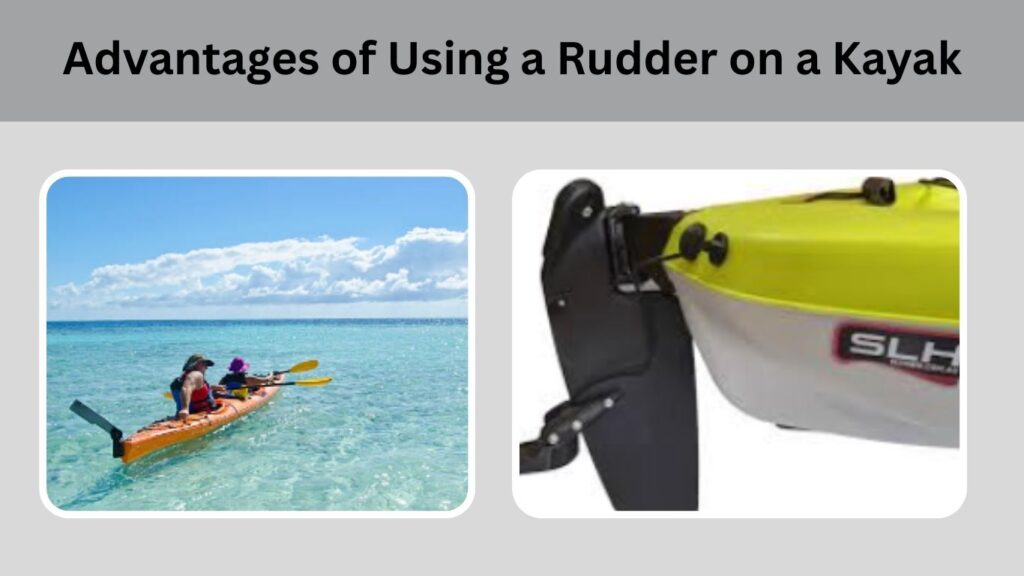
A kayak rudder is more than just an accessory; it can completely change your paddling experience. Whether you’re out for recreation, fishing, or long-distance touring, a rudder can make kayaking easier, safer, and more enjoyable. Here are the main advantages:
1. Better Tracking
One of the biggest benefits of a rudder is keeping your kayak straight. Wind, waves, or currents often push kayaks off course. Instead of constantly correcting with wide paddle strokes, a rudder helps you hold your line with minimal effort. This is especially valuable on open water or long-distance paddles.
2. Energy Efficiency
Without a rudder, paddlers waste energy correcting their course. Over time, this can be tiring and slow you down. With a rudder, your paddle strokes can stay consistent, letting you move faster and farther with less effort. This makes a huge difference on long trips.
3. Easier Steering
Rudders make steering simple. By pressing a foot pedal, you can smoothly guide your kayak without breaking your paddling rhythm. This is especially helpful for beginners who may struggle with turning techniques.
4. Wind and Current Control
When paddling in strong wind or current, kayaks tend to weathercock, turning into the wind. A rudder counteracts this effect, helping you stay on track. It’s also useful for side currents that push you off course.
5. Hands-Free Help for Anglers
Fishing kayakers love rudders because they free up their hands. You can focus on casting, reeling, or handling gear while using your feet to control direction. It makes multitasking on the water much easier.
6. Smoother Long-Distance Touring
Touring kayakers often cover many miles in a single trip. Over that distance, small inefficiencies add up. A rudder reduces fatigue, keeps you steady in crosswinds, and makes navigating large bodies of water less stressful.
7. Beginner-Friendly Learning Curve
Learning kayak strokes takes practice, and some beginners get frustrated when they can’t paddle straight. A rudder shortens the learning curve by assisting with steering and tracking until the technique improves.
8. Safer in Challenging Conditions
In rough waters, strong winds, or busy waterways, control is everything. A rudder gives you more stability and confidence to handle sudden changes in conditions.
Disadvantages of Using a Rudder on a Kayak
While rudders provide many benefits, they also come with trade-offs. Not every paddler or kayak needs one, and understanding the downsides helps you make a balanced decision.
1. Added Cost
Rudders are an extra investment. A quality rudder system can range from $100 to $300 or more, depending on the materials and brand. If your kayak doesn’t come rudder-ready, you may also need to pay for professional installation, adding to the cost. For casual paddlers on calm water, this expense may not be justified.
2. Extra Weight and Bulk
Even though rudders aren’t heavy, they do add weight and extra parts to your kayak, including the blade, cables, pedals, and mounting hardware. On lightweight kayaks, this can affect transport, storage, and handling, and it slightly increases drag in the water.
3. Maintenance Requirements
A rudder is a mechanical system with moving parts. Sand, salt, and debris can cause the cables or pivot points to stick or wear out. Regular maintenance is needed, including cleaning, lubricating, and checking tension. Neglecting this can reduce performance or even cause failure.
4. Risk of Mechanical Failure
Rudders can break or jam. If a rudder gets stuck while paddling, it may make steering more difficult than paddling without one. In this case, the paddler must rely on traditional strokes to regain control, which can be challenging for beginners.
5. Potential for Over-Reliance
Some paddlers, especially beginners, may rely too much on the rudder and neglect learning proper paddle strokes and steering techniques. This can be problematic if the rudder fails or if you switch to a kayak without one.
6. Not Always Necessary
For short paddles, calm lakes, or sheltered rivers, a rudder may be unnecessary. Skilled paddlers can often maintain a straight line and turn efficiently using only paddle strokes. In these cases, a rudder may add unnecessary complexity.
7. Risk in Shallow or Rocky Water
A lowered rudder can hit rocks, logs, or sand in shallow water, potentially damaging the blade. Paddlers must remember to lift the rudder when approaching shallow areas, which adds another step to manage while kayaking.
Example Scenario
Imagine a beginner paddler relying on a rudder for control. Mid-trip, the cable snaps, and the rudder becomes stuck. Without experience in sweep strokes or corrective paddling, they struggle to maintain a straight course, causing fatigue and frustration. This highlights why rudders should be seen as a helpful tool, not a replacement for good technique.
Final Thoughts
A kayak rudder is a valuable tool that enhances control, tracking, and efficiency on the water. While it adds cost, weight, and maintenance, its benefits, especially for sea kayaking, fishing, tandem paddling, or long-distance trips, often outweigh the drawbacks. Proper use, regular maintenance, and choosing the right rudder for your kayak type ensure a smooth, safe, and enjoyable paddling experience. Even beginners can gain confidence and conserve energy by learning how to steer effectively with a rudder, making every journey more comfortable and fun.