Kayaking is an exciting and adventurous activity for kids, offering them a chance to explore lakes, rivers, and coastal waters while staying active and enjoying nature. But for young paddlers, having the right kayak seat is more than just a comfort matter; it’s about safety, support, and confidence on the water. A well-designed kids kayak seat ensures proper posture, stability, and long-lasting comfort, making every trip enjoyable. In this guide, we’ll explore the best kids kayak seats, their key features, and tips to choose the perfect one for your child.
Why the Right Kayak Seat Matters for Kids
Choosing the right kayak seat for kids is crucial for a safe, enjoyable, and comfortable paddling experience. Unlike adults, children have smaller bodies, developing muscles, and less core strength, which makes proper support essential. A well-designed seat helps maintain the correct posture, preventing back strain and discomfort during longer trips.
Safety is another major concern. Kids are naturally more wiggly and may shift their weight unexpectedly while paddling. A secure seat with proper straps or harnesses keeps them stable, reducing the risk of tipping or falling out of the kayak.
Support is not just about keeping kids upright; it also improves their paddling efficiency. When a child’s back and legs are properly supported, they can use their muscles more effectively, paddle longer without fatigue, and enjoy better control over the kayak.
Finally, comfort and support build confidence. A child who feels secure and comfortable in their seat is more likely to enjoy the water, explore new areas, and develop a love for kayaking. Investing in the right seat is not just about equipment; it’s about creating a positive, safe, and fun experience for young paddlers.
Key Features to Look for in a Kids Kayak Seat
Selecting the right kayak seat for a child goes beyond just picking a colorful or fun-looking design. A well-chosen seat can dramatically improve comfort, safety, and paddling performance, turning every trip on the water into an enjoyable experience. Parents should pay attention to several key features to make sure their child is secure, supported, and ready for adventure.
1. Adjustable Straps
Children grow quickly, and what fits today may be too small in a few months. Seats with adjustable straps allow you to resize the seat to match your child’s growth, extending its usability. Adjustable straps also play a critical role in securing the seat tightly to the kayak, preventing shifting, slipping, or tipping during paddling. Some seats offer multiple strap points, which provide better stability, especially on uneven or wavy water.
2. Padding and Cushioning
A well-padded seat makes a huge difference in comfort, particularly during longer trips. Kids can become fidgety or uncomfortable on hard surfaces, which may shorten their kayaking experience. Look for seats with thick foam, memory foam, gel padding, or inflatable cushions that soften the contact points and reduce pressure on the back, hips, and legs. Some models feature removable cushions for easy drying, while others have non-slip surfaces to keep kids steady as they move.
3. Back Support
Proper back support is essential for posture, balance, and overall paddling efficiency. High-back seats are ideal for younger kids or beginners who need extra support to sit upright, while low-back seats may suit older children with stronger core muscles. Seats with adjustable backrests let you fine-tune the angle for optimal comfort, which can also prevent slouching that may lead to fatigue or discomfort. Enhanced lumbar support can make long trips on the lake, river, or ocean much more enjoyable for your child.
4. Durable and Water-Resistant Materials
Kids’ kayak seats need to withstand exposure to water, sun, and rough handling. Look for seats made of high-quality, water-resistant materials that resist mold, mildew, and UV damage. Strong fabrics, reinforced stitching, and sturdy frames made of metal or reinforced plastic ensure durability and longevity. Even if the seat is used frequently or in rough conditions, these materials help maintain its shape, support, and overall safety.
5. Lightweight and Portable
Parents often have to carry and install kayak seats, so lightweight designs are a major advantage. Portable seats can be easily moved between kayaks, stored when not in use, or taken along for trips where multiple kids share one kayak. Some foldable or inflatable seats add even more convenience, allowing for compact storage without sacrificing comfort or support.
6. Safety Harness Options
For added protection, some kids’ kayak seats include built-in harnesses or attachment points for safety straps. This is especially important for younger children or when paddling in moving water, such as rivers or coastal areas with waves. Safety harnesses keep children secure in the seat, reducing the risk of tipping over or falling during sudden movements.
7. Ease of Cleaning
Children can get messy, and kayaking often involves splashes, mud, or spilled snacks. Seats made from easy-to-clean materials save parents time and effort. Removable covers, quick-dry fabrics, and wipeable surfaces make maintenance simple, keeping the seat hygienic and comfortable for repeated use.
8. Customizable Features
Some advanced kayak seats allow for additional customization, such as attachable cushions, extra back support pads, or even small storage pouches for snacks and water bottles. Customizable features help tailor the seat to your child’s needs and preferences, ensuring maximum comfort and convenience.
9. Breathability
A seat with breathable mesh panels or perforated padding helps reduce sweating, especially during hot weather. Breathable designs keep kids cool and comfortable, even on longer paddling trips, preventing skin irritation and discomfort.
By carefully considering these features, parents can ensure their child’s kayak seat is not only safe and supportive but also enhances the overall paddling experience. Investing in a seat with the right combination of adjustability, padding, support, and durability helps children enjoy kayaking safely and comfortably, encouraging them to spend more time on the water and build confidence as young paddlers.
Types of Kids Kayak Seats
Choosing the right kayak seat for a child goes beyond just finding a comfortable place to sit. The type of seat can impact safety, paddling efficiency, and overall enjoyment on the water. Understanding the different types of kids kayak seats helps parents make an informed decision that fits their child’s needs, the type of kayaking they plan to do, and the specific kayak being used. Below, we’ll explore the most common types, their advantages, limitations, and best uses.
1. Built-In Seats
Many kayaks designed specifically for kids come with built-in or molded seats. These seats are part of the kayak’s hull and cannot be removed. They are designed to match the shape and size of the kayak, providing a secure and stable seating area for young paddlers.
- Pros:
- Extremely stable and less prone to shifting or tipping, which is especially important for beginners.
- No installation required, children can sit and paddle immediately.
- Often molded to provide some level of lumbar support and a proper paddling position.
- Durable and less likely to be damaged since they are part of the kayak itself.
- Extremely stable and less prone to shifting or tipping, which is especially important for beginners.
- Cons:
- Not adjustable for growing children, so they may outgrow the seat quickly.
- Padding and comfort levels are sometimes minimal, leading to discomfort on longer trips.
- It cannot be removed or replaced easily if damaged or worn out.
- Not adjustable for growing children, so they may outgrow the seat quickly.
Built-in seats are a solid choice for parents who want simplicity and stability, especially for shorter trips on calm lakes or ponds.
Removable or Adjustable Seats
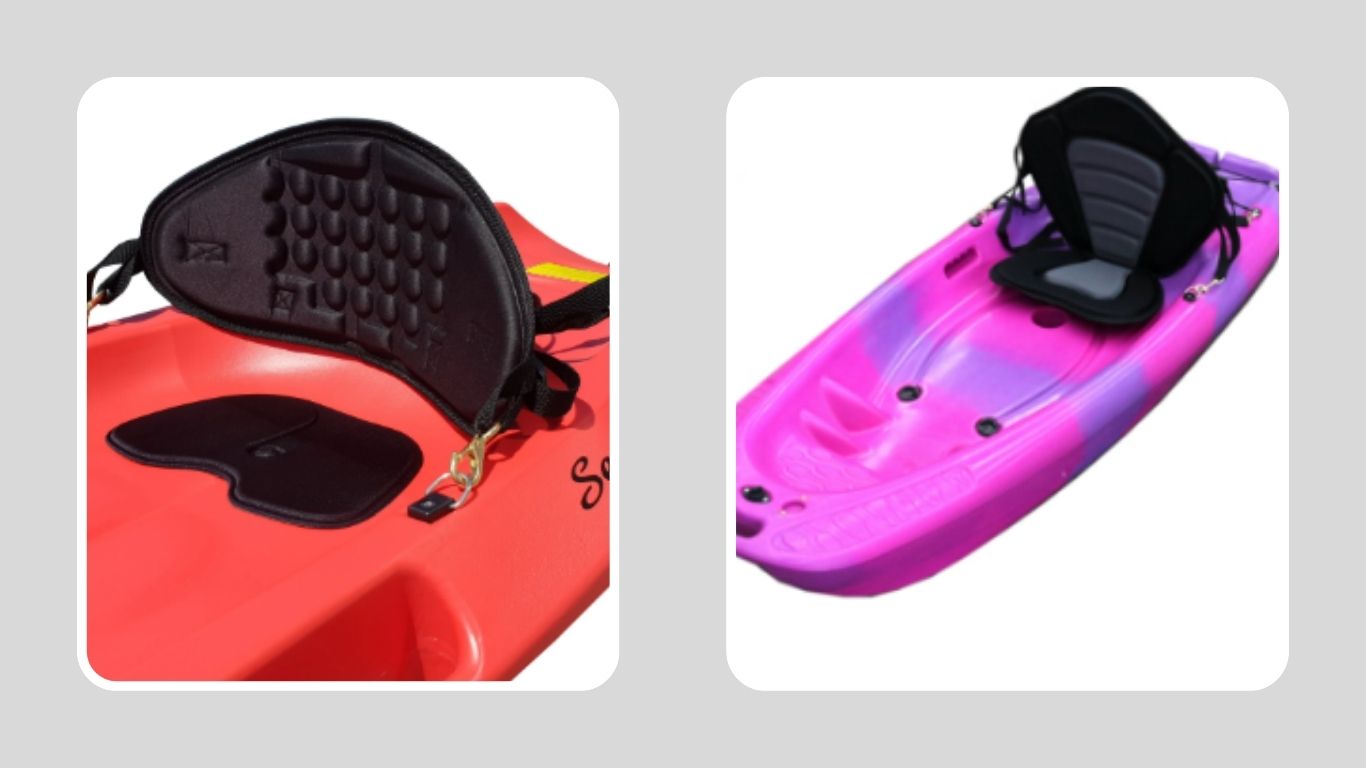
Removable seats are separate from the kayak and can be attached using straps, clips, or buckles. They are extremely versatile and allow parents to adjust the seat to suit their child’s size and paddling ability.
- Pros:
- Adjustable for growing children, extending the life of the seat.
- It can be moved between different kayaks, making it more cost-effective for families with multiple kayaks.
- Often come with extra padding, backrests, and safety features, improving comfort and stability.
- Some models include pockets or storage compartments for small items like water bottles or snacks.
- Adjustable for growing children, extending the life of the seat.
- Cons:
- Requires proper installation to ensure stability and safety; incorrect setup may lead to tipping.
- It may be slightly less stable than built-in seats if not secured tightly.
- Requires proper installation to ensure stability and safety; incorrect setup may lead to tipping.
Removable seats are ideal for families who want flexibility and customization. They work well for kids of various ages and can be used in recreational kayaks, touring kayaks, and even some ocean kayaks.
Inflatable Seats
Inflatable seats are designed to provide maximum cushioning and comfort. They are made from durable, air-tight materials that can be inflated to the desired firmness.
- Pros:
- Extremely comfortable due to soft, adjustable air cushioning.
- Lightweight and portable, making them easy to carry and store.
- It can be used in multiple types of kayaks, including sit-on-top and inflatable kayaks.
- Some inflatable seats feature integrated backrests for added support.
- Extremely comfortable due to soft, adjustable air cushioning.
- Cons:
- Requires regular inflation and monitoring for leaks, which can be inconvenient.
- Punctures or tears are possible, though repair kits are often included.
- Provides less structural support than rigid seats, so may not be ideal for rough or fast-moving waters.
- Requires regular inflation and monitoring for leaks, which can be inconvenient.
Inflatable seats are perfect for parents seeking comfort, portability, and versatility for recreational kayaking on calm waters.
High-Back Seats
High-back seats are designed to provide maximum support for the child’s back, shoulders, and torso. They are particularly beneficial for younger paddlers who may struggle to maintain an upright posture for long periods.
- Pros:
- Excellent back support reduces fatigue and discomfort during longer trips.
- Promotes proper posture, which improves paddling efficiency and balance.
- Often includes straps or harnesses for additional safety.
- It can help prevent slouching, which reduces the risk of tipping or losing control.
- Excellent back support reduces fatigue and discomfort during longer trips.
- Cons:
- Slightly heavier and bulkier than low-back options, making them less portable.
- It may feel restrictive for older children who want more freedom of movement.
- Slightly heavier and bulkier than low-back options, making them less portable.
High-back seats are ideal for beginners, younger children, and those who plan to spend longer periods on the water.
Low-Back Seats
Low-back seats provide minimal support and are better suited for older children with stronger core muscles. These seats allow more flexibility and freedom of movement while paddling.
- Pros:
- Lightweight and easy to install or move between kayaks.
- Provides freedom of movement for active paddlers.
- A simple design makes cleaning and maintenance easier.
- Lightweight and easy to install or move between kayaks.
- Cons:
- Less support for young or beginner paddlers.
- It can become uncomfortable during longer trips or for children who require more posture support.
- Less support for young or beginner paddlers.
Low-back seats are best for older kids or experienced paddlers who can maintain proper posture without additional back support.
Convertible or Hybrid Seats
Some seats are designed to convert between high-back and low-back configurations, offering flexibility as children grow. These hybrid designs aim to combine support, comfort, and freedom of movement in one seat.
- Pros:
- Adjustable to fit different ages, sizes, and skill levels.
- It can be used in multiple kayaking environments, from calm lakes to slow rivers.
- Often includes adjustable straps, padding, and backrest options.
- Adjustable to fit different ages, sizes, and skill levels.
- Cons:
- Usually more expensive than standard seats.
- Slightly heavier due to additional components for adjustability.
- It may require a learning curve to adjust and secure properly.
- Usually more expensive than standard seats.
Convertible seats are a smart investment for parents who want a seat that grows with their child and adapts to different types of kayaking adventures.
Specialty Seats
Some kayak seats are designed for very specific purposes, such as ocean kayaking, whitewater kayaking, or long touring trips. These seats often include extra padding, higher backrests, or reinforced frames to handle rougher conditions.
- Pros:
- Highly durable and purpose-built for specific kayaking environments.
- Offers enhanced support and safety features.
- Often designed with ergonomic comfort for longer trips.
- Highly durable and purpose-built for specific kayaking environments.
- Cons:
- Can be heavy or bulky.
- It may be overkill for casual or recreational paddling.
- Usually more expensive than standard seats.
- Can be heavy or bulky.
Specialty seats are best for families who plan to take their children on extended kayaking adventures or rougher waters and want maximum safety and comfort.
By understanding the types of kids kayak seats, parents can match the seat to their child’s age, size, skill level, and kayaking environment. Choosing the right seat ensures not only safety and support but also enhances the child’s enjoyment, confidence, and love for kayaking. A well-chosen seat can transform a simple paddle into a fun, memorable, and comfortable adventure on the water.
Top Kids Kayak Seats on the Market
Choosing the right kayak seat for a child can feel overwhelming, given the variety of options available. A good seat should combine comfort, support, safety, and durability while matching the child’s size and paddling environment. Below is a detailed look at some of the best kids kayak seats on the market, including their key features, benefits, and considerations for parents.
1. Lifetime Youth Kayak Seat
The Lifetime Youth Kayak Seat is a highly popular choice among parents because it balances comfort, stability, and ease of use. It is specially designed for young paddlers, offering support where it is most needed.
- Features:
- Molded high-back seat for excellent posture and back support.
- Adjustable straps that ensure a secure fit in most sit-on-top kayaks.
- Lightweight design, making it easy for parents to install and remove.
- Durable, water-resistant materials that withstand repeated exposure to water and sun.
- Non-slip base to prevent shifting during paddling.
- Benefits:
- Keeps children upright and stable, reducing the risk of tipping.
- Simple installation allows kids to get on the water quickly.
- Molded design provides natural lumbar support, preventing back fatigue on longer trips.
- Low maintenance; easy to rinse or wipe down after use.
- Considerations:
- Limited padding compared to inflatable or fully cushioned seats.
- Not ideal for older kids who may require more adjustable or spacious seating.
- Limited padding compared to inflatable or fully cushioned seats.
Best For: Calm lakes, ponds, and recreational paddling trips for younger children.
2. Perception Kids Kayak Seat
The Perception Kids Kayak Seat is a removable seat designed for flexibility and comfort. Its versatility makes it suitable for families with multiple kayaks or children of different ages.
- Features:
- Adjustable straps to fit a variety of kayak types and child sizes.
- Thick foam padding for added comfort during long paddling sessions.
- Low-back design is ideal for older children or those with stronger core muscles.
- Lightweight, compact, and portable for easy transport.
- Benefits:
- It can be transferred between kayaks, saving cost for families with more than one kayak.
- Foam padding reduces discomfort from long paddling sessions and keeps kids engaged.
- Low-back design allows more freedom of movement while paddling.
- Considerations:
- Less supportive for younger children who need a high-back seat.
- Not recommended for rough waters or whitewater conditions due to limited structural support.
Best For: Recreational paddling, older kids, and families needing a flexible seat solution.
3. Advanced Elements Inflatable Kids Seat
The Advanced Elements Inflatable Kids Seat is designed for maximum comfort and portability, making it ideal for casual and longer trips on calm waters.
- Features:
- Inflatable backrest and seat cushion that can be adjusted for firmness.
- Lightweight and portable, perfect for travel or storage.
- Fits most kayak models with adjustable straps.
- Water-resistant material that is easy to clean and quick to dry.
- Benefits:
- Soft cushioning protects against pressure points and enhances comfort.
- Adjustable inflation allows customization for growing children.
- Compact and easy to carry or store when not in use.
- Considerations:
- Requires regular maintenance to check for leaks or punctures.
- Provides less rigid support compared to molded or high-back seats, which may affect stability in choppy waters.
Best For: Calm water kayaking where comfort and portability are top priorities.
4. Ocean Kayak Youth Seat
The Ocean Kayak Youth Seat combines stability, support, and safety features, making it an excellent choice for beginner paddlers.
- Features:
- High-back design to support the child’s spine and maintain proper posture.
- Adjustable straps for secure fitting in sit-on-top kayaks.
- Durable, water-resistant construction for longevity.
- Lightweight and easy to install or remove as needed.
- Benefits:
- Provides strong support for younger paddlers who may struggle with balance.
- Helps maintain correct paddling posture, enhancing efficiency.
- Simple installation means parents can focus on supervising and teaching rather than on setup.
- Considerations:
- Padding is moderate; longer trips may require an additional cushion.
- Slightly more expensive than basic youth seats.
Best For: Lakes, calm rivers, and gentle coastal kayaking for beginners.
5. Hobie Youth Seat
Hobie is a well-known brand in kayaking, and their youth seat offers a combination of durability, comfort, and adjustability.
- Features:
- High-back design for optimal back and spine support.
- Adjustable features, including straps and seat angle.
- Padded cushion for long-term comfort.
- Compatible with a wide range of kayak models.
- Benefits:
- Adjustable design grows with your child, making it a long-lasting investment.
- Strong, durable frame ensures safety in a variety of paddling conditions.
- Padded seat enhances comfort for longer trips and encourages kids to enjoy the water longer.
- Considerations:
- Heavier than some portable or inflatable models.
- Higher price point compared to basic youth seats.
Best For: Families planning longer kayaking adventures or those who need a versatile seat that adapts as the child grows.
Tips for Choosing the Right Seat:
- Fit and Size: Ensure the seat matches your child’s height, weight, and torso length. A seat that is too small or too big can cause discomfort and safety issues.
- Type of Water: Calm lakes, rivers, or coastal waters all require different support levels. High-back seats are better for beginners, while older kids may prefer low-back options.
- Portability Needs: Removable or inflatable seats are ideal for families who want flexibility or travel often.
- Durability and Material: Look for water-resistant, UV-resistant, and easy-to-clean materials to ensure the seat lasts through multiple seasons.
- Comfort Features: Padding, back support, and breathable materials are essential for longer trips.
- Safety Options: Consider seats with harnesses or extra strap points for added security, especially for younger children.
By evaluating these features and understanding each seat’s advantages, parents can select the best kayak seat for their child’s comfort, safety, and enjoyment. The right seat transforms a simple paddle into a fun, engaging, and worry-free adventure on the water.
How to Install a Kids Kayak Seat
Installing a kids kayak seat properly is one of the most important steps to ensure your child’s safety, comfort, and enjoyment on the water. Even the highest-quality seat will not provide the full benefits if it is not set up correctly. Whether you are using a built-in, removable, or inflatable seat, following detailed steps and taking the time to adjust the seat properly will make paddling safer, more comfortable, and more fun for young kayakers.
1. Check Compatibility
Before installing the seat, it’s essential to confirm that it is compatible with your kayak.
- Sit-on-top kayaks, sit-inside kayaks, and inflatable kayaks have different attachment systems. Some seats are designed specifically for certain models.
- Removable seats require secure attachment points such as straps, buckles, or clips. Ensure the kayak has enough anchors to hold the seat firmly.
- Check the seat’s weight limits and dimensions to make sure it match your child’s size. Using an incompatible seat can compromise stability and safety.
2. Position the Seat Properly
The seat’s position within the kayak affects balance, paddling efficiency, and comfort.
- Place the seat near the kayak’s center of gravity for maximum stability. This is especially important for beginners or younger children who may shift their weight more frequently.
- Make sure the child has sufficient legroom to paddle comfortably without hitting the sides of the kayak.
- In tandem kayaks or shared kayaks, adjust the seat position based on weight distribution to maintain overall balance and prevent tipping.
- For adjustable or removable seats, test multiple positions to find the most comfortable fit before heading out on the water.
3. Secure the Seat Straps
Straps are critical for keeping the seat stable and preventing movement while paddling.
- Follow the manufacturer’s instructions to tighten all adjustable straps, ensuring the seat is snug but not overly tight.
- Check all buckles, clips, or Velcro points to confirm they are securely fastened.
- For high-back seats, make sure the backrest is firm and upright, providing proper support for the child’s spine.
- Test the seat’s stability by gently rocking the kayak on dry land to make sure it doesn’t shift or tip.
4. Adjust Padding and Cushions
Comfort is key to keeping your child happy during longer kayaking trips.
- Many seats come with removable padding, foam cushions, or inflatable components. Adjust these to fit your child’s size and preference.
- Inflatable seats should be filled to the desired firmness; too soft may cause sliding, too firm may reduce comfort.
- Check for any uneven surfaces or gaps that could create discomfort during paddling.
- Some seats have extra lumbar or side padding that can be repositioned for maximum support.
5. Add Safety Features
For extra security, especially for younger children or trips on rivers or coastal waters, consider additional safety measures.
- Use built-in harnesses or extra seat straps to prevent slipping or tipping.
- Make sure harnesses are snug but allow the child to move their arms freely for paddling.
- Ensure that straps do not interfere with the child’s foot placement or paddle movement.
- Teach the child how to sit properly and stay centered while paddling to maximize the effectiveness of these safety features.
6. Test the Seat Before Launching
Always conduct a trial on land before heading into the water.
- Have the child sit in the kayak and practice paddling motions to ensure comfort and stability.
- Rock the kayak gently to make sure the seat stays in place and doesn’t tilt or slide.
- Adjust straps, cushions, or backrests as needed until the seat feels secure and the child is comfortable.
- Encourage your child to practice entering and exiting the kayak to get used to the seat’s height and position.
7. Regular Maintenance and Safety Checks
Proper maintenance ensures the seat remains safe and comfortable for long-term use.
- Rinse the seat with fresh water after each trip to remove dirt, sand, or saltwater.
- Inspect straps, buckles, padding, and the seat’s structure for wear or damage.
- For inflatable seats, ensure they are fully deflated and completely dry before storage to prevent mold or deterioration.
- Periodically check strap tension and cushion placement before each trip to maintain proper safety and comfort.
Tips for a Comfortable and Safe Ride:
- Always pair the seat with a properly fitted life jacket.
- Teach the child proper paddling posture: back straight, arms relaxed, and feet positioned for balance.
- Use non-slip mats or additional padding if the kayak’s bottom is hard or uneven.
- For rougher water conditions, double-check that all straps and harnesses are secure before launching.
- Encourage children to remain seated and balanced while paddling to prevent tipping.
Proper installation of a kids kayak seat ensures stability, support, and comfort, allowing young paddlers to focus on enjoying the water. Taking time to position, secure, and adjust the seat correctly builds confidence for both the child and parent, ensuring every kayaking adventure is safe, fun, and memorable.
Tips for Choosing the Right Seat for Your Child
Choosing the right kayak seat for your child is a crucial decision that affects their safety, comfort, and overall enjoyment on the water. With so many options available, it’s important to consider several factors carefully before making a purchase. Here’s a detailed guide to help parents select the perfect seat for young paddlers.
1. Consider Your Child’s Age and Size
- Children grow quickly, so choose a seat that accommodates their current size and allows room for growth.
- Measure your child’s height, weight, and torso length, and compare them to the seat’s specifications to ensure a proper fit.
- Younger children often require high-back seats with added support to maintain posture, while older children with stronger core muscles may do well with low-back or convertible seats.
2. Determine the Type of Water You’ll Paddle On
- Calm lakes and ponds are ideal for seats with comfort and padding as the primary focus.
- Rivers or coastal kayaking may require more secure, high-back seats with additional harnesses or straps to maintain stability.
- For whitewater or rougher conditions, durability and safety should take priority over extra padding.
3. Choose Between Built-In, Removable, or Inflatable Seats
- Built-in seats: Great for simplicity and stability, ideal for younger children and beginners.
- Removable seats: Offer flexibility and can be transferred between kayaks, perfect for growing children or families with multiple kayaks.
- Inflatable seats: Provide excellent cushioning and portability but require regular maintenance and careful handling.
4. Focus on Comfort Features
- Look for thick padding, adjustable backrests, and breathable materials to keep your child comfortable during long paddling sessions.
- Seats with removable or inflatable cushions allow customization for different water conditions and trip lengths.
- Some seats offer extra lumbar or side padding for enhanced posture support, which reduces fatigue on longer trips.
5. Safety Considerations
- A secure seat is crucial for preventing tipping or slipping. Check for strong straps, harness options, and non-slip bases.
- Ensure the seat keeps the child in a balanced position with proper leg and back support.
- For younger kids or rough waters, a high-back seat with additional harnesses is highly recommended.
6. Durability and Maintenance
- Kids can be rough on equipment, so choose seats made from durable, water-resistant, and UV-resistant materials.
- Easy-to-clean surfaces or removable covers make post-adventure maintenance simple.
- Inspect the seat regularly for wear, especially straps, buckles, and padding, to ensure long-term safety.
7. Portability and Storage
- If you frequently move seats between kayaks or travel to different paddling locations, choose lightweight and compact options.
- Inflatable or foldable seats are ideal for storage in small spaces or carrying on trips.
- Consider how easy it is to install and remove the seat; cumbersome designs may reduce overall convenience.
8. Budget and Value
- High-quality seats may cost more initially but often last longer and provide better support, comfort, and safety.
- Look for seats that offer a balance of durability, features, and comfort for the price.
- Avoid extremely cheap options that sacrifice safety or support, as these could lead to discomfort or accidents on the water.
9. Test Before You Buy, if Possible
- Whenever possible, have your child try the seat before purchase. Check comfort, back support, and range of motion.
- If purchasing online, read reviews from other parents regarding sizing, comfort, and durability.
10. Adaptability for Growth
- Seats with adjustable straps, backrests, and removable cushions can grow with your child, extending the seat’s usefulness over several years.
- Convertible seats that switch between high-back and low-back configurations are ideal for families with multiple kids or for children who are growing quickly.
By keeping these tips in mind, parents can make an informed decision when selecting a kayak seat. The right seat ensures that your child enjoys a safe, comfortable, and fun paddling experience. Properly chosen seats not only enhance safety and support but also build confidence, encouraging kids to spend more time exploring the water and developing kayaking skills.
Benefits of Using a Proper Kids Kayak Seat
Choosing the right kayak seat for your child is more than just a comfort decision; it directly impacts safety, enjoyment, and skill development. A proper kids kayak seat provides the support and stability children need to have fun on the water while minimizing risks. Here’s a detailed look at the key benefits of using a well-designed seat.
1. Enhanced Safety
- A well-fitted seat keeps children secure and stable in the kayak, reducing the risk of tipping over.
- High-back seats with harnesses or straps provide extra support, especially in moving water or windy conditions.
- Proper positioning in the seat ensures the child’s weight is evenly distributed, improving balance and preventing accidents.
- Safety features, like non-slip bases and reinforced attachment points, add an extra layer of protection.
2. Improved Comfort for Longer Trips
- Kids kayak seats with padding or inflatable components prevent discomfort from sitting on hard surfaces.
- Cushioned backrests support the spine and reduce strain on the lower back, making longer excursions more enjoyable.
- Adjustable padding allows the seat to adapt to the child’s body shape and size, providing a personalized fit.
- Comfortable seating encourages children to stay engaged and focused, rather than fidgeting or complaining during trips.
3. Promotes Proper Posture
- A good seat helps children maintain an upright position, which is important for paddling efficiency and balance.
- High-back seats prevent slouching, which can cause fatigue and reduce control over the kayak.
- Proper posture encourages better paddling technique, allowing children to move the kayak smoothly and with less effort.
- Posture support also reduces the risk of muscle strain and enhances overall enjoyment on the water.
4. Encourages Confidence and Independence
- When children feel secure in their seat, they are more willing to explore and try new kayaking skills.
- A stable and supportive seat gives kids the confidence to paddle on their own, increasing independence.
- Feeling comfortable and safe helps children develop a positive association with kayaking, encouraging them to spend more time outdoors.
5. Adaptable to Growth and Skill Level
- Many kids kayak seats are adjustable, allowing parents to modify the backrest height, straps, or padding as children grow.
- Convertible seats that switch between high-back and low-back configurations adapt to changing skill levels.
- This adaptability ensures the seat remains useful over multiple seasons, accommodating the child’s development and increasing value for parents.
6. Better Balance and Stability
- Properly designed seats keep children centered in the kayak, which is essential for maintaining stability.
- Balanced weight distribution reduces the likelihood of tipping, especially in sit-on-top kayaks or small boats.
- Improved stability allows kids to focus on learning paddling techniques rather than worrying about falling over.
7. Increased Enjoyment and Engagement
- Comfortable and supportive seating helps children enjoy kayaking for longer periods without complaining or becoming fatigued.
- When kids are secure and comfortable, they can concentrate on exploring, spotting wildlife, and developing kayaking skills.
- Engaged children are more likely to continue paddling regularly, fostering a lifelong interest in outdoor activities.
8. Protects Against Injuries
- Seats with proper cushioning and support reduce pressure points and prevent muscle strains.
- High-back and harnessed seats protect against sudden shifts or tips, minimizing the risk of bumps or scrapes.
- Inflatable or padded seats can absorb minor shocks in choppy water, providing extra safety for young paddlers.
9. Versatility Across Different Kayaks and Waters
- Many high-quality kids seats are removable or adjustable, allowing them to be used in multiple kayak types.
- Parents can switch seats between recreational, touring, or inflatable kayaks, making them a versatile and cost-effective option.
- Adaptable seating ensures comfort and safety in different water conditions, from calm lakes to gentle rivers.
10. Encourages Healthy Outdoor Habits
- A supportive seat that makes kayaking enjoyable helps children spend more time outdoors.
- Regular kayaking builds core strength, balance, and coordination while fostering an appreciation for nature.
- By creating a positive and safe paddling experience, a proper kayak seat helps instill lifelong healthy habits and outdoor exploration.
Summary:
Using a proper kids kayak seat offers numerous advantages beyond basic comfort. It ensures safety, enhances posture, increases confidence, and encourages engagement with kayaking activities. Parents who invest in a well-designed seat provide their children with a secure, enjoyable, and supportive platform to explore the water, develop paddling skills, and enjoy outdoor adventures safely.
Final Thoughts
A proper kids kayak seat is essential for safety, comfort, and an enjoyable paddling experience. Choosing the right seat involves considering your child’s size, the type of water, and comfort features like padding, back support, and harnesses. Regular maintenance, proper installation, and useful accessories enhance safety and extend the seat’s lifespan. Investing in a well-designed seat ensures your child remains stable, confident, and engaged on the water, making every kayaking adventure fun, safe, and memorable.