When I first started kayaking, I didn’t think twice about the paddle. I was more focused on the kayak itself. its size, storage capacity, and whether it looked cool enough for Instagram. But a few exhausting trips later, I learned the hard way: the paddle can make or break your kayaking experience.
Here, I’m sharing everything I’ve learned about choosing the best kayak paddle. These insights come from real-life trial and error, including the sore arms, wasted money, and eventual satisfaction of finding the right gear. I’ll also give you specific recommendations depending on your kayaking style. If you’re just getting started—or still struggling with the wrong paddle—this guide is for you.
My First Kayaking Trip
The first time I went kayaking was on a calm river near my hometown. The weather was perfect, the water smooth, and I was genuinely excited. I borrowed a friend’s spare paddle—some basic aluminum thing from a local store. At first, I didn’t notice anything wrong. But an hour into paddling, my shoulders were burning, my wrists were sore, and I couldn’t keep the kayak moving straight.
At one point, I was paddling hard but moving at a snail’s pace. That’s when I realized something was off—not with my strength or my kayak, but with the paddle.
The Mistake – Using a Cheap, Wrong-Sized Paddle
That paddle was heavy, awkward, and completely the wrong size for me. I’m about 5’8″ and was using a sit-on-top kayak that’s around 28 inches wide. The paddle I had was 220 cm long—way too short for the kayak’s width and my reach. I was overreaching on every stroke, and the weight of the paddle made each pull feel like lifting bricks. Plus, the aluminum shaft got cold quickly and caused hand discomfort.
What I Learned the Hard Way About Kayak Paddles
After that painful trip, I started reading forums, watching videos, and talking to experienced kayakers. The first thing I discovered was that paddle length should match both your height and kayak width. I did a quick measurement and realized I needed a 230–240 cm paddle.
Quick Tip:
For a 28” wide recreational kayak, and if you’re around 5’6″ to 6’0″, a 230 cm paddle is often ideal.
Weight Isn’t Just a Number
I used to think a few grams wouldn’t matter. But when you’re paddling continuously for 2–3 hours, every extra ounce adds up. That aluminum paddle felt like an anchor compared to the fiberglass one I later switched to.
Eventually, I upgraded to a fiberglass shaft with reinforced nylon blades. The weight difference made paddling feel 30% easier. On longer day trips, it literally saved my energy—and made kayaking much more enjoyable.
Later on, I even tried a carbon shaft paddle. It was light, responsive, and almost felt like slicing through the air. Pricey? Yes. Worth it for longer trips or serious paddlers? Absolutely.
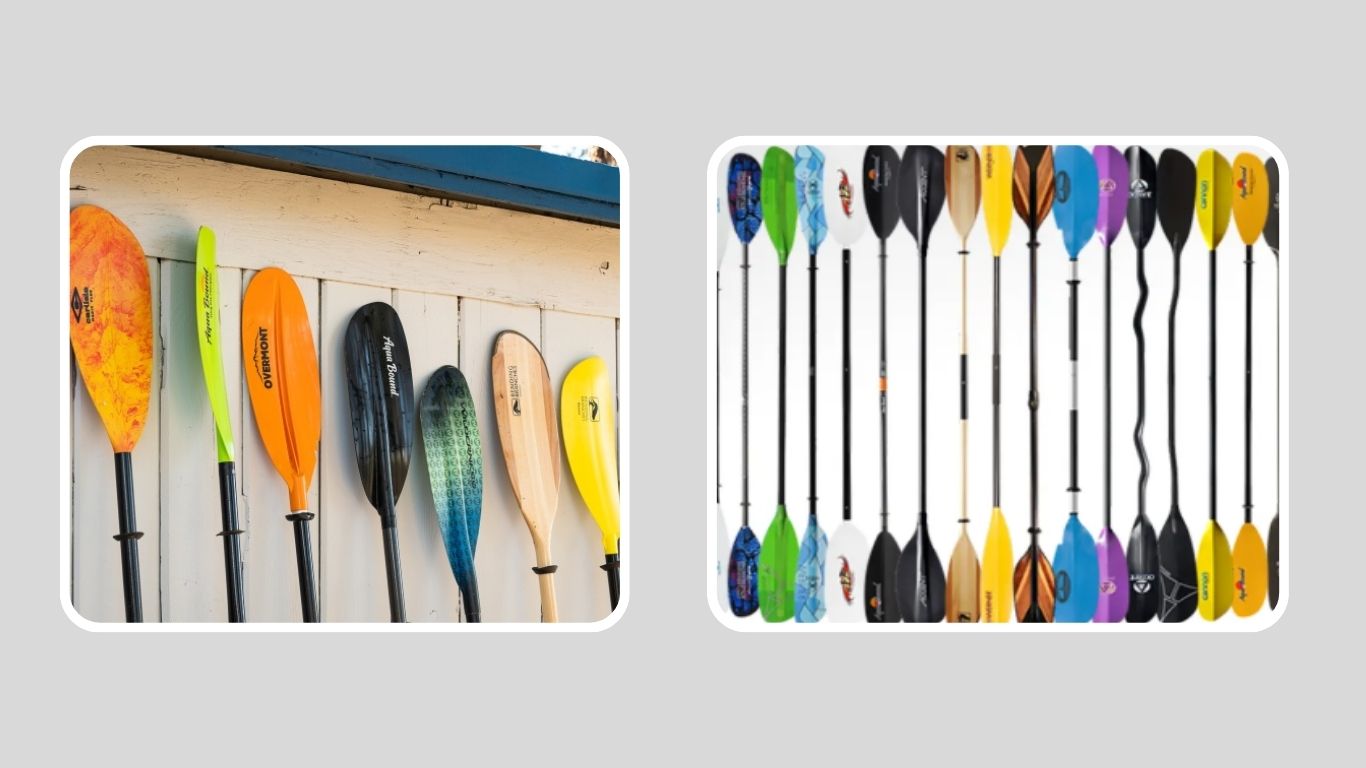
Blade Shape Impacts Speed and Control
The paddle blade I first used was basic and symmetrical. It caused flutter on each stroke, which meant I had to grip harder to stabilize it—leading to more wrist pain.
I switched to an asymmetrical dihedral blade, and the improvement was instant. The design helped the water flow smoothly off each side, reducing resistance and giving me better control over my kayak’s movement.
Choosing the Right Paddle – My Step-by-Step Advice
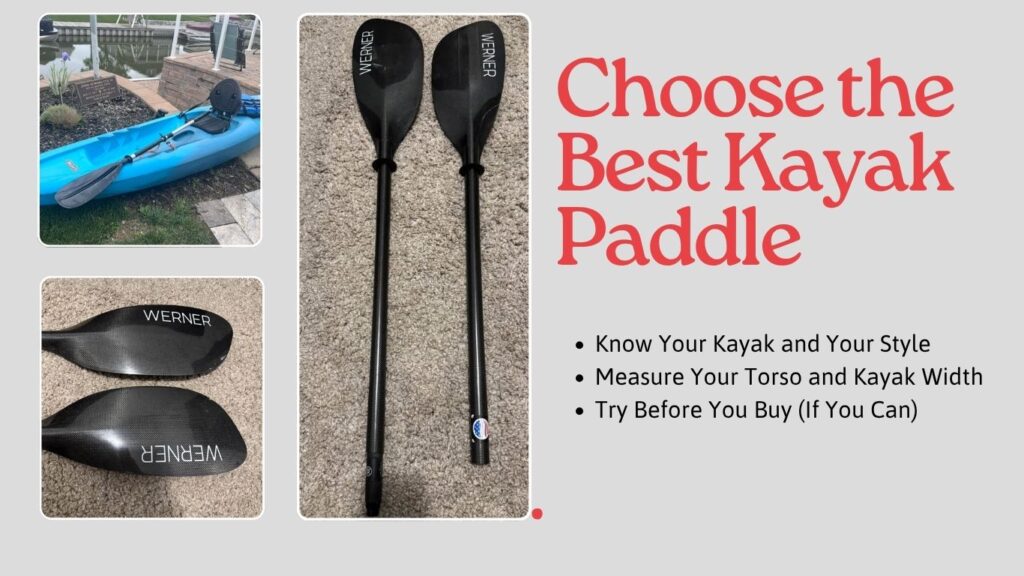
Step 1 – Know Your Kayak and Your Style
Before buying a paddle, think about what kind of kayaking you’ll do. My primary kayak is a recreational sit-on-top model, around 10 feet long and 28” wide. I go on calm lakes and slow rivers—light touring, not whitewater.
Are you fishing, touring, or just paddling for fun? Here’s a rough breakdown:
- Recreational paddlers → Lightweight paddles with nylon blades are enough.
- Touring → Fiberglass or carbon fiber is ideal for long-distance comfort.
- Fishing kayakers → Paddles with features like hook retrieval notches or measurement markings can help.
Step 2 – Measure Your Torso and Kayak Width
Use your height and kayak width to calculate ideal paddle length. Here’s what worked for me:
- My height: 5’8″
- Kayak width: 28″
- Paddle length: 230 cm (perfect balance)
Pro Tip:
Look up a paddle sizing chart or test out demo paddles if possible.
Step 3 – Try Before You Buy (If You Can)
Not all paddles feel the same in your hands. I attended a demo day at a local lake where I got to try four different paddles. That 30 minutes saved me from buying the wrong gear again.
If you can’t try in person, at least order from a seller that allows returns after testing.
My Top Paddle Recommendations (Tried and Tested)

These are based on what I’ve personally used and liked. No sponsors—just honest opinions.
1. Best for Beginners: Bending Branches Whisper
- Aluminum shaft with durable polypropylene blades
- Affordable and solid build
- Best for casual paddling and short trips
This was my second paddle after the “mystery metal rod.” It’s a great improvement for under $100 and a solid start.
2. Best Lightweight Choice: Aqua-Bound Sting Ray Hybrid
- Fiberglass-reinforced nylon blade
- Weighs just 30.5 oz (noticeably lighter)
- Adjustable ferrule (2-piece)
This is what I currently use for longer sessions. The difference in fatigue is huge, and it packs well for travel.
3. Best for Fishing Kayakers: Carlisle Magic Angler
- Has a hook retrieval notch
- Strong fiberglass shaft with durable blades
- Measurement markings on blade for fish size
Perfect if you fish often and need a versatile paddle with extra features.
Final Thoughts
If I could go back, I’d spend less on kayak accessories and more on a quality paddle from the beginning. My first paddle actually ruined the fun. The second one fixed the issue. The third one made me fall in love with kayaking all over again.
FAQs
How do I know if my paddle is too short or too long?
If you’re splashing water on every stroke or reaching too far, it’s probably too short. If it feels awkward or your hands are too far apart, it may be too long.
What paddle material is best for beginners?
Aluminum is fine for very casual use, but fiberglass or hybrid paddles offer a better balance of weight and performance.
Does feathering a paddle make a real difference?
Yes. Feathered paddles reduce wind resistance, which helps in windy conditions. Adjustable paddles let you choose the feathering angle.
Are adjustable paddles worth it?
Absolutely, especially if you share your paddle with others or have multiple kayaks with different widths.
Should I invest more in a kayak or a paddle first?
Both matter, but a bad paddle can make even a great kayak feel awful. If you’re on a budget, get a decent mid-range paddle first.